Star anise, Illicium verum, is The Herb Society’s Herb of the Month for December. December is the ideal month to become familiar with this spice because its star shape is perfect for using during the holiday season. Its sweet, subtle licorice flavor can be added to holiday desserts, and the seed pod can be floated in holiday drinks or nestled on the rim of a glass of a holiday cocktail or mocktail.
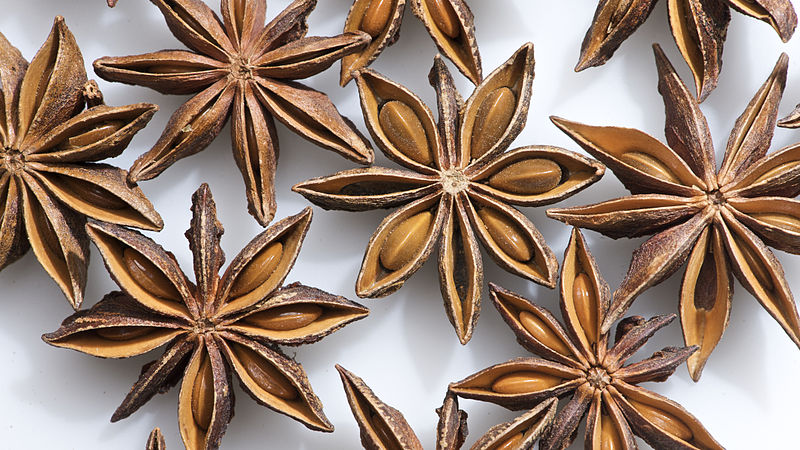
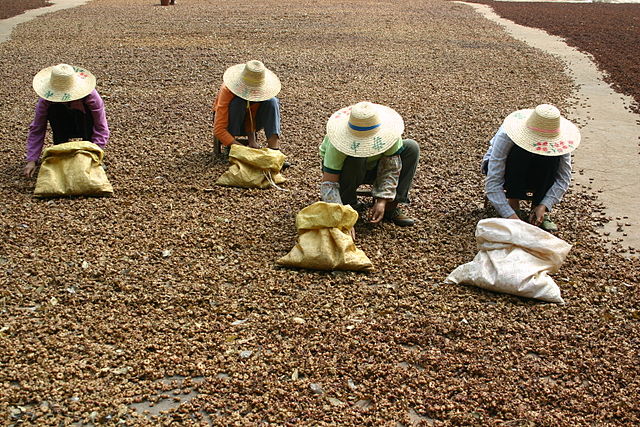
Star anise is the seed pod from the fruit of an evergreen tree native to Southern China and Vietnam, where it has been used in cooking and medicine for thousands of years. The leaves and seed pod have a distinct licorice flavor and fragrance. Each of the six to eight points of the seed pod contains a small seed. It became known in the West in the 1600s when a sailor brought the star-shaped spice home to England. European settlers brought the spice to the New World where it was used in medicine and to flavor desserts. The fruit is harvested twice a year by farmers who climb and shake the trees to make the fruit drop to the ground. The green fruit can be eaten fresh, or it can be dried in the sun until it hardens and reaches the rich brown color of the star anise we purchase at the grocery store.
 The star anise seed pod is an important spice in Traditional Chinese Medicine (TCM), as it is believed to maintain the balance of yin and yang in the body. It is also used for respiratory problems and to relieve pain. A tea made with the seed pod can aid digestion and reduce bloating. Studies have shown that star anise has antioxidant, antibacterial, anti-inflammatory, antiviral, and insecticidal effects (Zou, 2023).
In Western medicine star anise has been used to make Tamiflu, a medication to treat the flu virus. The seed pods are the primary source of shikimic acid, which is needed to make the drug. Until 2012, Roche Pharmaceuticals used 90% of the world’s production of star anise to make Tamiflu (Virology Research Services, 2024). However, Roche developed a process to chemically produce the shikimic acid, thus reducing dependence on the fruit of the slow-growing tree.
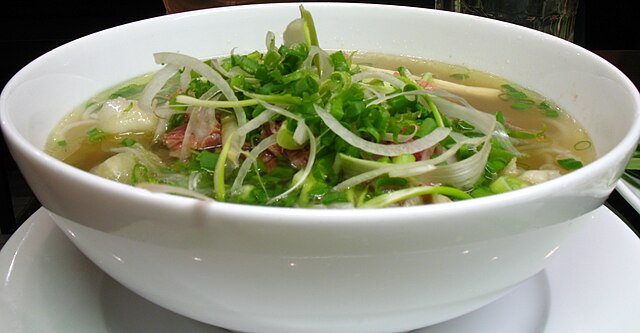
 Star anise is an important spice in Asian cooking. It is one of the spices in Chinese five-spice powder and Indian garam masala. It is also an important ingredient in Vietnamese pho soups. It adds a nice flavor to coffee and tea, can be used to marinate meat, and added to barbecue sauce. The whole pod is used in stews, soups, sauces and other dishes that need braising. The seed pod is removed when cooking is finished. Star anise can also be ground but loses its flavor more quickly this way. The ground spice is added to a dish just like any other spice.
The fruit, leaves, and branches of Illicium verum are used to produce star anise oil. The oil is used to flavor candy, baked goods, chewing gum, cigarettes, and dental products. It is also used to flavor liqueurs such as Galliano, Sambuca, Absinthe, and Pastis.
 I would be remiss not to mention that star anise has curious practices associated with it. Some believe that adding star anise and bay leaves to your bath will reduce negative energy. And some believe that putting a star under your pillow at night will help ensure a good night’s sleep and will banish nightmares (Johnson, 2024). When you consider the medicinal effects of star anise, it is understandable how these beliefs developed.
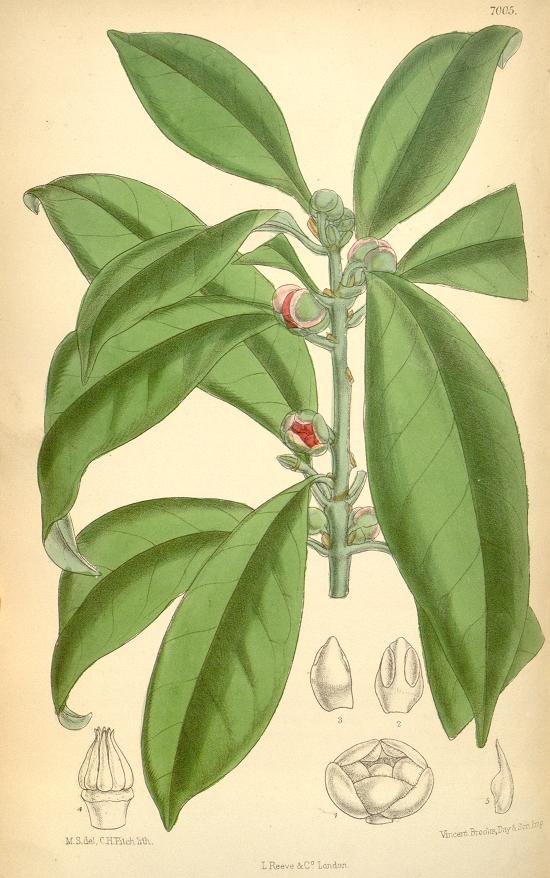 It is important not to confuse star anise with Japanese star anise (Illicium anisatum) which is toxic and causes seizures and damage to the urinary tract, kidneys, and digestive tract when eaten. In Japan, it is burned as incense (Zou, 2023). Adding to the confusion is the name “anise”. The star anise spice comes from a tree in the magnolia family while anise seed, Pimpinella anisum, comes from a plant in the parsley family. The plants and seeds of each are very different from each other.
For more information about star anise, please see The Herb Society’s Herb of the Month.