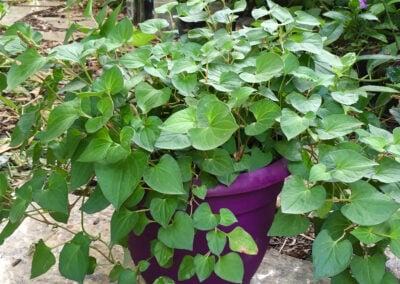
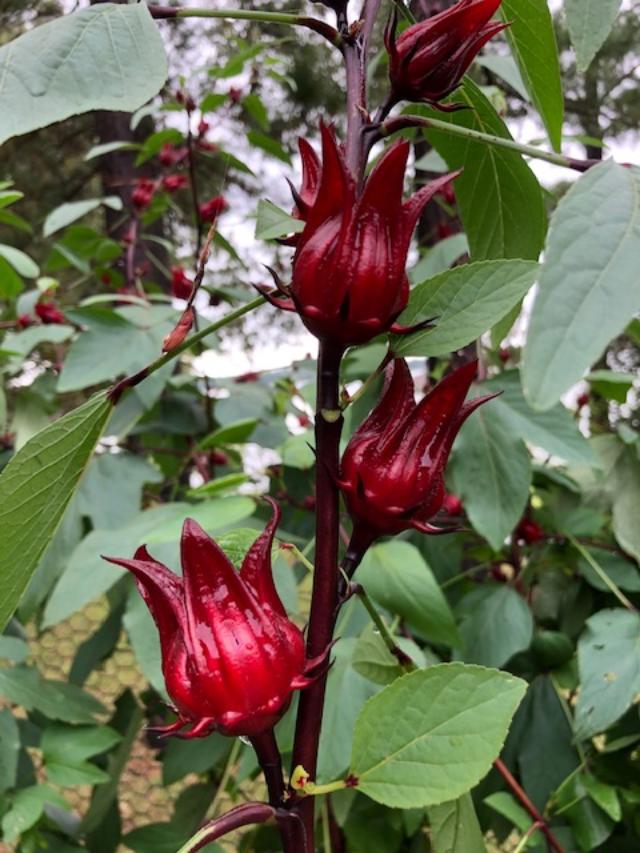
 Roselle hibiscus is The Herb Society’s Herb of the Month for July. With its bright red calyces, green leaves, red stems, and cream-colored, okra-like flowers, Hibiscus sabdariffa is also known as red zinger, red sorrel, sour tea, Florida cranberry, and roselle. It makes an unusual and striking accent plant in the garden. We don’t normally think of red zinger hibiscus as a landscape plant, but indeed it can be.
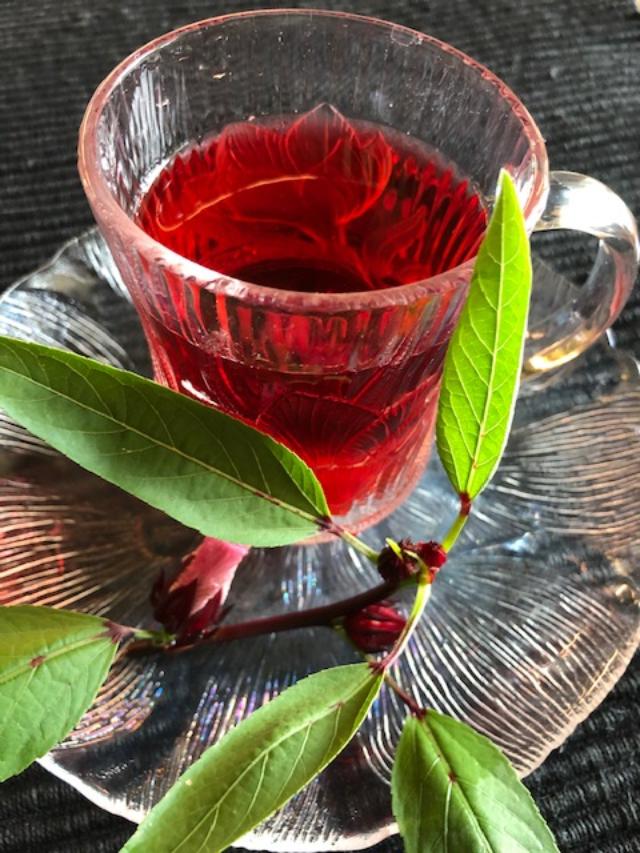
And of course, an interesting side note to this hibiscus is that the whole plant has many uses. The bright red calyces surrounding the seed can be dried and used to make a refreshing hot or cold tea. In Jamaica and much of Latin America, this red drink is a popular Christmas and celebratory drink. The fresh red calyces can also be chopped and used in fruit salads. They can be cooked into a sauce similar to cranberry sauce. If making jelly from the calyces, pectin does not need to be added as roselle calyces contain sufficient pectin (Qi, 2005). The leaves and tender shoots of the plant can be added to salads. In some countries the leaves are eaten as a vegetable and as a meat accompaniment. The seeds are high in protein and can be roasted and ground to use as a powder for soups and sauces. They can also be pressed for oil, and the mash left over from processing can be fed to livestock. Chickens enjoy the seeds. The fiber in the stems can be processed into rope or into rough cloth such as burlap (Duke, 1998). It is truly a plant with many uses.

Hibiscus tea has several health benefits including lowering blood pressure, which has been documented in clinical trials (Cattleman, 2020). The tea helps to cool the body, making it a very common beverage in hot, tropical climates (Qi, 2005). In Africa, India, and Mexico, the flowers, leaves, calyces, and stems of the plant are used in native medicines. In some countries, the root is also used for medicine.
This plant is native to West Africa and Southeast Asia. It is thought that the plant reached the New World on slave ships carrying enslaved West Africans. Roselle, along with other African plants, was loaded onto the ships for use as food during the trans-Atlantic journey. The familiar plants were then used as food and medicine by the Africans when they reached the New World (Carney, 2013).
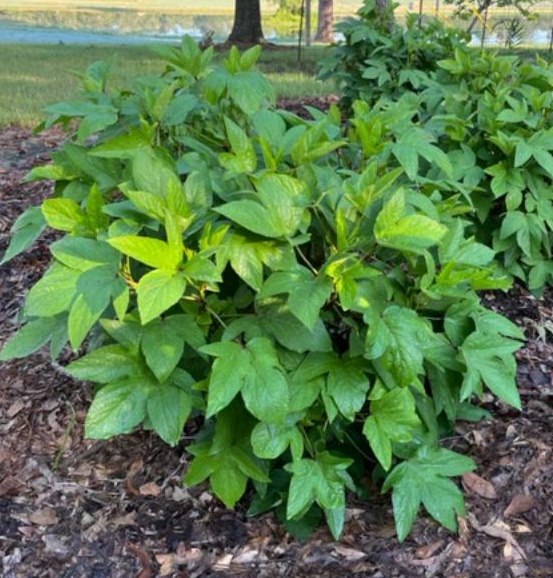
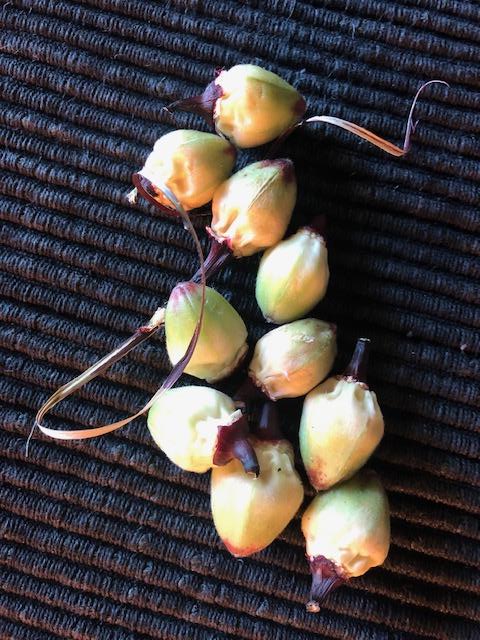 If you plan to grow Hibiscus sabdariffa in your garden, be prepared to give it plenty of sun, water, and room to grow. It can easily reach six to seven feet tall. Pruning it early in the spring will encourage branching. Roselle will not tolerate frost, making it an annual in all but tropical climates. It does not bloom until the days are short, usually in October. Some say that the calyces should not be harvested until several days after the okra-like blossoms drop off. The plant is easily propagated from seed.
Whatever you call it or whatever you use it for, roselle is an interesting herb to know about and grow. I like this plant!
For more information about Hibiscus sabdariffa, please see The Herb Society’s Herb of the Month webpage.