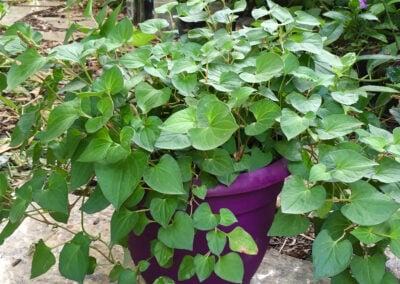
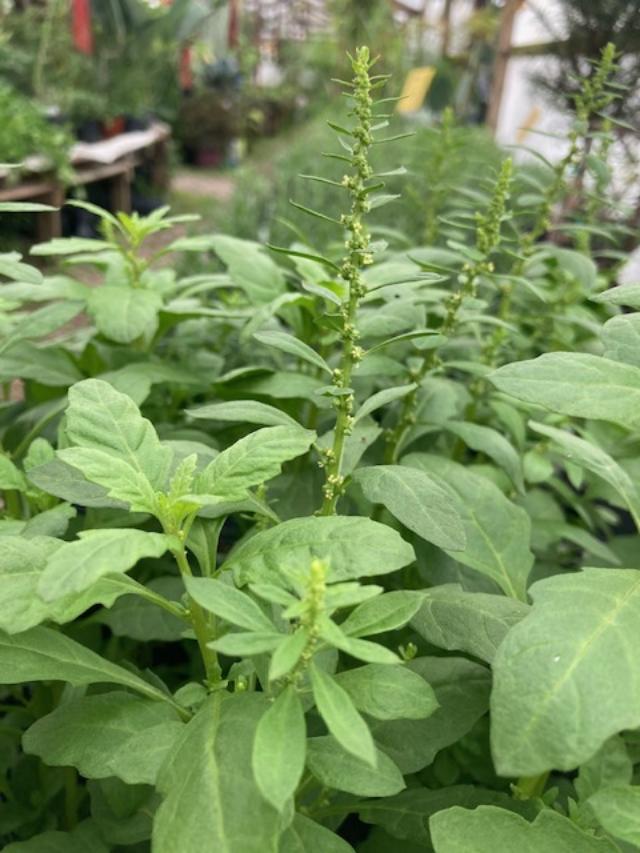
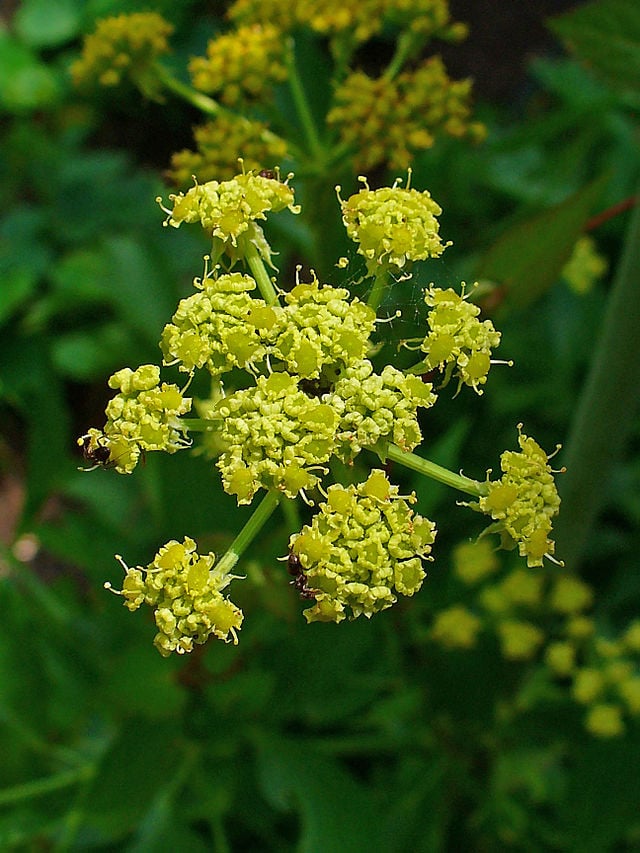
 Lovage, Levisticum officinale, is The Herb Society’s Herb of the Month for June. It can be a difficult herb to find in nurseries where I live in Texas. This spring, though, I did find a nice-looking lovage plant and decided to give it a try. After doing some research, I learned that lovage is native to the Mediterranean area and Southwest Asia. It is an easy-to-grow perennial that can reach a height of six feet and a width of three feet. Needless to say, I had it planted in the wrong place, and I had to move it to give it more room to grow. It dies back in the winter, but returns in the spring. It can be cut back in midsummer to control its height. Lovage thrives in sun or partial shade and needs well-watered soil. If it does not receive enough water during the growing season, the leaves tend to become bitter (New York Botanical Garden, 2022). The flowers are yellow umbels, which appear at the end of their tall stalks, and each flower contains two seeds (Harlos, 2011). As a bonus, goldfinches love the seeds. It is a host plant for swallowtail butterflies, and honeybees love the flowers, too. Lovage can be grown from seed or propagated by dividing the crown in the spring.
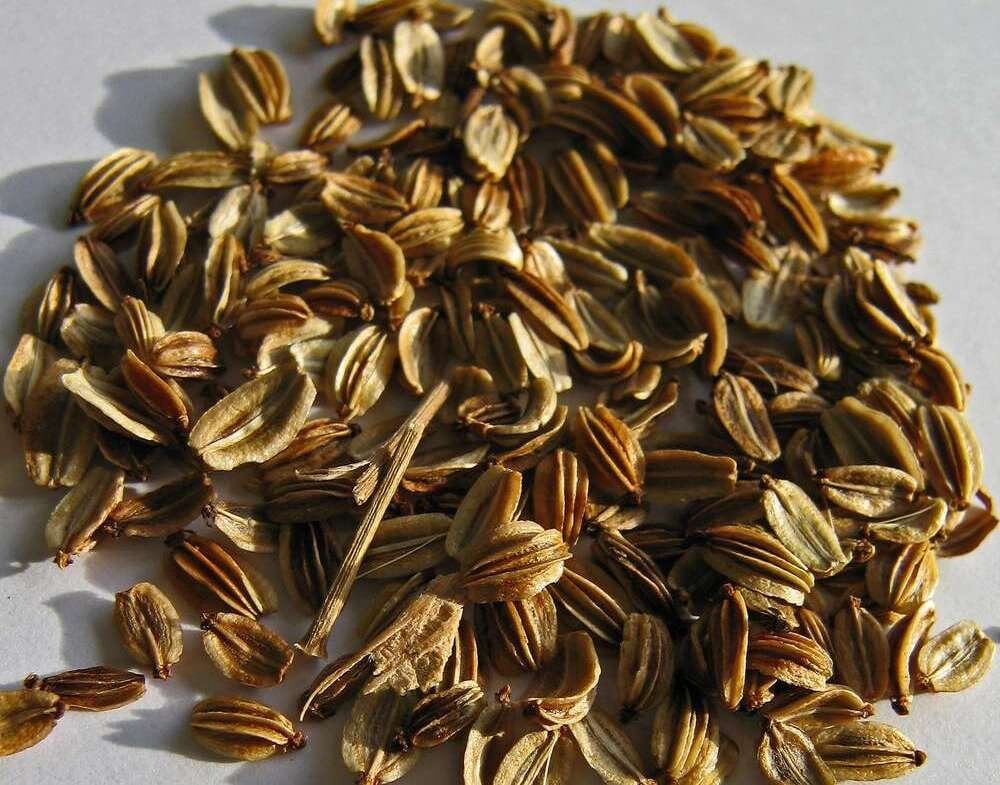
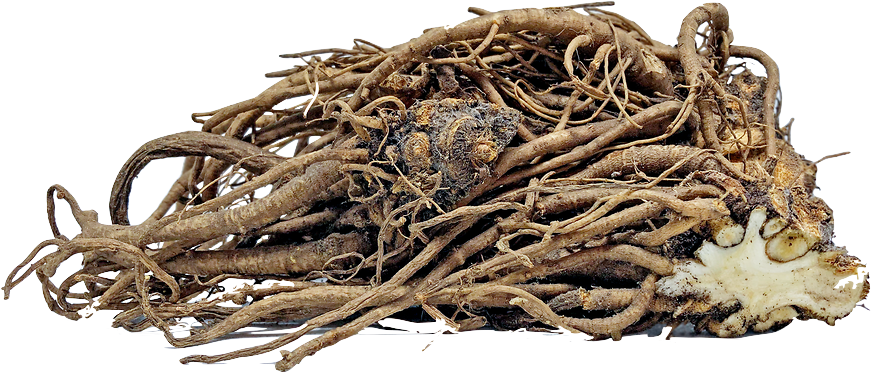
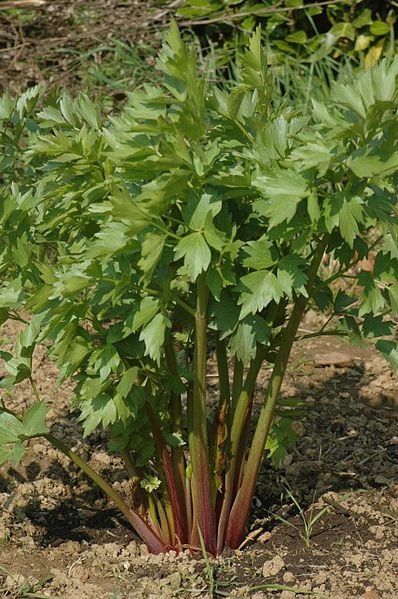 The leaves of lovage look and taste like celery but with a spicier flavor. Some say that it has anise and citrus undertones. The stems and leaves can be chopped into salads, soups, meatloaf, or sauces. Only a leaflet or two is needed to flavor a soup or stew. The hollow stems can be blanched and eaten like asparagus. They can also be candied using simple syrup or make a convenient addition to a Bloody Mary. Lovage seeds can be ground or used whole in pickling brines, cheese spreads, salad dressings, and sauces. Some chefs say that celery seed found on grocery store shelves is actually lovage seed (McCann, 2021). The roots, which are rhizomes, are used to make a tonic tea. Lovage leaves, stems, and seeds can be dried for use during the winter (Tucker and Debaggio, 2009).
 Lovage was used by the Greeks and Romans as a seasoning and as a medicine. The Greeks and later, Benedictine monks, chewed lovage leaves to help with digestion. The Romans brought lovage to England, where it was grown in kitchen and pharmacy gardens during the Middle Ages. Early use of the plant’s roots was as a diuretic, to relieve gas, and as a cure for rheumatism, jaundice, malaria, sore throat, and kidney stones (Kowalchick, 1998). Leaves were placed in bath water for a cleansing and deodorizing effect on the body. Lovage did have a reputation as an aphrodisiac and as a love herb. It is said that Charlemagne grew lovage in his gardens and that Queen Victoria snacked on candied lovage seeds and had pockets sewn into her clothing to hold the seeds (Specialty Produce, N.D.). Lovage was grown in monastery gardens because of its medicinal uses. Celtic travelers put lovage into their shoes because they believed that it helped with weariness and muscle aches. The British brought lovage to North America, where it is still grown in places like the Plimoth Plantation in Plymouth, MA (Tirrell, 1975). Colonial women used lovage to cure sore eyes and upset stomachs. They used the fresh leaves in summer salads and the dried roots in winter soups. It was also used by the Shakers as a medicinal herb.
 Today, lovage seems to be more popular in Europe, particularly in Central Europe and England, but its use has declined there as well. Interestingly, lovage is not very common in the United States, even though it is easy to grow and has culinary uses. For more information about lovage, please visit The Herb Society’s Herb of the Month webpage.