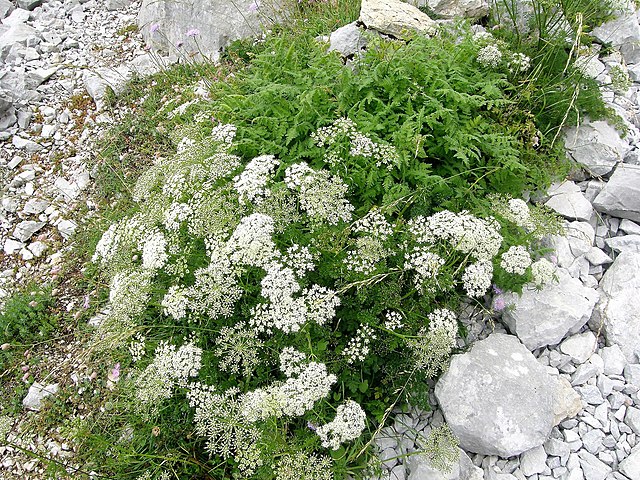
 Anise or aniseed, Pimpinella anisum, is The Herb Society of America’s Herb of the Month for March. It is a licorice-flavored herb in the parsley family (Apiaceae). This herb has feathery-looking leaves and resembles Queen Anne’s lace when in bloom. It is native to Egypt and the Mediterranean, but is also grown in the U.S., Europe, India, Spain, and Mexico. From seed it takes at least 120 frost-free days to reach maturity, and requires 70℉ temperatures to germinate. Anise develops a long taproot, which makes transplanting difficult. It does not like high heat and humidity, making it a challenging herb to grow in the southern U.S.
 The seeds that anise produces are actually the fruit of the plant. It is these fruits that can be used either whole or ground to add a licorice flavor to food. The leaves of the plant can also be used for tea, sprinkled on salads, or as flavoring in soups and stews. Anise is the flavoring used in many licorice candies, and is also used in pastries such as pfefferneusse, springerle, and pizzelle cookies. The flavor goes well with eggs, fruit, cheese, and vegetables. It is also used in a number of alcoholic drinks such as pastis, anisette, raki, and ouzo. Most cuisines have used anise as a flavoring for a very long time.
Anise seed is a part of the history of the wedding cake, which can be traced back to ancient Roman times. A Roman wedding was sealed by breaking a traditional Must Cake (Mustacei) made of wheat, anise, lard, and cumin, over the head of the bride as a symbol of good fortune. The newlyweds would then eat a few pieces of the cake in a custom known as confarreatio–eating together. Afterwards, the wedding guests gathered up the crumbs as tokens of good luck (Wilson, 2005). Doesn’t this tradition sound familiar? In case you are interested in trying the original wedding cake recipe, here is Cato the Elder’s recipe from his book De Agricultura 121 (256 BCE):
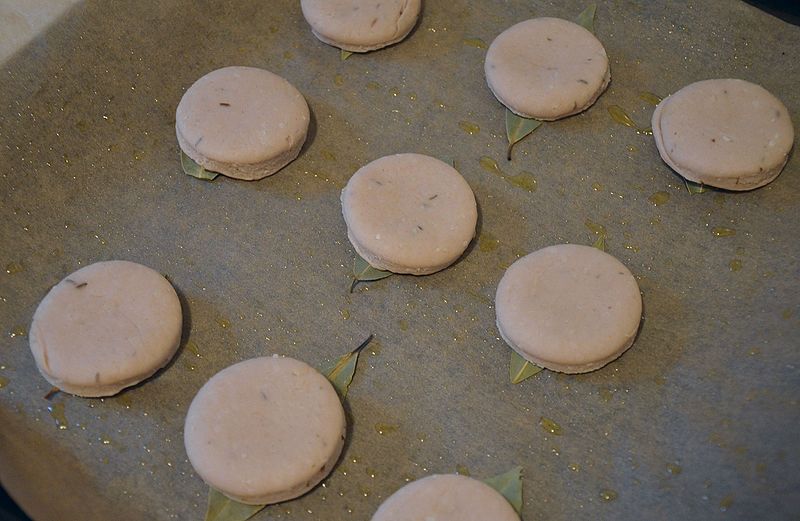
Original recipe: Mustaceos sic facito. Farinae seliginaeae modium unum musto conspargito. Anesum, cuminum, adipus P. II, casei librum et de virga lauri deredito, eodum addito, et ubi definixeris, lauri folia subtus addito, cum coques.
Translation: Moisten one modius (9 liters) of wheat flour with must [must is unfermented grape juice], add anise, cumin, two pounds of lard, one pound of cheese, and the bark of a laurel twig. When you have made them into cakes, put bay leaves under them and bake (Romans in Britain, n.d.).
Anise has a long history of use in traditional medicines. It has been used to treat respiratory and gastrointestinal conditions, migraines, skin infections, mental distress, and hormonal issues, although there is not enough human clinical evidence to support the effectiveness of these uses today (Singletary, 2022). The Egyptians wrote about using anise nearly 4,000 years ago as a diuretic, as a treatment for digestive issues, and for relieving toothache pain. Greek and Roman writers including Pliny the Elder and Hippocrates wrote about the use of anise as a treatment for coughs and as a breath freshener. Even the mathematician Pythagoras weighed in on the benefits of anise saying that it could cure epilepsy! Today, the essential oil is used in cough preparations, as well as gum and oral health products (Singletary, 2022).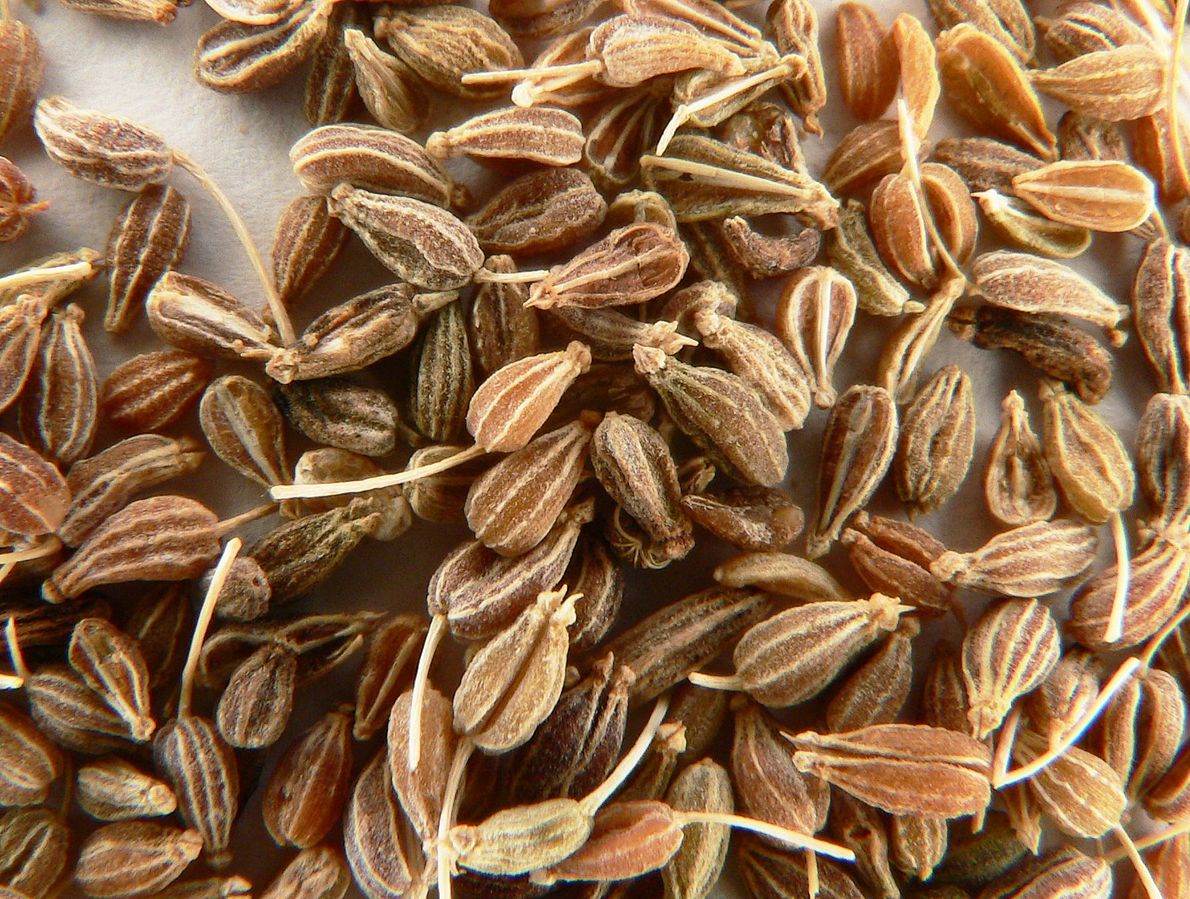
Anise was not only used as medicine and as flavoring, it was also used to lure animals into traps. In the 16 th century it was used as bait to catch mice. Still today, the Old Farmer’s Almanac recommends rubbing anise oil on the bait in mousetraps to attract rodents. Today hunters spray anise seed oil to attract deer, boars, and elk, and fishermen use anise-scented lures to catch catfish, trout, and bass. Anise seed was, and is still today, used as an alternative to hunting foxes in fox hunts in England and in the U.S. A bag of anise seed or an anise oil scented bag is dragged over a fox hunting course before the start of a hunt. Anise to a dog is like catnip to a cat, so the foxhounds excitedly follow the scent of the anise. This sport is called drag hunting and is certainly a more humane sport than hunting fox. Oh, the versatility of herbs!
Anise or aniseed is not to be confused with star anise, Illicium verum, which is a Chinese bush, or with anise hyssop, Agastache foeniculum, which is a member of the mint family, or with fennel, Foeniculum vulgare, another plant with a licorice flavor, or with the true licorice perennial plant, Glycyrrihiza glabra (See our blog on Herbs with Anise-, Fennel-, and Licorice-Like Flavors)
For more information and recipes using anise, please see The Herb Society of America’s Herb of the Month.