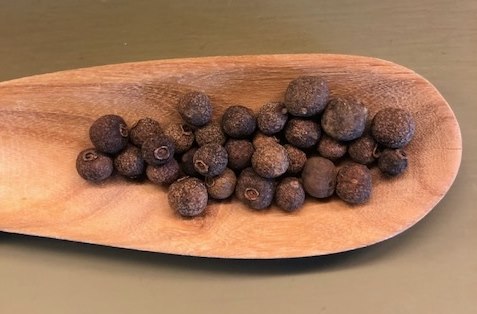
 My mother always flavored her delicious apple pies with allspice. She did this with good reason since allspice carries the flavors of cinnamon, cloves, nutmeg, and a tiny hint of black pepper—all of these spices, even the dash of pepper, enhance the flavor of apple pie. Perhaps that was the ingredient that made my mother’s pies so special.
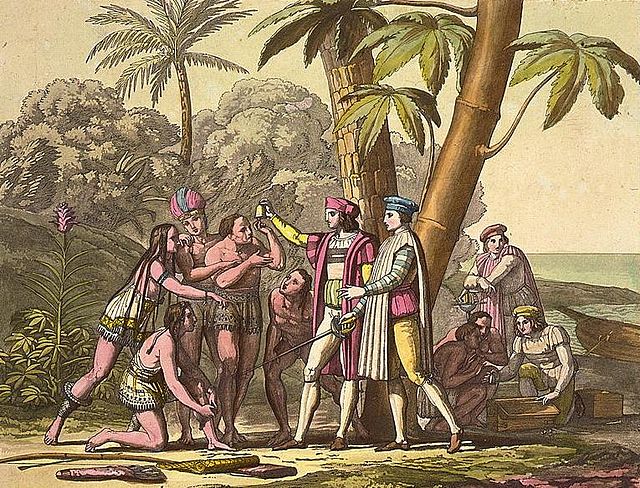
Allspice, Pimenta dioica, The Herb Society’s Herb of the Month for December, has an interesting history. The plant that produces the allspice berries is actually an evergreen tree and is native to Mexico, Jamaica, and Central America. It is said that when Columbus arrived in the New World on his search for an alternative route to the spices of the East, he found allspice berries in Jamaica and thought they were peppercorns. Later, when the Spanish explorers were traveling to the West Indies and Central America, they observed indigenous peoples adding the small dark berries to their food and chocolate drink. The Spaniards thought the berries added spice and heat to their food and therefore called them “pimenta,” the Spanish word for peppercorn. Dioica was added to its name because the male and female flowers grow on different trees. Obviously, calling this tree a pepper was not correct at all. The British, who took Jamaica from the Spanish in 1655, renamed the berries allspice, but kept the botanical name for the tree (Missouri Botanical Garden, N.D.).
 By the time allspice was brought to Europe, Europeans were rather blasé about the spice because they were already accustomed to using cinnamon, nutmeg, and cloves from the East. There was nothing new about this new spice, allspice. Slavery practiced on Caribbean island plantations also tarnished the reputation of products of the spice trade. A quote from a speech given by Samuel Taylor Coleridge against slavery in the late 1700s illustrates the thought at that time: “We receive from the West Indies sugar, rum, cotton, logwood, cocoa, pimento….not one of these are necessary—indeed with the exception of cotton and mahogany, we cannot in truth call them even useful” (Eddy, 2001). However, in the new American colonies, allspice was less expensive than the individual spices coming from Europe and was therefore “a thrifty alternative to the expensive spices monopolized by the Dutch colonies” (Sumner, 2004).
Early explorers tried to grow the tree from seed in their own countries, but they found the seeds impossible to germinate. It was later discovered that the seeds had to pass through the stomachs of native birds, heating and softening the seeds so that they could then germinate (Stewart, 2013).
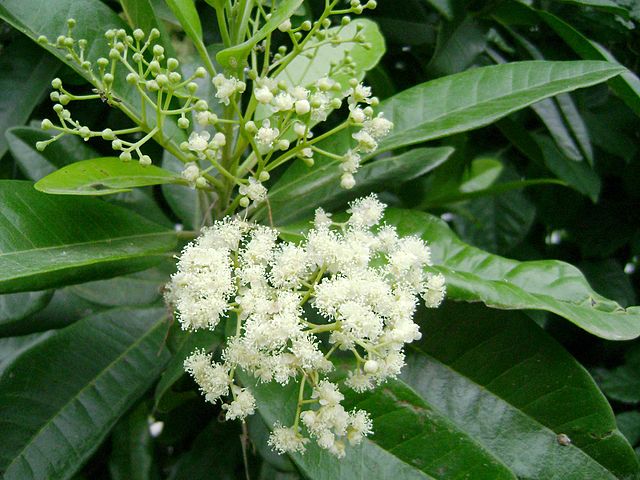 The allspice tree became almost extinct during the Victorian era, when it was very fashionable to have walking canes and umbrella handles made from the fragrant, durable wood. Many trees were destroyed until Jamaica, where much of the aromatic allspice still grows, banned the export of allspice saplings in 1882 (Stewart, 2013).
In pre-Hispanic times, indigenous peoples used the leaves of the allspice tree for medicine and the berries and leaves to flavor their food. The Mayans used allspice as an embalming agent and of course to flavor their famous chocolate drink. The berries and leaves are still used in folk medicine in the West Indies, and Latin and Central America to treat a wide range of illnesses. Allspice has also been incorporated into the practice of Ayurvedic medicine. Research is ongoing into the possible use of allspice components for anticancer treatments (Zhang, 2012).
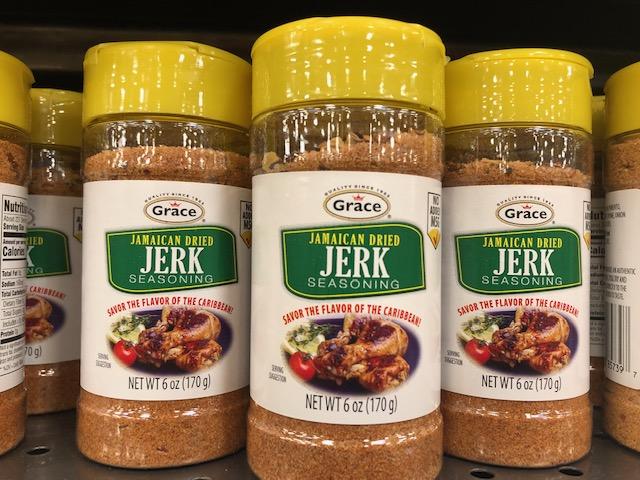 Allspice is an important ingredient in Caribbean cuisines. Think of jerk seasoning, where allspice is the key ingredient. In the Caribbean, meats are seasoned with allspice and then roasted over a P. dioica wood fire. Jamaicans also infuse the berries in rum to make their characteristic drink, Pimento Dram. It is also used as the flavoring in the liqueurs Chartreuse and Benedictine. The spice is used in European pastries, pies, breads, and puddings. In many Arab dishes, allspice is the only spice used. It is also an important spice in Middle Eastern cooking where it flavors stews and meat dishes.
 The scented oil from the berry has been used in perfumes, candles, and in cosmetics. It is also used as a natural alternative for pesticides and fungicides (Zhang, 2012.) Today the trees are planted among coffee plants to shade the plants from the hot sun. The berries are picked green and dried in the sun until they are a dark brown color. When dry, the berries look like large peppercorns. Whole dried berries hold their flavor better than the ground product. Many people think that the ground spice is a combination of spices instead of the unique spice that it actually is.
For more information about allspice, visit The Herb Society’s Herb of the Month webpage. Also visit The Society’s Facebook and Instagram pages.