 I suppose every family has universal cure, the thing you apply or ingest that will cure whatever ails you. My family had several. My German grandmother advised a generous dollop of blackberry brandy for internal upset, for being stung by a honey bee, for arthritis pain, and she recommended a rocket-fuel type disinfectant called Germ-Trol for everything else. My Tennessean father-in-law was a firm believer in sea water (used externally) and apple cider vinegar (taken internally).
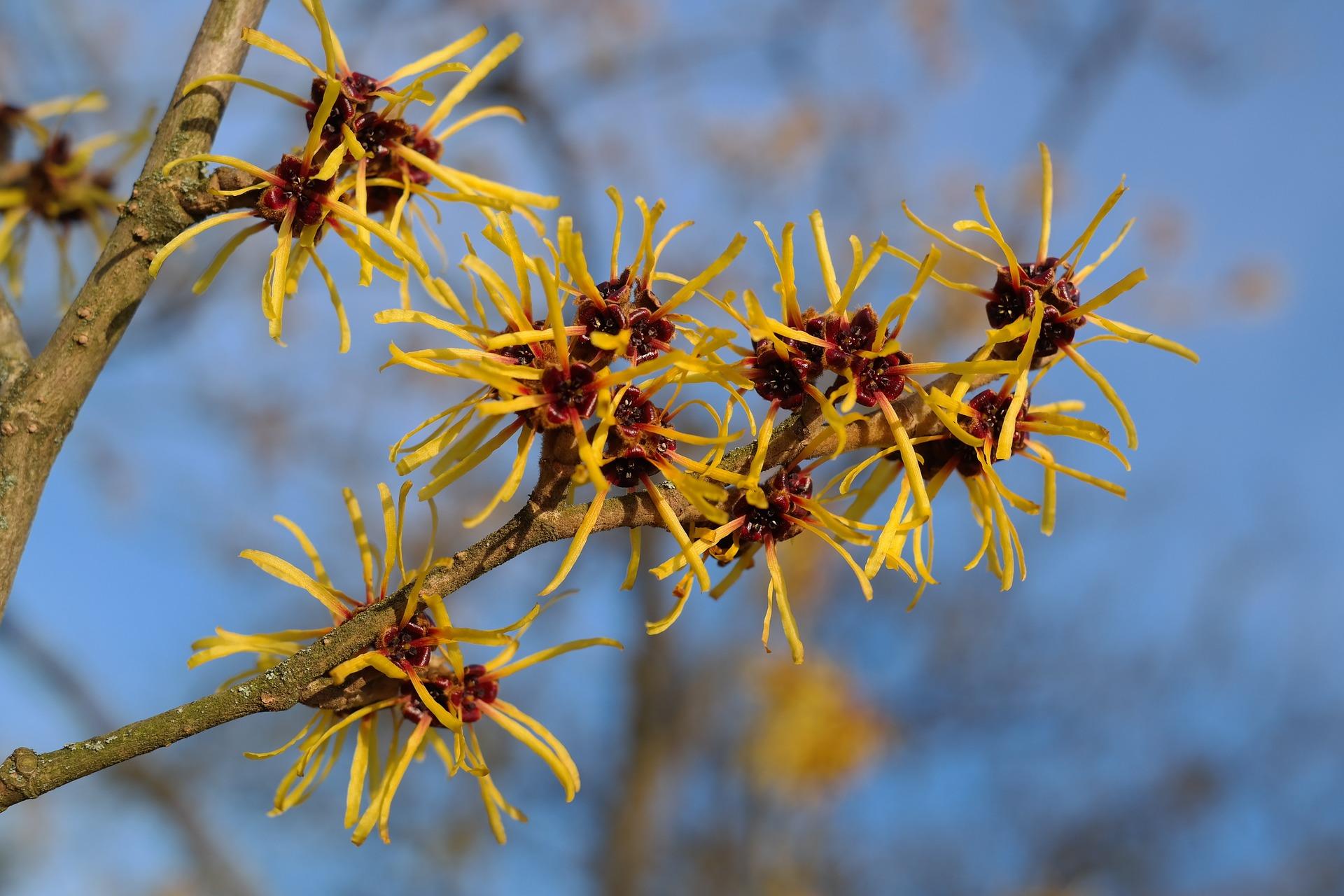
The center of my mother’s home remedies was witch hazel. It wasn’t until I was an adult that I discovered the shrub/small tree Hamamelis virginiana, This North American native plant is the source of the miracle-in-a-bottle readily available at every drugstore. The plant blooms in the fall, about the same time that the leaves turn color. The deciduous trees are compact, topping out at 6- to 10-feet tall. They grow readily pretty much anywhere, although, like everything else, they prefer loam to clay, and appreciate adequate drainage. They have no pest nemeses.
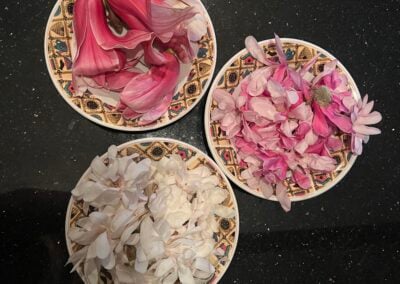
Another Hamamelis species, Hamamelis vernalis is native to the Ozarks, and has smaller but wonderfully fragrant flowers in a range of colors. They bloom improbably early in the spring. I now have a thicket of them in my garden, and they are gloriously in bloom (it’s February), in what is probably the middle of a Northeast Ohio winter. The flowers look like fringed forsythia. One of the nicknames for Hamamelis vernalis is “winter bloom.”
Sadly, the name “witch hazel” comes, not for any association with witches, but from the Anglo-Saxon word for “pliable”. The slender stems and branches are very bendy. This has made them a convenient tool for those who claim dowsing or divining powers, and who use sticks to detect water or treasure. But that’s stretching the “witch” angle.
Witch hazel preparations are a gentle but powerful astringent. The bark of Hamamelis virginiana may be macerated or distilled. It can be marketed straight, or combined with glycerin, rose water, citrus extracts, or other beneficial plants, like Aloe vera. Americans have used witch hazel stems boiled in water to sooth skin complaints since long before the arrival of European settlers. New Englanders began steam distillation, marketing the product in the mid-19th century.
The tannins found in the bark of the witch hazel provide the astringent quality sought after by users. Unfortunately, distillation destroys those tannins. So any benefit from commercially available preparations probably comes from the alcohol found as their second ingredient, after water. But you know what? Alcohol is a pretty good astringent. And magic is mostly a matter of intention.