u003cpu003eu003ca href=u0022/wp-content/uploads/nasturtium_group.jpgu0022u003eu003cimg class=u0022size-medium wp-image-12515 alignleftu0022 src=u0022/wp-content/uploads/nasturtium_group.jpgu0022 alt=u0022Picture of nasturtium flowers and leavesu0022 width=u0022225u0022 height=u0022300u0022u003eu003c/au003eNasturtium, u003ciu003eTropaeolum majusu003c/iu003e, has an unforgettable place in my memory. My grandmother always planted a drift of these spectacularly jewel-toned flowers along the banks of her driveway. Perhaps she was recreating the gardens of her European homeland, where nasturtiums have been a popular garden plant since the time of King Louis XIV, who planted masses of them at his Palace of Versailles.u003c/pu003enu003cpu003eNasturtiums are native to the highlands of Peru and Chile, where the Incas consumed them as a vegetable, prepared a medicinal tea with them to treat respiratory illnesses, and used them to create a salve to heal wounds. Spanish explorers brought the plant to Europe around 1500. At that time, it was considered a vegetable due to its edible flowers and leaves. The Spanish botanist, Nicolas Monardes, first documented the plant in 1565, and by 1597, British herbalist John Gerard was growing it in his garden in England. The plant was called “Indian cress” because of its origins in South America, which was part of the world people referred to as the “Indies.”u0026nbsp; Another name for it was “Capucine cress” because the flower shape was reminiscent of the hoods of Capuchin monks. It was given the name “nasturtium,” a Latin word meaning “nose-twister,” due to its peppery taste and fragrance. That peppery taste was similar to watercress, u003ciu003eNasturtium officinaleu003c/iu003e—hence its common name “nasturtium.” It was Linnaeus who gave the plant its botanical name, u003ciu003eTropaeolum majusu003c/iu003e. I love his rationale for choosing this name. The plant reminded Linnaeus of an ancient Roman custom. After victory in battle, Roman soldiers erected a trophy pole (oru0026nbsp;u003ciu003etropaeumu003c/iu003e, from the Greeku0026nbsp;“u003ca href=u0022https://en.wikipedia.org/wiki/Tropaionu0022u003etropaionu003c/au003e”, source of English “u003ca href=u0022https://en.wikipedia.org/wiki/Trophyu0022u003etrophyu003c/au003e“) on which they hung vanquished foe’s armor and weapons. The plant’s round leaves reminded Linnaeus of shields, and its flowers of blood-stained helmets (Perry, 1972).u0026nbsp;u0026nbsp;u003c/pu003enu003cpu003eu003ca href=u0022/wp-content/uploads/Jan-Voermans-painting.jpgu0022u003eu003cimg class=u0022size-medium wp-image-12514 aligncenteru0022 src=u0022/wp-content/uploads/Jan-Voermans-painting.jpgu0022 alt=u0022Photo of Jan Voerman's painting, Nasturiumsu0022 width=u0022300u0022 height=u0022187u0022 style=u0022margin-bottom: 12px;u0022u003eu003c/au003eDuring Victorian times, the plant was popular in bouquets and table arrangements. In the language of flowers, nasturtiums symbolized patriotism and were known as the “flower of heroes” (Donabella, 2015).u0026nbsp;u003c/pu003enu003cpu003eu003ca href=u0022/wp-content/uploads/nasturtiums-display.jpgu0022u003eu003cimg class=u0022size-medium wp-image-12513 alignrightu0022 src=u0022/wp-content/uploads/nasturtiums-display.jpgu0022 alt=u0022Image of Hanging Nasturtiums Courtyard Display, 2021. Isabella Stewart Gardner Museum, Bostonu0022 width=u0022225u0022 height=u0022300u0022u003eu003c/au003eThe striking, unusual-shaped flowers have captured the imaginations of artists over the years. Monet planted many nasturtiums in his garden at Giverny, and he celebrated them in his painting “Nasturtiums in a Blue Vase”. The Dutch artist Jan Voerman painted the still life “Nasturtiums” in 1894, featuring three pots of nasturtiums in blue vases. This painting was the inspiration for Isabella Stewart’s Courtyard Garden in Brookline, MA. This garden features long, trailing vines of nasturtiums growing from the balconies in the courtyard of her home, which is now a museum. Stunning photos of these hanging nasturtiums taken by Museum Horticulturist Jenny Pore can be seen at u003ca href=u0022https://www.gardnermuseum.org/blog/elevation-nasturtium-plate-palace-gardenu0022u003ehttps://www.gardnermuseum.org/blog/elevation-nasturtium-plate-palace-gardenu003c/au003e. A visit to this museum in April, when the nasturtiums are in full bloom, would be a delight.u003c/pu003enu003cpu003eu003ca href=u0022/wp-content/uploads/nasturtium-salad-2.jpgu0022u003eu003cimg class=u0022size-medium wp-image-12512 alignleftu0022 src=u0022/wp-content/uploads/nasturtium-salad-2.jpgu0022 alt=u0022Photo of nasturium saladu0022 width=u0022300u0022 height=u0022225u0022u003eu003c/au003eNasturtiums are well known for their culinary and medicinal uses. Both leaves and flowers are edible. The leaves are rich in vitamins A, B, u0026amp; C and contain compounds that boost the immune system and protect against carcinogens (Sams, 2025). The leaves can be steamed as a vegetable, tossed into salads, or blended to make a delicious pesto. The flowers make perfect cups to hold cheese or guacamole sitting atop a nacho chip. They can be used as a garnish, tossed into a salad, or added to a vinegar. They are a beautiful addition that brightens any dish or drink. The seeds and the young buds can be pickled and used as capers. The seeds can also be ground and used as pepper, which was done during World War II due to a shortage of black pepper at the time.u003c/pu003enu003cpu003eu003ca href=u0022/wp-content/uploads/nasturtium_seeds-2.jpgu0022u003eu003cimg class=u0022size-medium wp-image-12511 alignrightu0022 src=u0022/wp-content/uploads/nasturtium_seeds-2.jpgu0022 alt=u0022Nasturium seedsu0022 width=u0022300u0022 height=u0022200u0022u003eu003c/au003eNasturtiums are easily grown from seed. There are vining and mounding species (Belsinger, 2016) in a range of jewel-like colors. In my USDA Zone 9a garden, nasturtiums bloom from late winter to early spring. They are definitely not fond of our Texas summer heat. In cooler zones, their peak bloom comes in late spring to summer. They are an annual herb in most USDA Zones but can be perennial in Zones 9-11. They prefer sun and bloom better when not overfed (Schlosser, 2006). The bright colors, pollen, and nectar of nasturtiums attract pollinators. They also deter aphids and cabbage moths in the vegetable garden. This is an herb that I intend to plant in my winter garden in the fall.u003c/pu003e
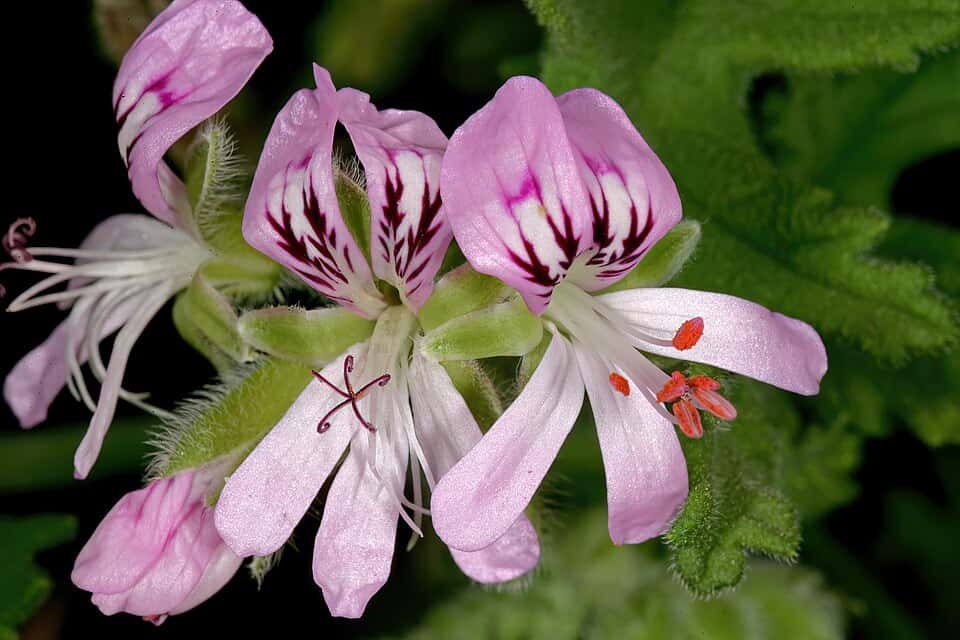
Pelargonium
Pelargonium is the Herb of the Month for September. Pelargonium is a genus of about 280-300...