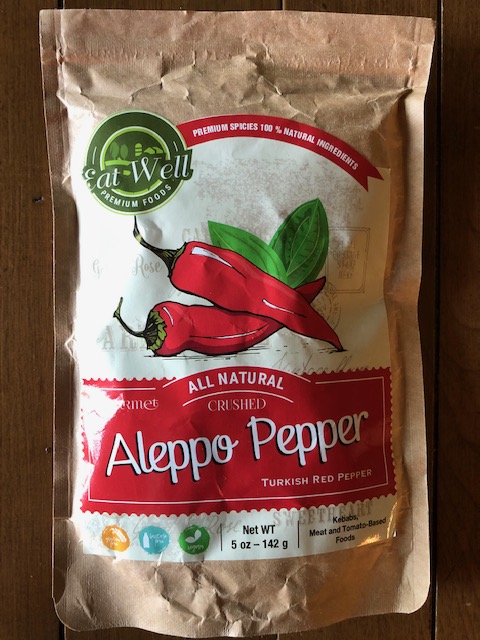
 The Aleppo pepper, also known as the Halaby pepper (Halab is the ancient name for the city Aleppo) has its origins in the city of Aleppo in northern Syria. Aleppo is one of the oldest cities in the world and was on the crossroads of the Silk Road 1,500 years ago. Unfortunately, the recent Syrian Civil War has left much of this ancient city in ruins. What the war did not destroy, the recent earthquake in February unfortunately added to its devastation.
 One of the many results of the civil war in Syria was the disruption of trade of one of the area’s signature spices, the Aleppo pepper, Capsicum annuum ‘Aleppo’. It is interesting that the parent of this famous pepper has its roots in the Americas, where Christopher Columbus and later explorers found Capsicum annuum growing. Explorers brought the hot pepper back to Spain and from there it traveled to the Middle East where, because of the unique environment and soil, it grew into the very flavorful red Aleppo pepper. The exchange of herbs, spices, and vegetables between the new and the old world is referred to as the Columbian Exchange.
 The ground Aleppo pepper was, and is today, a highly sought after spice around the world. Unfortunately, the recent war was catastrophic for those who grew the pepper, and it became scarce. Some Syrian growers gathered seeds and moved to nearby Turkey to continue growing the plant. Turkish farmers also began growing the pepper; but, because of the different soil and environment, connoisseurs feel that the taste of the peppers grown in Turkey and other places is not as good as the peppers grown in Aleppo. Hopefully, the people of Aleppo will recover from the war and recent earthquake in order to begin growing their famous pepper plant again.
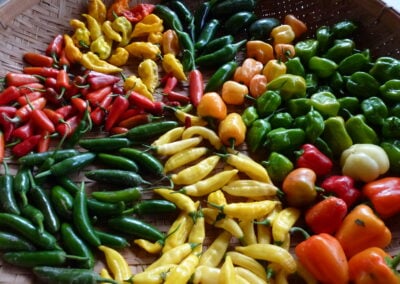
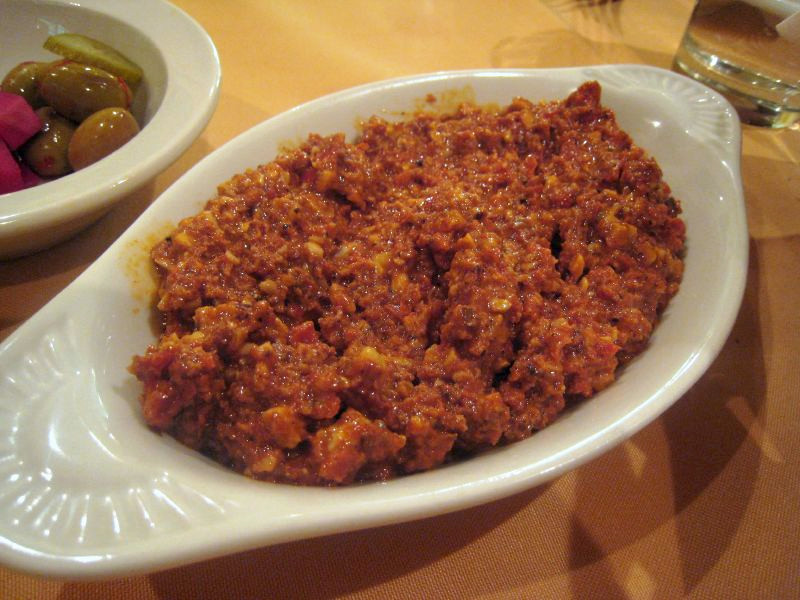
 The Aleppo pepper is 10,000 Scoville Heat Units on the Scoville scale, twice as hot as the jalapeno pepper at 5,000 units, but less hot than the Serrano pepper at 23,000 units. The flavor is described as mildly hot and raisin-like with a hint of sun-dried tomatoes. It also has a slightly salty taste because after removing the seeds and drying the peppers, they are crushed with salt and olive oil and left to dry further. The heat of the pepper is not felt immediately as you eat it. The heat comes a bit later. Some say the taste is out of this world and leaves you begging for more. The pepper is a natural for grilled meats and kebabs, pasta, and chili. It is a key ingredient in muhammara, a Syrian roasted pepper dip.
The Capsicums have a number of health benefits. They contain more Vitamin A than any other food plant. They are also high in Vitamin B. Because the capsaicin in the pepper causes an increase in saliva and gastric juice production, eating the pepper can be an aid to digestion. It is now being used in some medicines to treat pain, shingles, toothache, and arthritis (Nunn, 2010).
 Aleppo pepper may be difficult to find in a neighborhood grocery store. Middle Eastern markets will have it or it can be purchased online. I have found that its unique taste is worth the extra effort to find so that you can include it in your cooking.
Aleppo pepper, Capsicum annuum ‘Aleppo’, is The Herb Society’s Herb of the Month for September. For more information, recipes, and a beautiful screen saver, go to Herb of the Month : Herb Information : Learn : Herb Society of America