 There’s a lot of buzz about bees lately. For good reason. Their populations are in jeopardy. And, that could lead to pollination problems, thus less produce, thus food supply issues. Using honey to build awareness, Jillian Kelly and Kim Allen are doing their part.
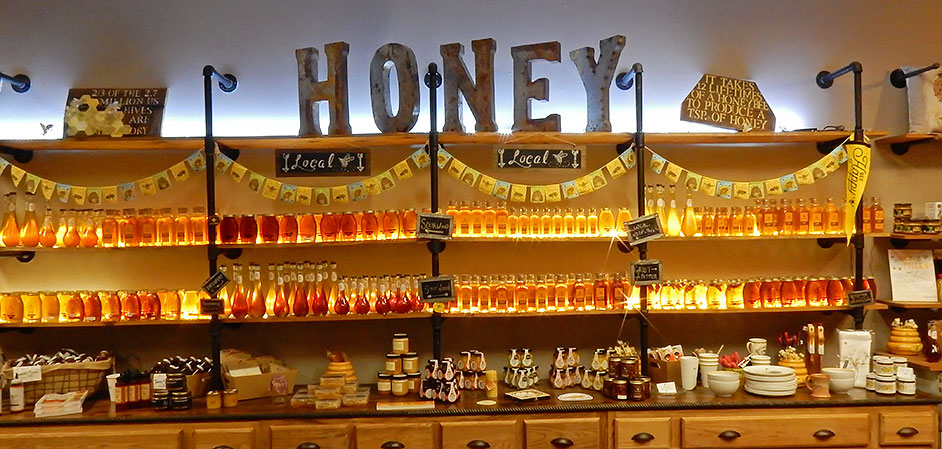
If you’re headed to HSA’s April 29 annual meeting, prepare for a sweet time at Jillian’s and Kim’s The Bee Charmer, 38 Battery Park Avenue downtown Asheville. You can belly up to the bar for a honey tasting similar to a winetasting. Sample honey from different states, countries and flowers – lavender, blackberry, sunflower, wild carrot.
As winemakers might say: Taste the terroir. The source location.
Sourwood honey — made from the flowers of a tree that grows in southeastern forests of the United States — is a local specialty. Its characteristics are considered superior, by some, to clover, orange blossom, fireweed or any other honey.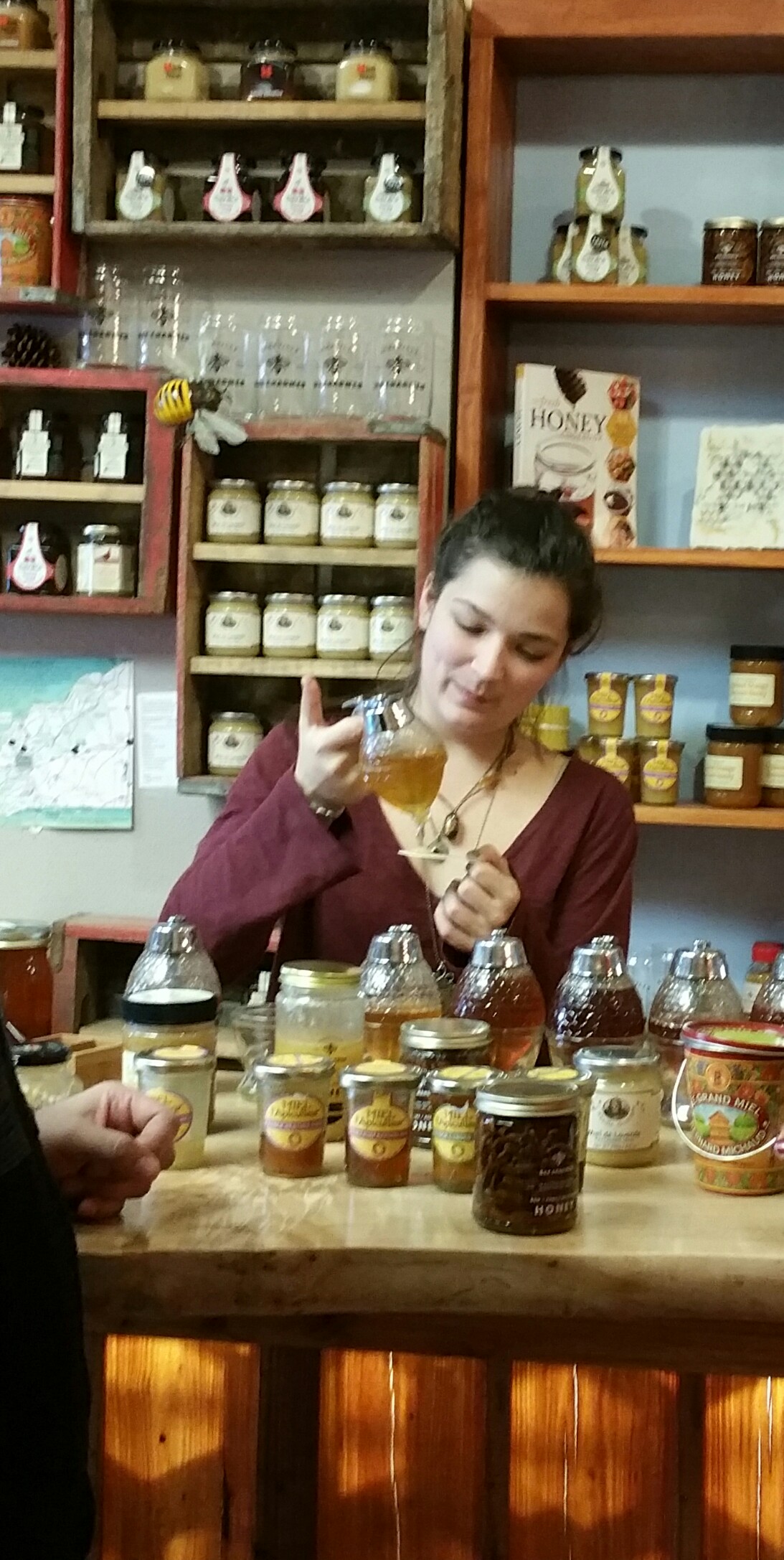
Behind the bar at The Bee Charmer your hostess will interpret what the tastebuds perceive. It goes far beyond sweetness and color. Flavor profiles can be boldly obvious. Taylor, our hostess for the trip, was an articulate guide.
- Sage is herbaceous with a finish of tobacco and roses
- Dandelion is grassy, and a bit like a French sancerre (sauvignon blanc)
- Meadowfoam, my favorite, has a toasted marshmallow finish
I don’t want to stop. But, after 10 or so my palate is fatigued. Then, Taylor tells me about the “reserved” honeys, those which have sold out because of popularity or rareness. I’m recharged and holding out my tasting spoon.
That’s when I discover real gold – leatherwood honey from Tasmania. Like a fine wine, it has three movements. Up front it has big floral characteristic. The midnotes are leathery. And, the finish is light menthol. I want, especially because I can’t have it.
We walk out with lavender, meadowfoam and sourwood. Now, what will I do with so much honey?
Probably backtrack and start my own pollinator garden to keep these precious providers alive in a changing, challenging ecosystem.
Meanwhile I’ll be waiting for the cookbook being written by Jillian and Kim.
Tell us about your bee garden and plans for using honey.