A few years ago, I was researching plants native to Mexico and Central America for a Mexican-themed garden at my work, Olbrich Botanical Gardens in Madison, Wisconsin. As an important early center of plant diversity and domestication, some of our favorite garden plants originally hail from Mexico, including tomatoes, corn, and chiles, as well as zinnias, cosmos, dahlias, and petunias. One less familiar plant also turned up on my list: chia.
Among edible plants, chia may have some of the most bizarre associations. Many people remember the 1980s chia pet craze. More recently, chia seed has become popular as a “superfood” and has made its way into chips and crackers, bakery items, and beverages. 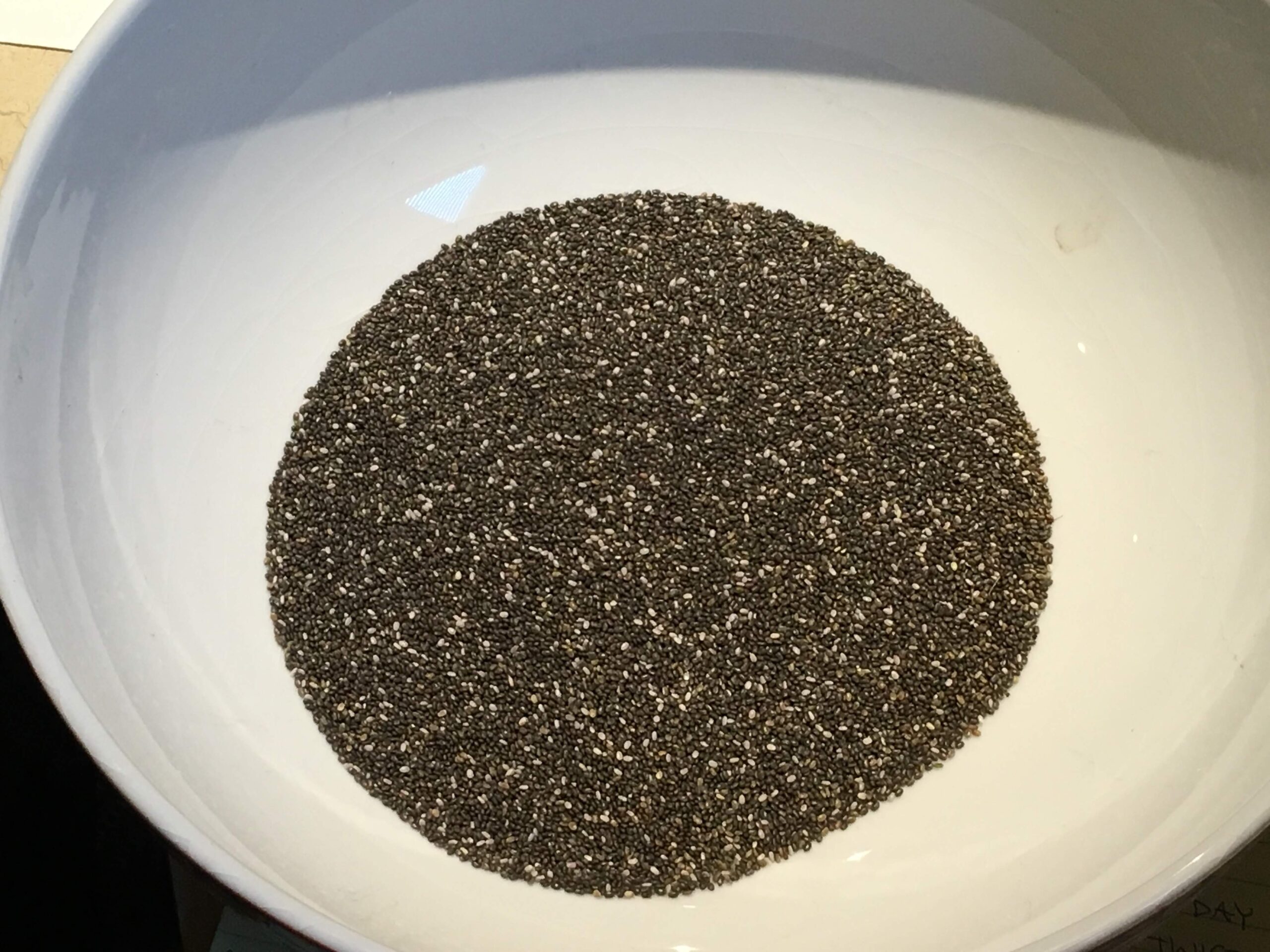 It’s high in protein, fiber, omega-3 fatty acids, and antioxidants. However, the gelatinous texture of the soaked seeds can be disconcerting for some. I remember having a visiting Californian friend who forgot a bottle of chia kombucha in his car one Wisconsin winter night. An explosion of grape kombucha slush full of sticky seeds is not a pleasant morning surprise in the backseat of your rental car.
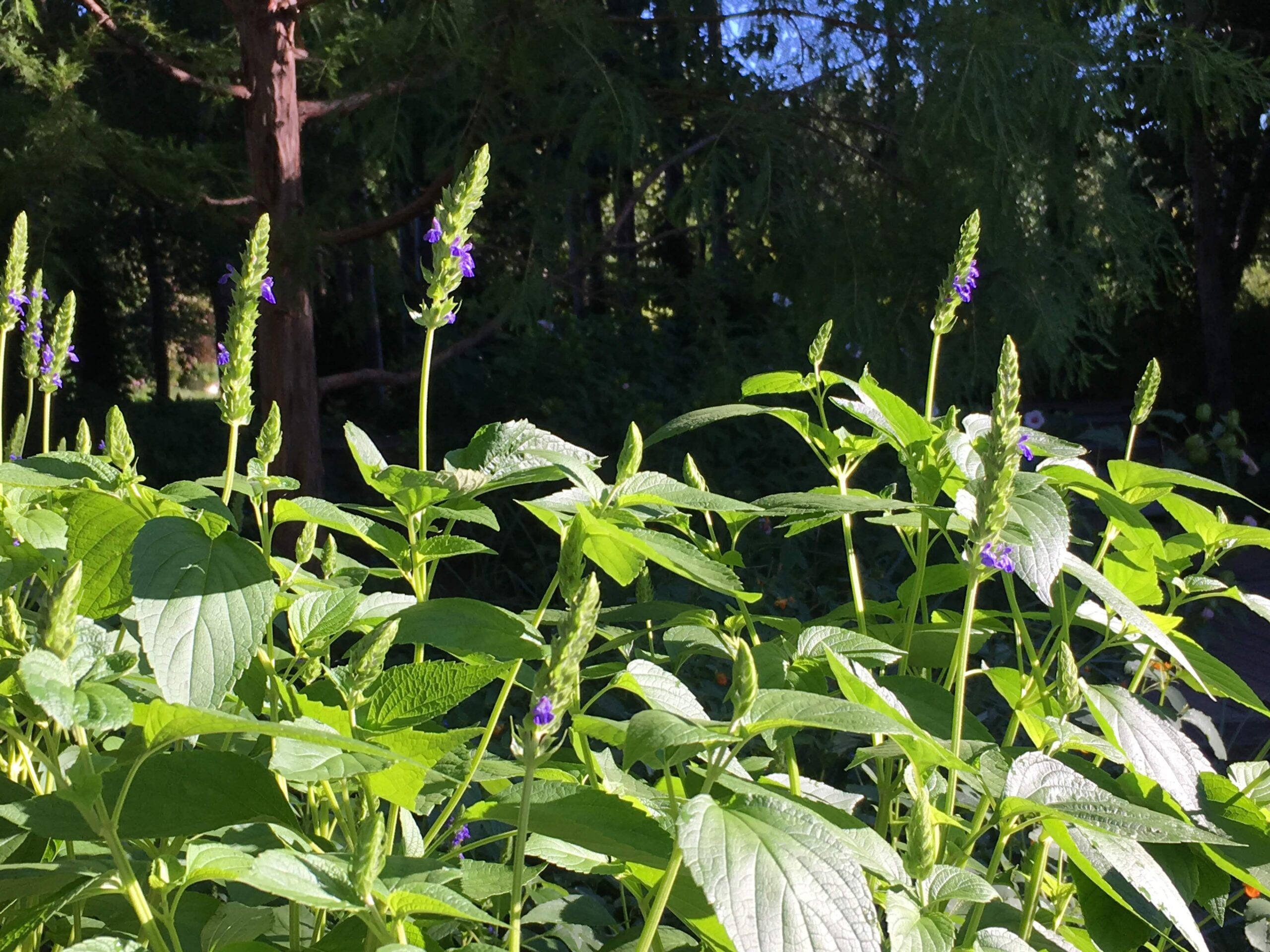 When I learned that chia is actually a species of sage, Salvia hispanica, and saw photos of its pretty blue flowers, I was intent on growing it. My seed search led me to Dr. Tim Phillips, a plant scientist at the University of Kentucky working on breeding early flowering chia suitable for cool northern climates. Tim introduced me to the importance of chia in Mayan and Aztec cultures – for the Aztecs, chia was the third most important crop after corn and beans and could even be used as a form of tribute similar to a tax payment. I knew he would be an entertaining colleague when he also related the Aztec legend that chia had originally been sneezed from the nose of the maize god, Cinteotl.
Tim generously sent some of his early flowering chia up to Wisconsin, and we have had great success with it ever since. Direct sown after frost danger has passed, the seeds sprout readily, and the plants grow to about four feet with spiky periwinkle blue flowers. 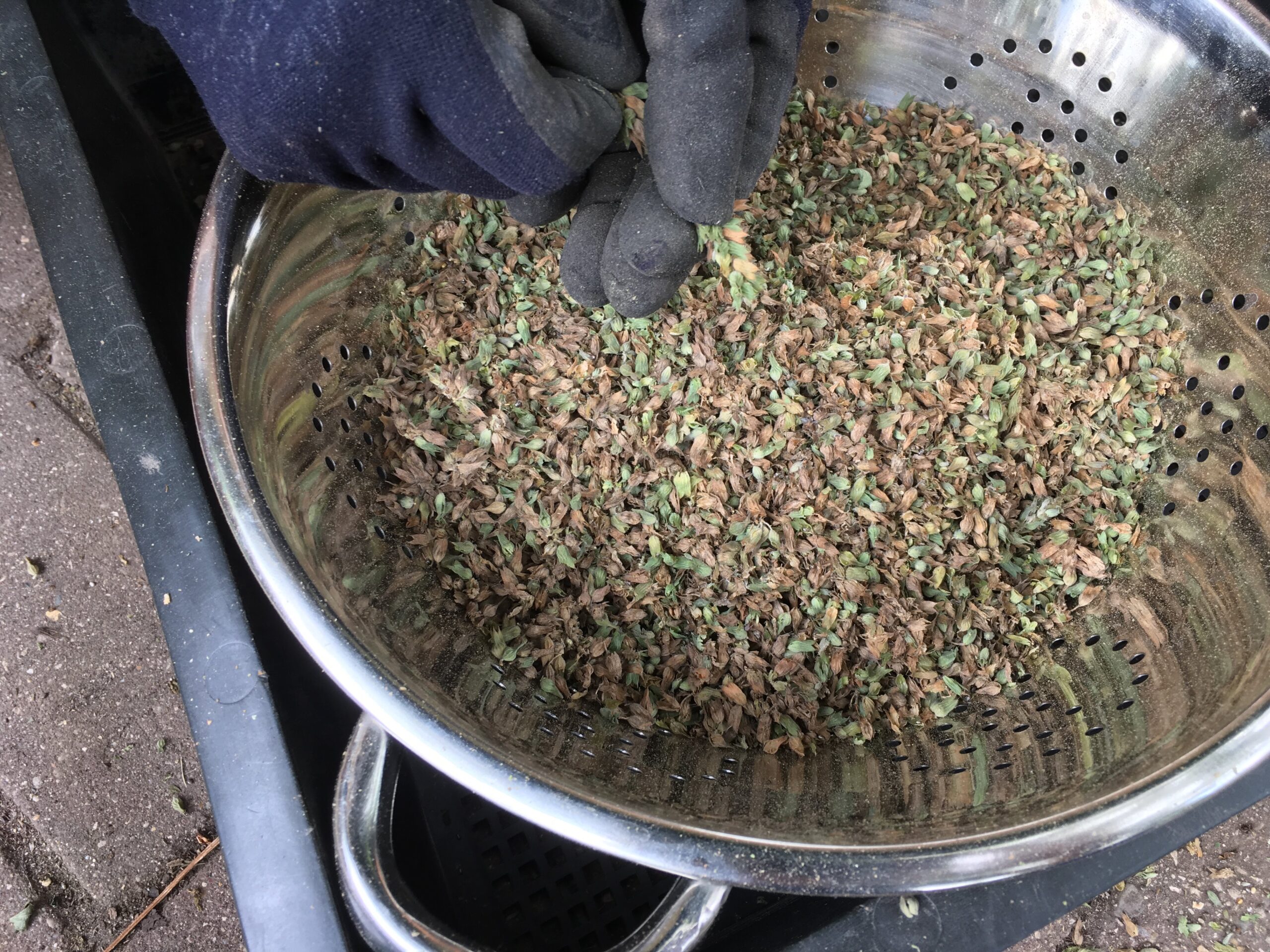 When the plants start to turn brown, we look for mature charcoal gray or white seeds within the calyces and then hang the plants to dry for a few days if the weather is rainy or humid. After that, the dried calyces and seeds are stripped from the stalks and sifted through a series of colanders and screens to separate the seeds, and the last bits of chaff are blown out using a gentle stream of air. The seeds are stored for incorporation into food and beverages and for growing in subsequent years. Check out our tasty recipe for rhubarb agua de chia below!
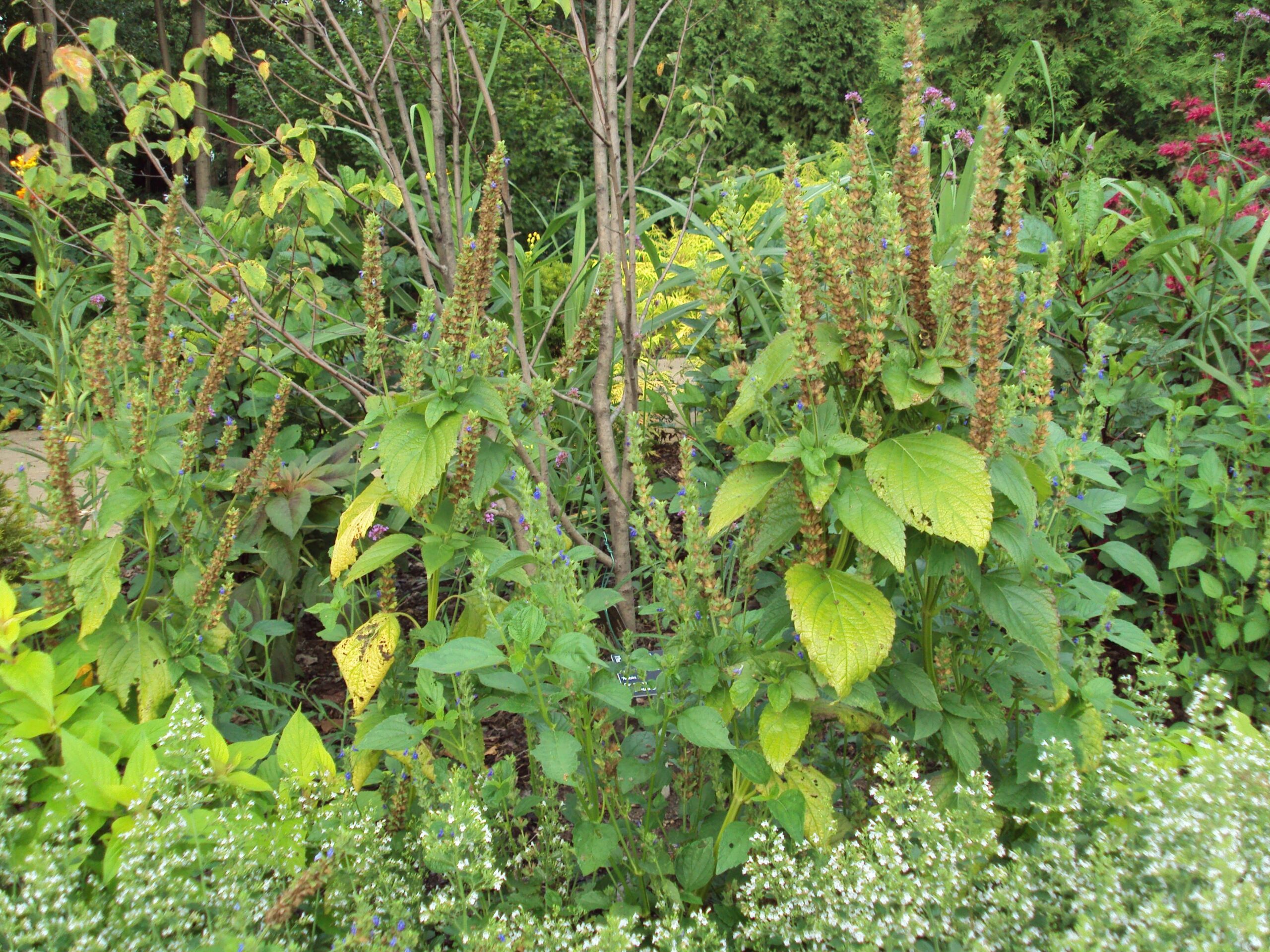 The chia plants have been such an attractive and easy to grow garden highlight, with so much interesting history, that we grow them every year. Unfortunately, the early flowering chia seed strains are under patent until 2029, and not available to home gardeners (yet). Tim did suggest trying to track down two other salvias with edible seeds, Tarahumara chia (Salvia tilifolia) and golden chia (Salvia columbariae).
Rhubarb Agua de Chia
The cheery pink color, refreshing tartness, and slippery chia seeds make this a perfect thirst quencher on a hot day.
Makes 6 cups finished beverage
A few hours or the day prior to serving, make the rhubarb water. In a large pot, combine 1 pound coarsely chopped fresh rhubarb, 1 ½ cups sugar, and 6 cups water. Bring to a boil and simmer for 5 minutes, then allow to cool for one hour and strain.
One hour prior to serving, stir in ½ cup fresh lime juice and 1 Tbsp chia seeds and allow to stand for one hour as the seeds swell. Serve over ice.
Instagram: @presleyspreferredplants