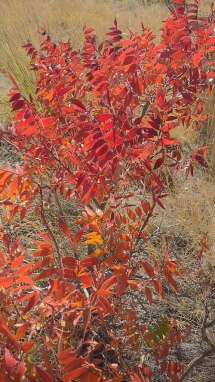
 Sumac, Rhus coriaria, is The Herb Society’s Herb of the Month for July. It is truly an interesting herb and perhaps a little-known one for many of us.
Sumac is a deciduous herbal shrub or small tree in the cashew family (Anacardiaceae). The family includes more than 250 species, many of which are native to the United States. Male and female flowers occur on different plants. Sumac was once thought to be only a roadside tree with vibrant fall foliage, but now it has become a familiar spice as we have become more aware of the cuisines of the Middle East. The species Rhus coriaria has a long history of medicinal and culinary use in North Africa, the Middle East, and the eastern Mediterranean, where it is a native plant. Early sailors traveling in these areas brought the plant’s red fruits back to Europe, where they became a popular spice, imparting a refreshing, lemony flavor to food. Lemons and other citrus fruits were not yet known in early Europe.
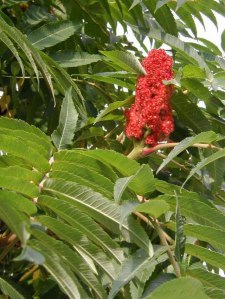
The origin of the word sumac is from the Arabic word summaq, meaning “dark red”, which is the color of the fruit clusters of the plant. A cluster of red fruits may contain 100 to 700 drupes (the technical name for the small fruits). In the Arab world, the color of the red berries symbolized the rising sun. And today, sumac symbolizes love and is one of the seven symbols used in the 13-day Persian New Year celebration, Nowruz.
 The spice za’atar, made from the drupes, is becoming a common spice blend in our kitchens. The spice blend is made with powdered sumac fruits blended with sesame seeds, oregano, thyme, and/or marjoram. Of course, there are variations to these ingredients. It is a tangy and invigorating seasoning blend that can be used with olive oil as a dip for bread, sprinkled over roasted vegetables, meats, and especially over hummus. Soaking the ripe drupes makes a refreshing drink, sumac lemonade. This drink was well-known to Native Americans in the past.
Medicinal uses of sumac date back to ancient times when it was used for its astringent properties. Dioscorides used an “unguent form of the herb to treat everything from gangrene to hemorrhoids” (Herbal Academy, n.d.). It was used as an antidiarrheal and antiemetic. Its antibiotic properties healed wounds and disease. It was interesting to learn that Native Americans used this plant for the same reasons Middle Eastern peoples used it. Recent research now shows that Rhus coriaria is effective in inhibiting the growth and proliferation of cancer cells (Gabr, 2021).
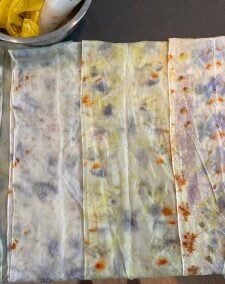
 Of course, there are other uses for this herb. The wood of the tree/shrub is used to make pipe stems, and Native Americans use the twigs to make baskets. Because of the tannic acid in the leaves, they are used to tan leather. Using leaves to tan leather dates back to Roman times and remains the preferred tanning material for bookbinding, gloves, and hat bands (Turner, 2009). Native Americans dry the leaves and use them as smoking tobacco and for some of their rituals. The leaves, bark, berries, and roots were, and still are, used to make different dye colors. The tannins in sumac serve as a natural mordant, which eliminates the need to treat fabrics with chemicals to ensure the color is absorbed into the cloth (Tull, 2013).
In the U.S., sumac serves as a valuable host for many insects and butterflies. Birds, deer, rabbits, and other animals depend on the berries for food during the winter. The plant also helps to stabilize soil and prevent erosion, according to the Missouri Department of Conservation (2025). The flaming colors of the leaves create a vibrant roadside landscape in the fall.
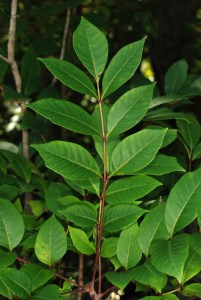 So, what is poison sumac, and how do you distinguish it from non-poisonous sumac? Poison sumac, Toxicodendron vernix, is also in the cashew family but is in a different genus. Its leaflets resemble those of sumac, but upon closer inspection, differences are apparent. The leaf edges of poison sumac are smooth, and the leaves of other sumacs are toothed. The stems of the poison sumac are also red. Poison sumac bark is smooth; the bark of other sumacs has small hairs. The berries of poison sumac are white and point down, but the berries of non-poisonous sumacs are red and point up. They also live in different habitats. Poison sumac inhabits swampy, wet areas, particularly in coastal areas, unlike the other sumacs, which grow along dry roadsides (Lowenstein, 2020).
Are you ready to try some sumac lemonade this fall? I plan to try it, as I discovered the native Rhus copallina, also known as winged sumac, growing in my neighborhood. If you are allergic to poison ivy or cashews, you might want to pass on this lemonade.