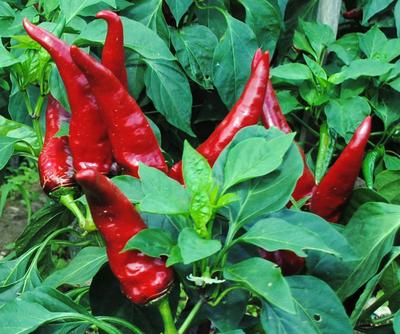
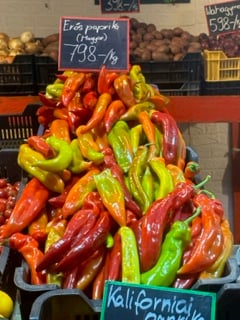
 Paprika, The Herb Society’s Herb of the Month for February, is the national and beloved spice of Hungary and a symbol of its cuisine. Hungarians call the pepper that is used to make the spice a paprika pepper. To them, paprika refers to a spice and a vegetable. According to Hungarian blog author Paprika Molnar: “We (Hungarians) have expressions with paprika: when we get upset, we get a “paprika-face,” or, we describe light red colour (with a shade of fiery orange) as paprika-red and that’s a lovely colour to us. Paprika is much more than just a spice. It’s like home to me and I believe it is for a lot of other people” (Molnar, 2021).
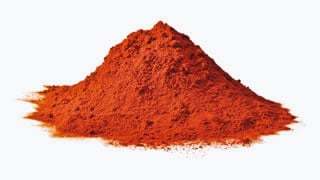 The spice is made by drying and then grinding the red paprika pepper into a powder. Paprika peppers are a long, narrow variety of the Capsicum annuum pepper.
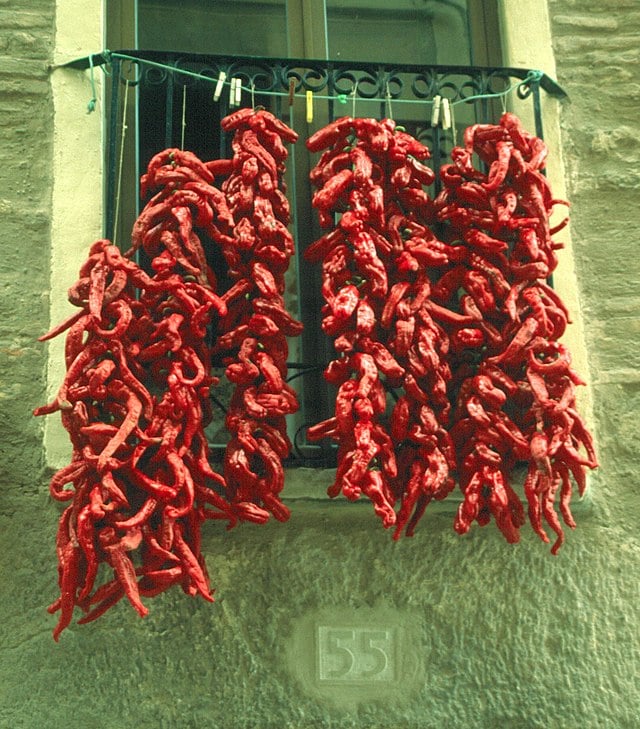
These red peppers were brought to Europe by Columbus from his travels to the Americas in the 15th century. The Turks traded for the pepper and brought it to Hungary, which was part of the Ottoman Empire in the 16th century. Historians say that at first the pepper was not used as food but was used ornamentally instead. Strings of the colorful pepper were dried and strung on the castle walls of the nobility. People did not eat the pepper because they thought it was poisonous. However, during an 18th-century cholera epidemic, paprika was credited with healing a famous Hungarian poet, and it became the much loved spice of the country.
 Paprika contains significant amounts of Vitamins A, B6, and E, and the antioxidant capsaicin, which helps fight cell damage in the body and also relieves pain (Streit 2023). The Hungarian scientist, Albert Szent-Gyӧrgyi, received the Nobel Prize in medicine and physiology in 1937 for discovering Vitamin C and isolating it in the pepper. He found that the paprika pepper contained more Vitamin C than a lemon.
Hungarians produce eight flavors of paprika ranging from sweet and mild to hot and spicy. The membrane and seed of the pepper is left in the pepper during the drying process in order to create the hotter flavors. Other varieties of hot peppers can also be added to create the hot and spicy variety. Today, the spice is used to make Hungary’s famous dishes, chicken paprikash and goulash, and to make sauces and sandwich spreads. Paprika gives foods their rich red color. It is a staple for every Hungarian cook and a shaker of paprika sits alongside a salt and pepper shaker on the Hungarian kitchen table (Banfalvi, 2015). A common culinary practice is to fry paprika in oil and onions before adding other ingredients when making a Hungarian recipe.
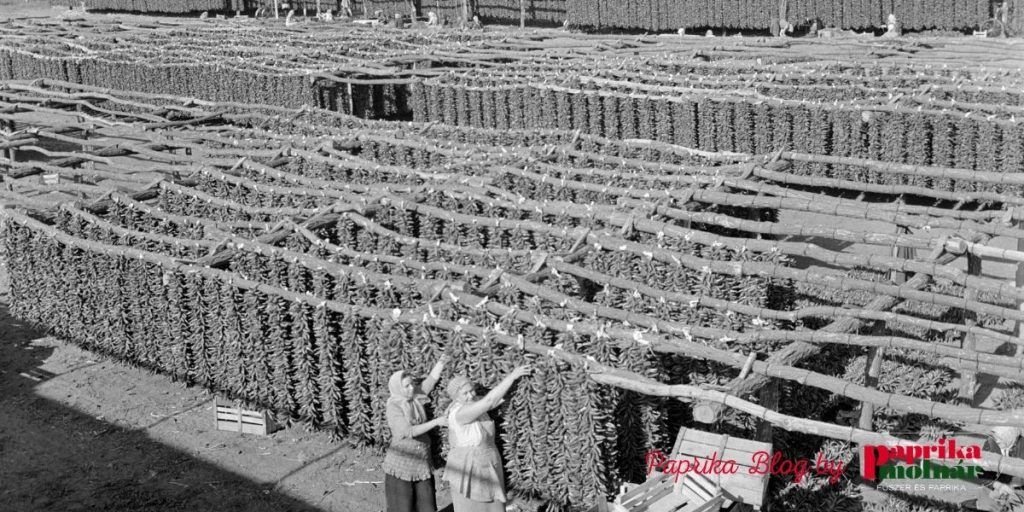 Because of its climate, Hungary is a major producer of paprika with production centered around the southern cities of Szeged and Kalocsa. Strings of drying paprika peppers can still be found hanging from fences in the countryside.
In Spain, the spice is called pimenton and comes in three varieties: mild, mildly spicy, and hot. It flavors chorizo, paella, and gazpacho. A characteristic of the Spanish paprika is that it has a smoky flavor due to smoking the peppers over an oak fire during the drying process. Indian cuisine also uses the spice to give a deep red color to dishes like tandoori chicken. In the United States, the spice is often sprinkled over deviled eggs, potato salad, and hummus. This practice only gives a colorful presentation of these dishes and does not impart any of the flavor of paprika. Clearly, there is much more to learn about using this spice to enhance our cooking.
 Want to change your hair color? Think of using paprika. An interesting use of paprika is its use in hair color. “By itself, it imbues hair with a reddish hue, and combined with henna unleashes the fiery redhead” (Grant, 2022). Of course, the color of the resulting hair is called “paprika.”
Find out more about paprika on HSA’s Herb of the Month webpage.