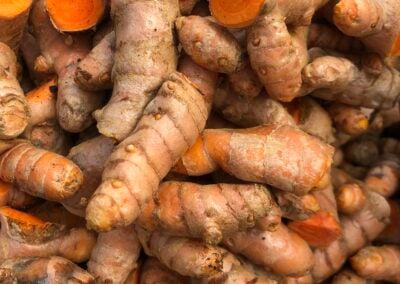
The pungent, aromatic rhizome of the galangals, greater galangal (Alpina galangal) and lesser galangal (Alpina officinarum) are used in southeast Asian cuisines. They are tro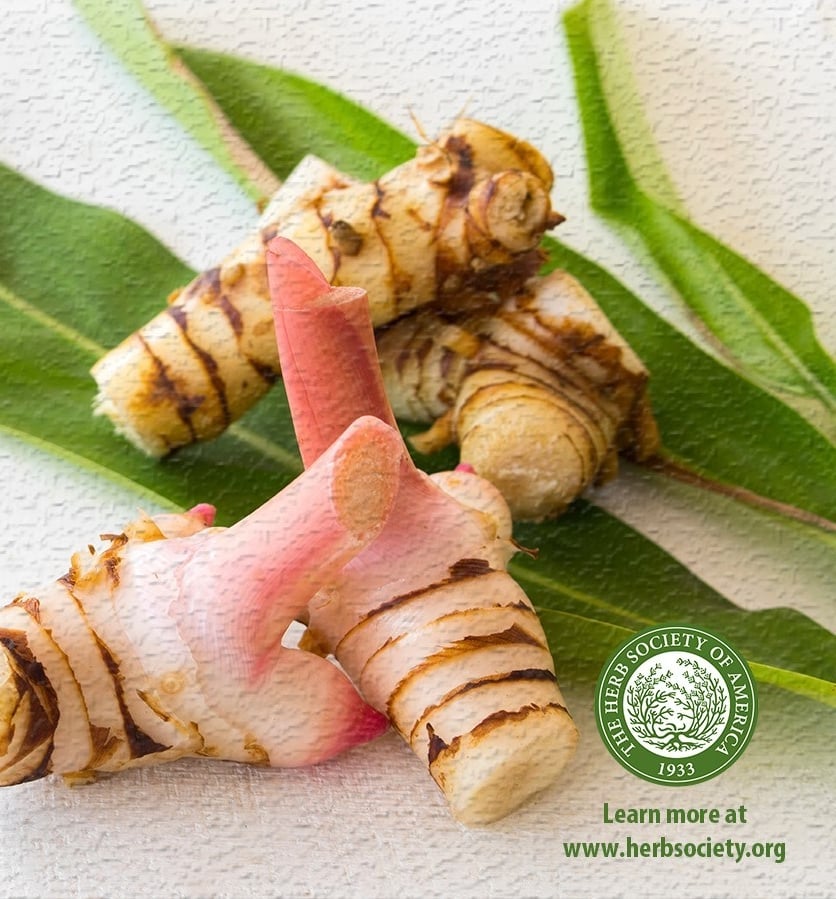 pical herbaceous plants in the ginger family with strappy leaves and white flowers resembling orchids. The rhizomes are red/white – orange/brown and are ringed with the scars of former leaves. The greater galangal rhizome is larger than that of the lesser galangal. In tropical climates, the rhizomes are harvested after three to four months of growth. While the greater galangal is used for cooking, it is the rhizome of the lesser galangal that has been used for its medicinal properties since the Middle Ages.
It is thought that the Arabic people brought the spice to Europe in the ninth century. It is said that they used the spice to “fire up” their horses. The notable Benedictine abbess Hildegard of Bingen called galangal the “spice of life” and used it as a major healing spice in the early 12th century. In Chinese herbal medicine, galangal is used to treat abdominal pain. In India and southwestern Asia, it is also used for stomach pain and as an expectorant. In western herbalism, it has been used for indigestion, vomiting, and stomach pain and as a treatment for sea sickness.
Galangal’s spicy warm flavor is used in the Indonesian fried rice dish nasi goreng. It is sometimes used in the Chinese five-spice blend. A popular Polish vodka, Żołądkowa Gorzka Vodka, is flavored with galangal. (Translated, it means bitter vodka for the stomach.) It is often used in seafood dishes with chili, garlic, and lemon and can be sliced and used in soups and stews. The slices should be removed before serving. Fresh and dried galangal can be found in Asian or specialty grocery stores. It is also available as a powder.
For more information about the galangals and interesting recipes using it, go to The Herb Society of America’s Herb of the Month website. You will also find more than six years of Herbs of the Month on this webpage, making it an ideal place to start your herbal research.