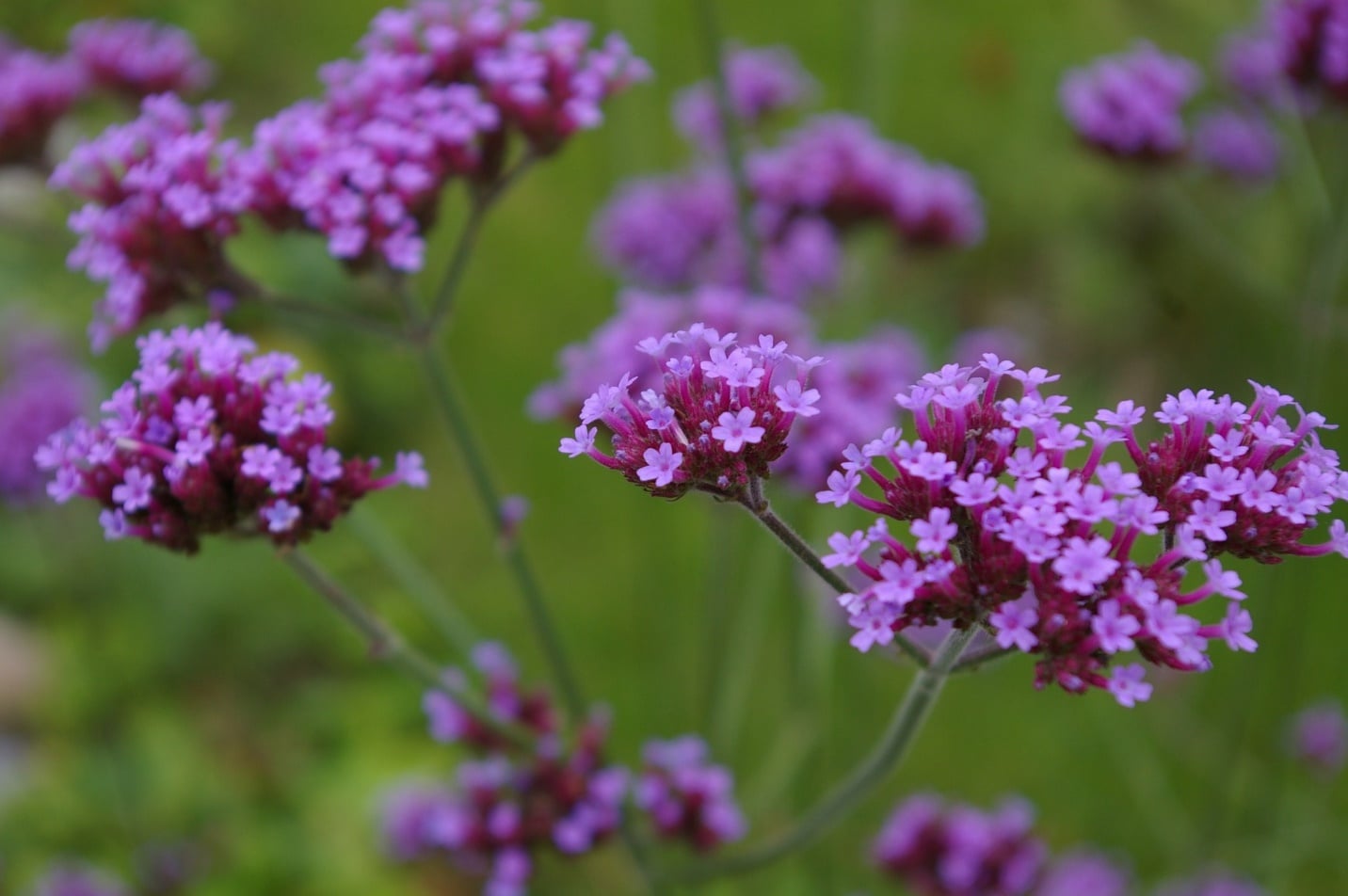
 Verbena, or vervain, is a plant with a very large family of about 250 species, and a long, rich history in its interactions with humans. It has been our companion in pagan sacrifice, in battle, in feasting, in comforting the wounded and in fostering visions.
In fact, vervain is usually highly venerated. In pre-Christian times it was called “Isis’ Tears” and “Hera’s Tears.” In Christian legend it was used to staunch the wound in Christ’s side at the crucifixion. The name, “verbena,” comes from the Latin for a plant sacred to the gods, and it was one of the plants customarily burnt in the worship of Jove.
In the Middle Ages, magical attributes of vervain –generally the repelling of evil — were legendary. Carrying leaves of vervain into battle could protect the wearer from his enemies.
Then again, vervain just wants to have fun: four leaves and four roots of vervain, soaked in wine, produced a potion that, when sprinkled around a feasting place, would ensure all would be merry.
In the Shawnee tradition, vervain is one of the herbs used to foster beneficial visions. The Iroquois tradition has a more pragmatic use: Giving the mashed leaves steeped in cold water to an obnoxious son-in-law or daughter-in-law to induce them to leave.
Historic herbalist Hildegard of Bingen advised that water in which vervain has been stewed may be used on linen cloths to draw out infection, and even worms, from wounds. There have been claims, too, that vervain might be useful in treatments to remove lice.
North American native verbena, often called blue or purple verbena, is hardy in zones 3 to 8, and common in the eastern United States. Glandularia canadensis, or “rose verbena,” like most of the American native varieties, is happy in damp places.
 In contrast European verbena varieties insist on good drainage. Authorities differ on whether European verbena is, in fact, a verbena. But it is a splendid perennial, good in zones 5 to 8, mingling happily with silvery companions, and requiring very little attention.
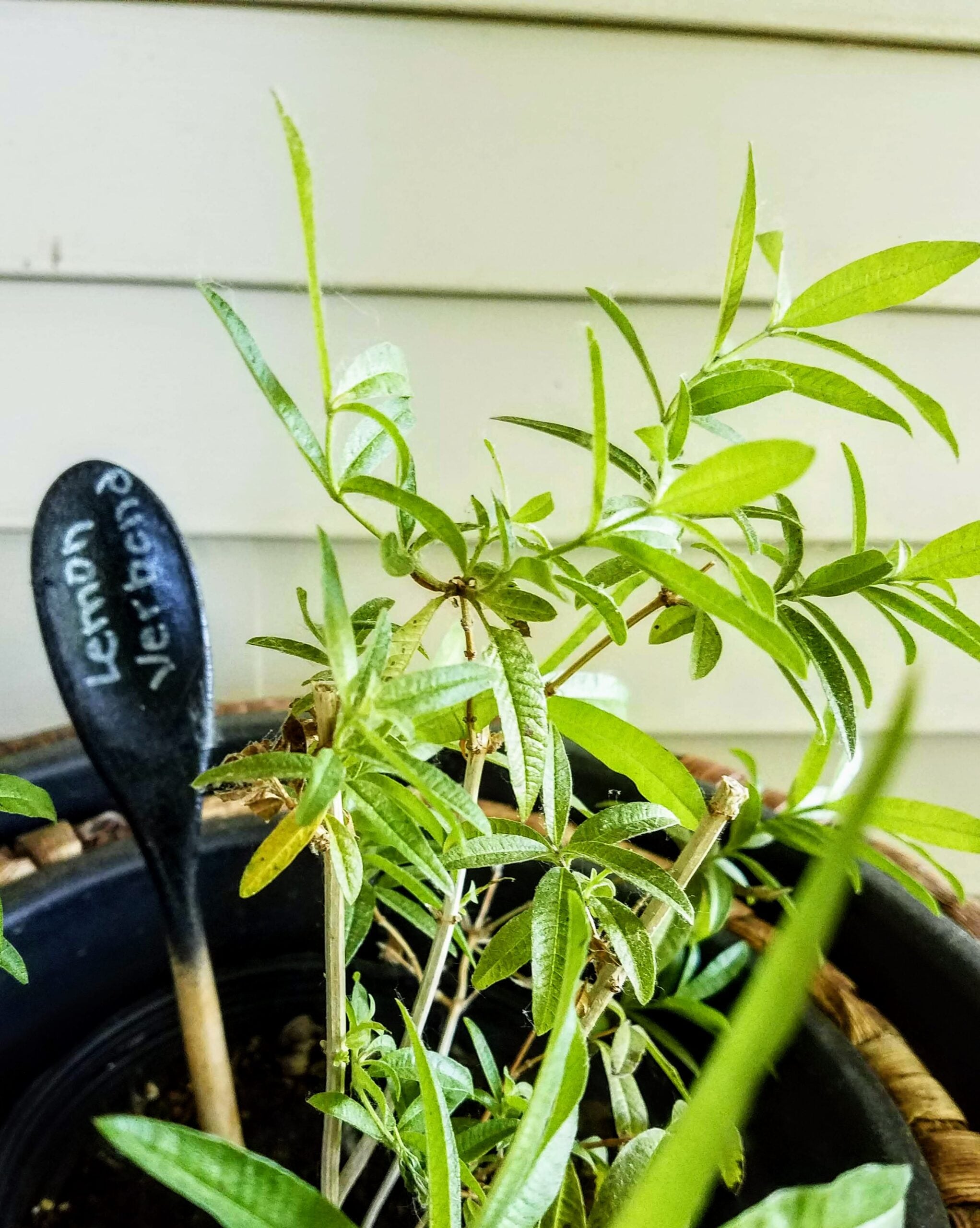
Yet another variety, lemon verbena is grown widely today for its use in teas or for its essential oils. It is believed to have a calming effect on the digestion, and to be useful in fostering weight loss, perhaps because it may act as a diuretic. Proving these claims in controlled trials has been elusive, but lemon verbena is certainly refreshing and its scent is uplifting.