
 I have never really been a fan of peppermint. Yes, I love those Andy’s brand brown-and-green chocolate layered mints, but let’s be honest they are more about the chocolate. It used to sadden me to find a giant peppermint candy cane in my Christmas stocking. It can be so tricky to find treats, or even toothpaste, with spearmint, my preferred mint flavor.
It really shouldn’t be so hard to find the right mint products at retail. Mentha is a diverse genus with more than 600 recognized plants. There are many identified species such as spearmint (M. spicata), peppermint ( M. piperita), orange mint (M. piperita var. citrata) and the apple mints (M. suaveolens).
Because mints readily hybridize among species, unlimited variations on the theme exist. And, that’s why it’s recommended to get new plants from divisions not seeds. That way you can identify what you are getting. Even at retail, new variations of mint seem to abound, I just picked up one labeled ‘chocolate mint,’ which actually tastes like one of those Andy’s candy mints.
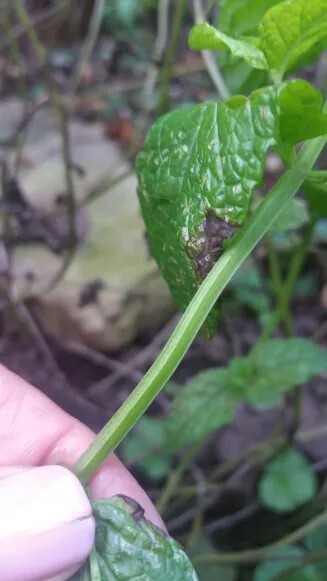
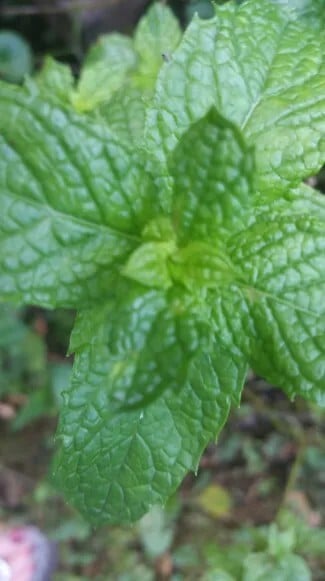
Mints are identified by their erect, square stems, opposite, and oblong serrate leaves. Mint leaf colors vary with species and can range from dark green to nearly yellow. Leaves can be smooth or downy. Mint’s assertively growing stolons (underground horizontal stem structures) help it survive and spread in moist soil. Assertively growing is code for “it takes over the garden.” It can be contained by a 10-inch deep, underground barrier that rises above ground a bit.
Mint has a multitude of uses, in both the garden and home. Mints tend to repel ants, white cabbage moths, rodents and other pests; and so they make good planting companions for cabbage, broccoli and tomatoes.
In addition to culinary uses — teas, juices, fruit, vegetable, and even meat dishes –mint has health and beauty uses. It can be used in a face freshener to combat acne, and it is used in muscle rubs, foot powder, toothpaste and other hygiene products. Mint, peppermint in particular, is also helpful in easing headaches, even if you just smell it.
The “cooling” sensation we feel and taste with mint is a nervous system illusion caused by menthol, one of mint’s essential oils. Physical temperature doesn’t change on the skin or in the mouth but menthol triggers the same receptors as cold does. And, when those receptors are triggered our bodies don’t know the difference.
Different mints contain different menthols and that changes their uses. For example, my least favorite — peppermint — has a high menthol content which makes it a favorite for teas and sweets as well as home and beauty uses. However, a fresh peppermint leaf may convey a strong, bitter, menthol flavor in cooking, so other mints may be preferred. Spearmint, meanwhile, has a much lower amount of menthol and also has carvone which we taste as sweet and ‘spearminty.’ Spearmint is most commonly used in cooking, as is apple mint which has a mixed spearmint/peppermint taste.
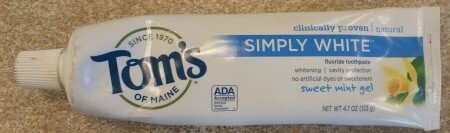 I find it frustrating that mint-flavored toothpastes never seem to identify a species. Labels read ‘cool mint,’ ‘fresh mint,’ and ‘mint blast.’ That leaves me to guess if the product will be more peppermint or spearmint.
Because of my interest in the flavors, I have a variety of mints growing in my garden. I add a few leaves of spearmint or apple mint to my daily brew of iced tea in the summer. I have been steeping chocolate mint in milk to add extra yum to my chocolate pudding. But I do not grow peppermint.