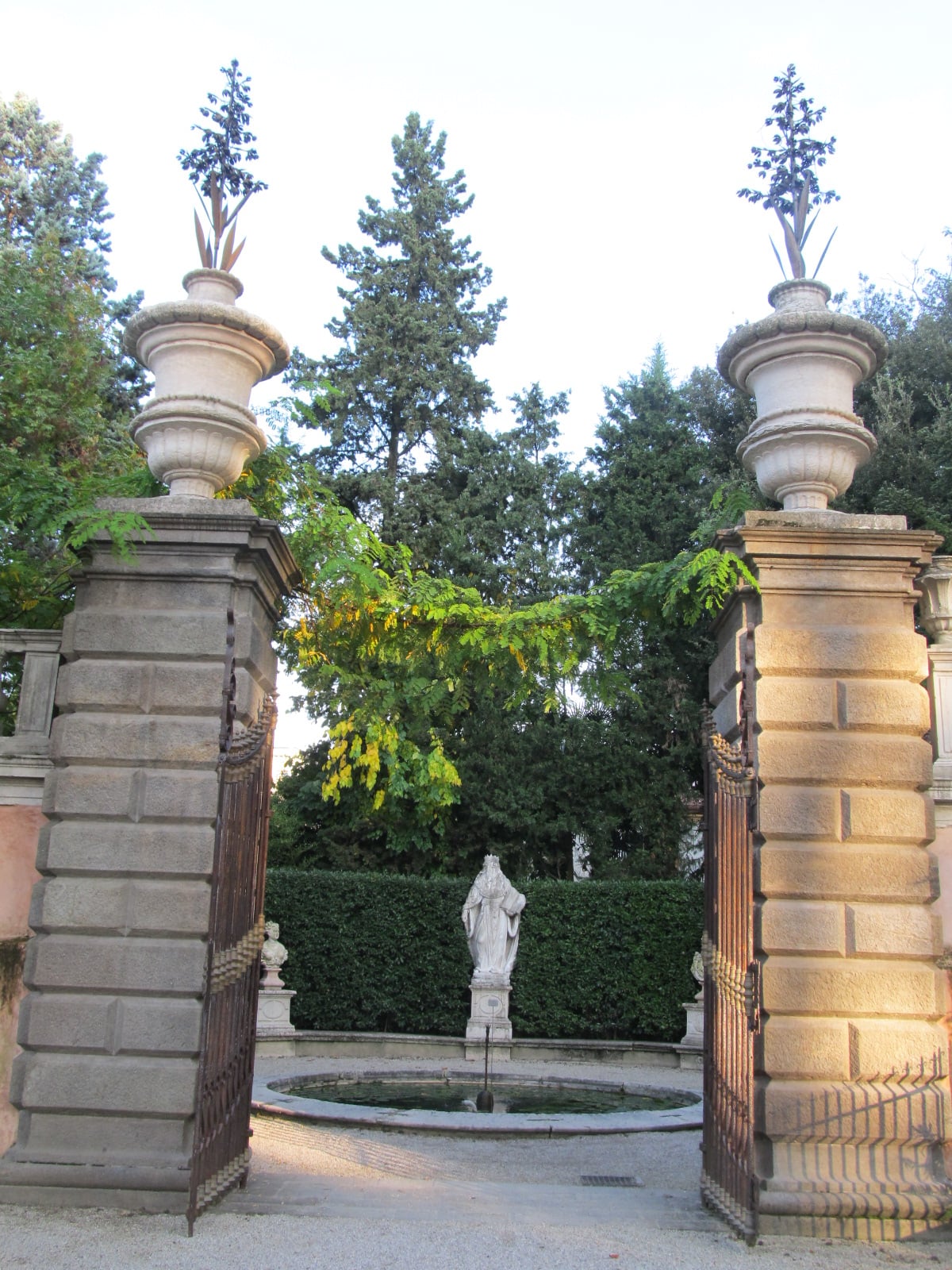
 A visit to the botanic garden in Padua is a step back in time. The garden was established in 1545 when a professor was hired to design a garden so students at the University of Padua could research and recognize medicinal plants.
Inside the ancient city walls, the garden was located near a canal for a permanent water supply. It was laid out in a circular design with walkways throughout and square beds in the middle. The design is the same today as it was in 1545.
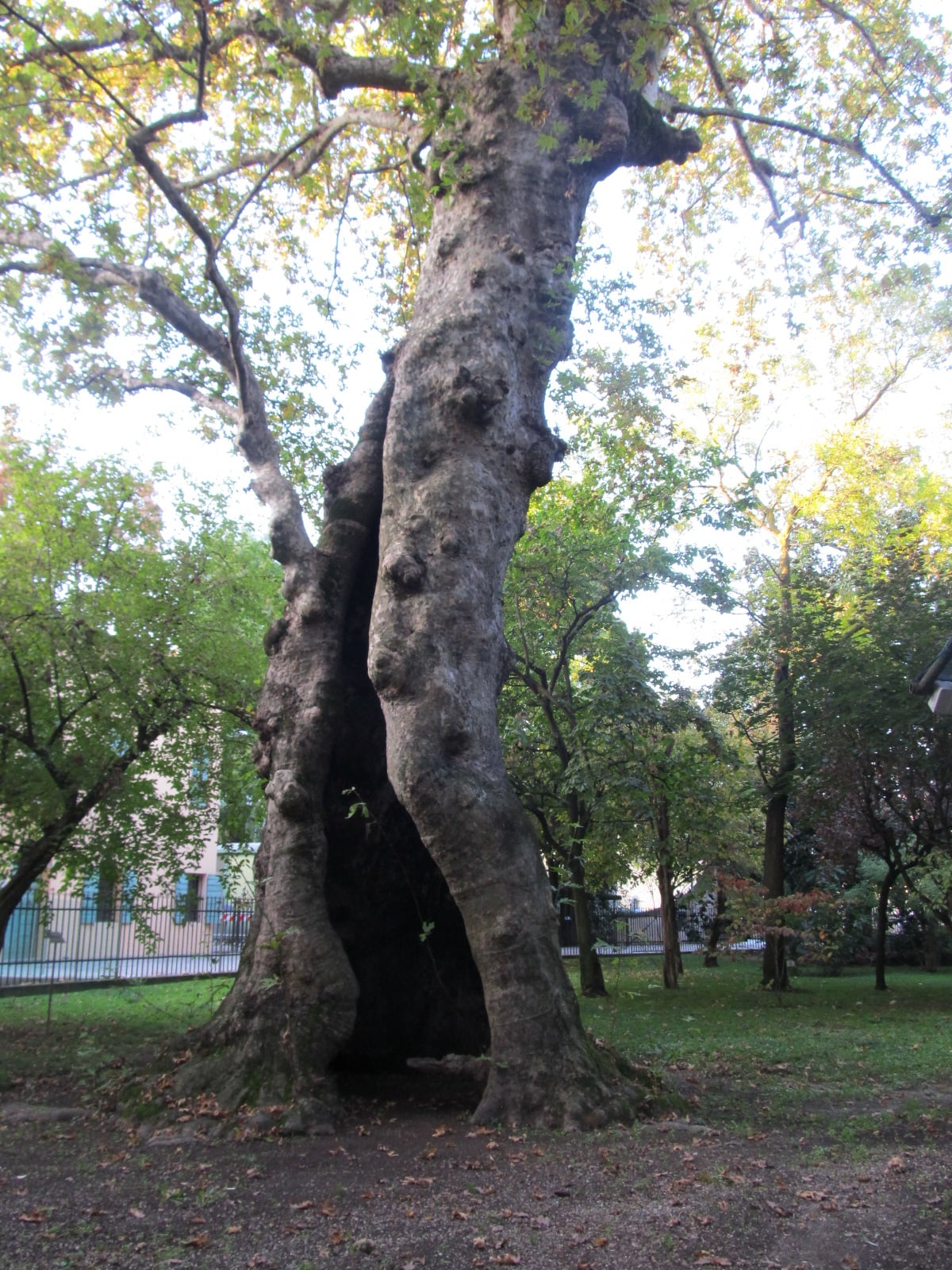
The original design included a substantial number of trees, medicinal plants, and hardscaping. A few trees are known as “the Grand Old Men.” The oldest survivor is a specimen of St. Peters Palm (Chamaerops humilis) also known as Goethe’s Palm, planted in 1585. A focal point and a must see is the Oriental Plane tree (Platanus orientalis) planted in 1680. It’s easily identified by its huge hollow trunk, a result of a lightning strike sometime during the last 200 years. Even after all the damage, it continues to grow and thrive.
Plants in the garden are grouped by characteristics, for instance, medicinal plants, poisonous plants, carnivorous plants, and rare exotics. Many plants introduced into Italy and Europe such as the potato, sesame, lilac, and sunflowers were first planted in this garden.
 In 1835 two important institutions were added, the Herbarium and the Library. The Herbarium collection is composed of about 500,000 specimens in two sections; the plants from North-East Italy, and those from other Italian regions and foreign countries. One of the prized possessions in the library is a small book printed in 1591, L’Horto dei semplici di Padova. It contains a map of the original garden, it’s subdivisions as well as a list of the plants cultivated at that time.
A welcome center and bookshop were built to funnel the thousands of visitors in and out of the garden. A new set of buildings erected in 2014 consisting of many greenhouses is called the Garden of Biodiversity. It demonstrates the world climate zones and sustainability. It is operated strictly on solar and water power.
The garden’s brochure has the best statement to summarize the garden. “It is the origin of all the botanical gardens in the world, a cradle of science and scientific exchange, serving as the basis for the understanding of the relationship between nature and culture. It largely contributed to the progress of a number of modern scientific fields, the likes of which include, of course, botanicals, as well as medicine, chemistry, ecology, and pharmaceuticals.”