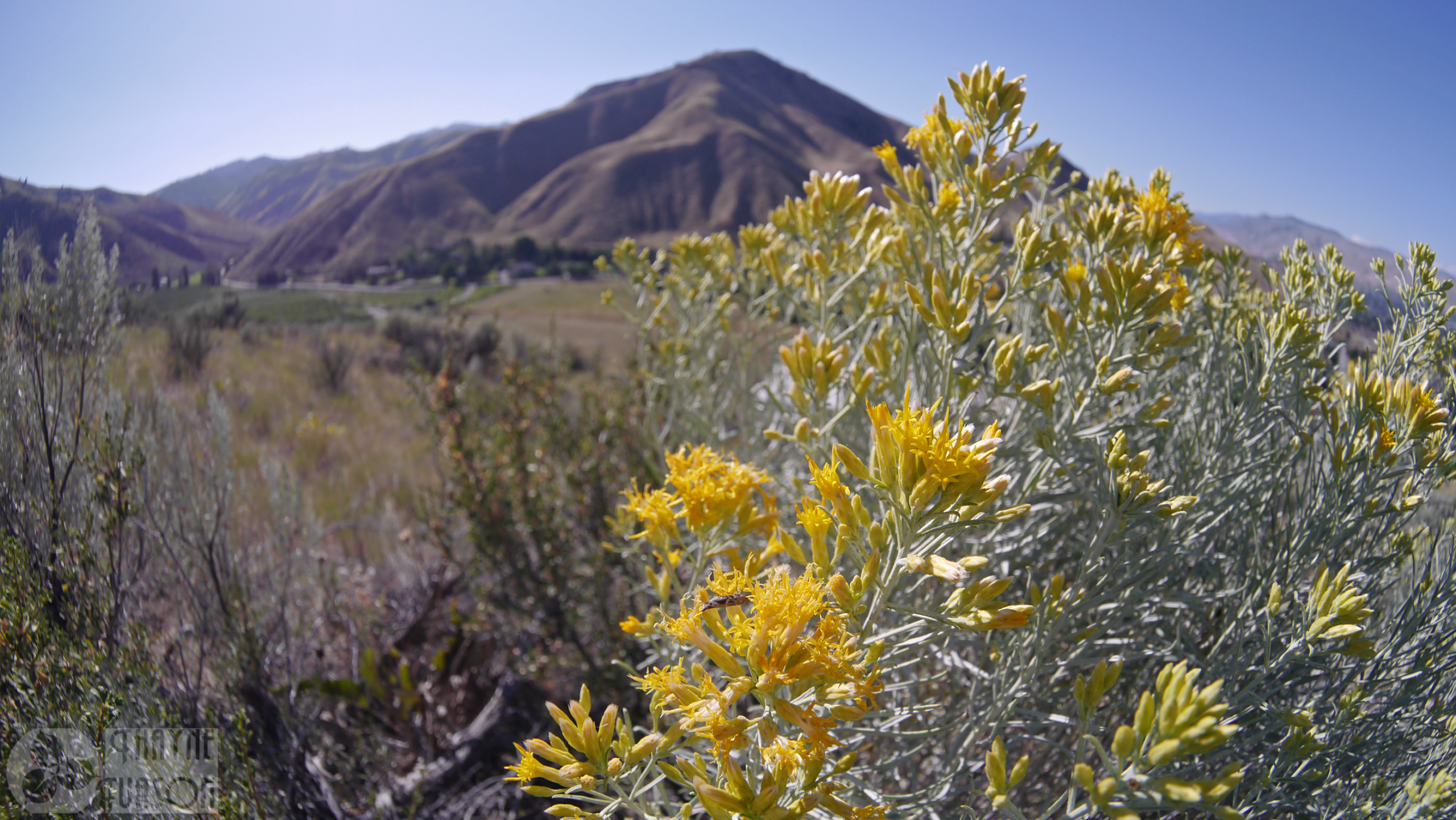
 It seems that as I continue my career in horticulture, there are plants that I come back to over time. With my recent move to Wyoming, I have come back to a lot of plants that are familiar from my childhood in western South Dakota. One of those is rubber rabbitbrush, Ericameria nauseosa. When I first learned it, it was Chrysothamnus nauseosus, but taxonomists assigned it to a different genus. I first knew it from visits to Badlands National Park where it grew as a low, billowy shrub among the desolation of nearly white decomposed Pierre Shale.
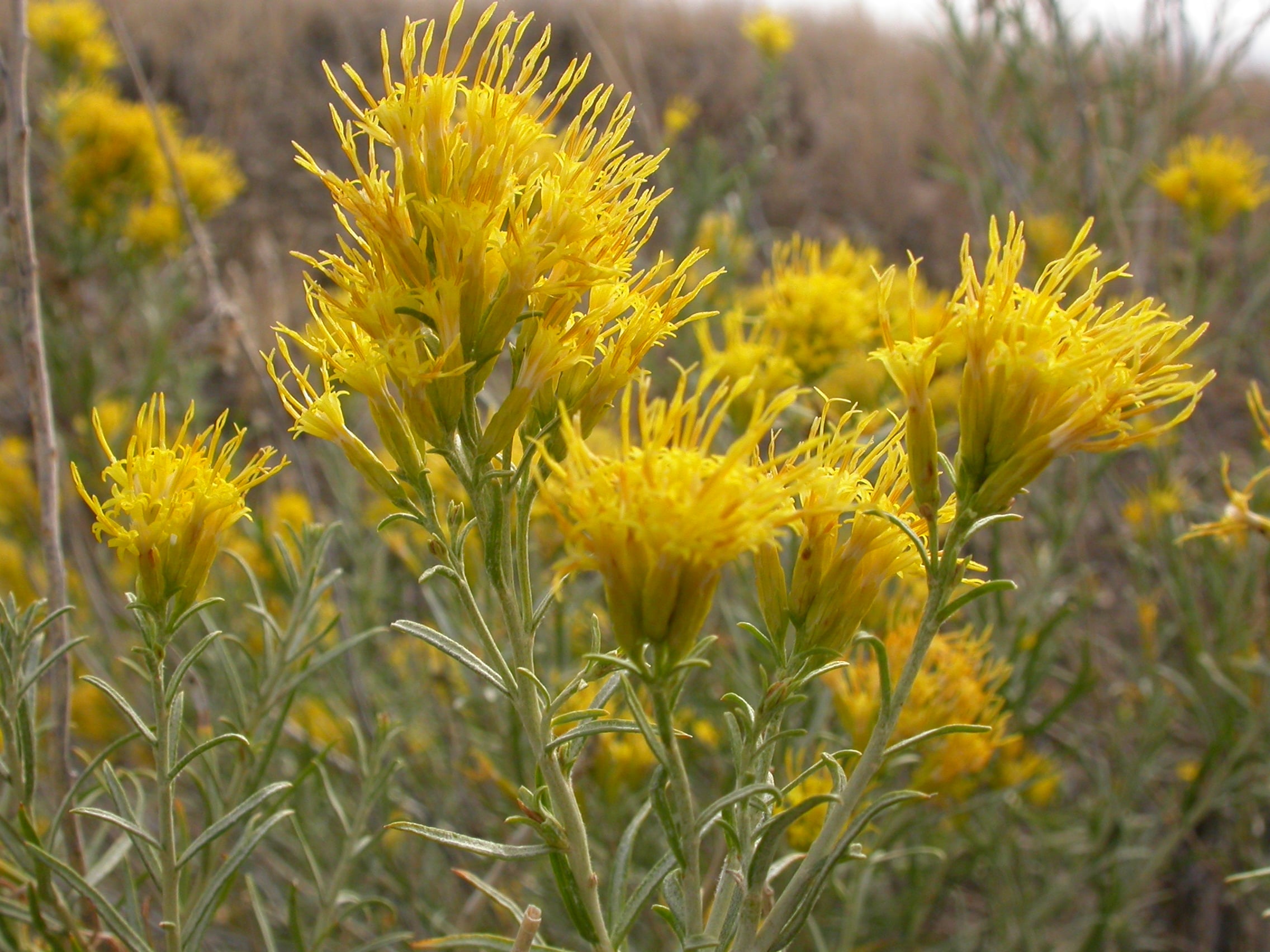 Fast forward to last fall when I arrived in Cheyenne to look for a new home. It had been a dry year, as they often are here, and anything that was not watered frequently was dormant and brown. Rubber rabbitbrush, however, had burst into bloom with its golden flowers covering each defiantly green shrub. I passed by one home with much of its front yard devoted to the shrub, and upon close inspection, I discovered that the stems were an attractive shade of green. The ones I knew from South Dakota had gray stems. It turns out there are two subspecies—Ericameria nauseosa ssp. consimilis has green stems and is more western in its distribution, while Ericameria nauseosa ssp. nauseosa has gray stems and is more eastern.
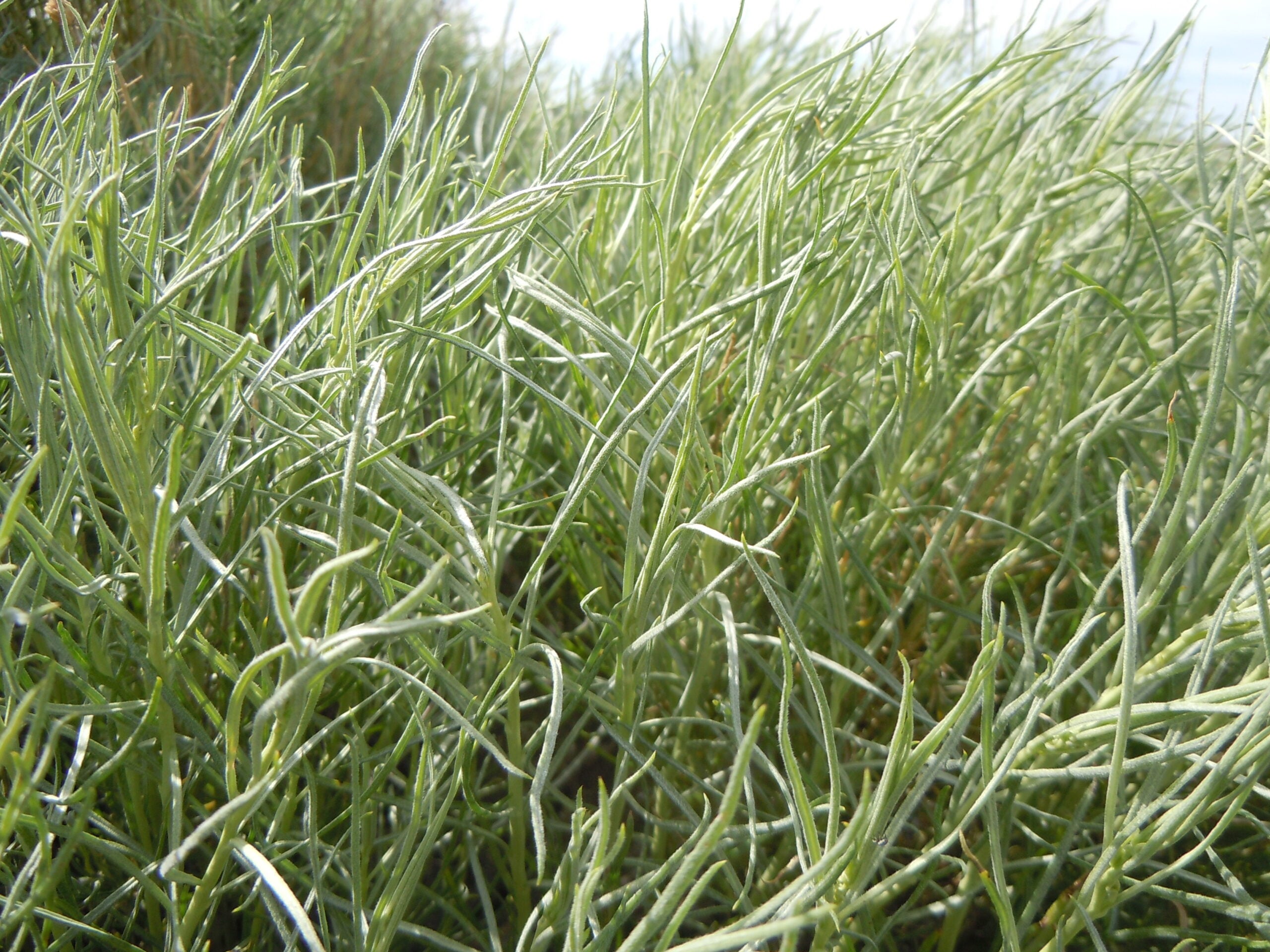 The species name refers to the smell of the foliage when crushed. It is described as pineapple-like by some and as foul and rubbery by others. While the scent may depend on the sniffer, the fact that the whole plant contains rubber in high amounts is beyond doubt. As early as World War II, it was studied as a potential domestic source of rubber when much of the world’s rubber production fell into Japanese hands. It is a small source of industrial rubber today. Perhaps one of the factors limiting its use as a source of rubber is the long time of six years that it takes for the plant to reach a stage of maximum rubber content. Curiously, the rubber found in rubber rabbitbrush is not in the form of latex; it is rather in the form of solids in the inner bark and outer ring of xylem just inside the bark. Ericameria nauseosa ssp. consimilis may have up to 4% rubber by dry weight, double the amount for Ericameria nauseosa ssp. nauseosa. The rubber from rubber rabbitbrush is also free of the proteins that cause problems for those with allergies.
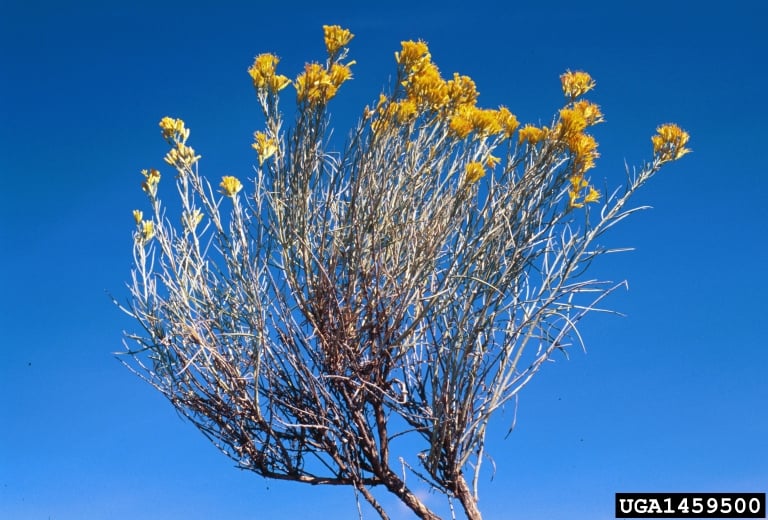 I was interested to learn why rubber rabbitbrush is only of minor commercial importance. It turns out that guayule, Parthenium argentatum, was designated as “the official crop for domestic production of rubber” (Bowers, 1990) even though it is not as cold hardy as rubber rabbitbrush. Even plants cannot escape politics. Perhaps it is the six years needed to reach peak rubber production. It may also be the quality of the rubber, which is judged by the molecular weight of each carbon chain; longer chains and higher molecular weight are desired. Rubber rabbitbrush does not have the highest molecular weight (Ma, 2019), and that may be why it is not widely grown or harvested for commercial rubber.
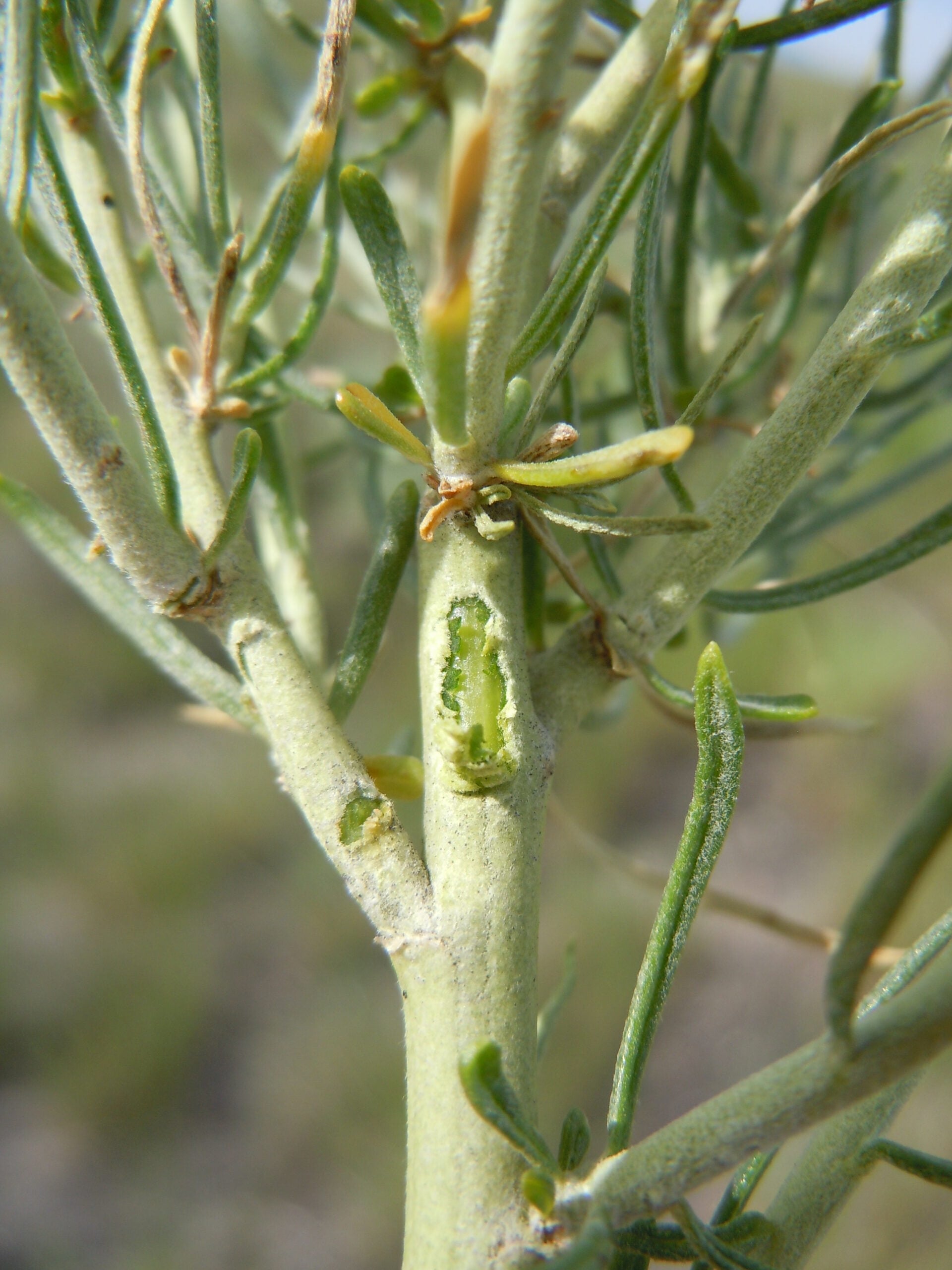 The leaves and trichomes also contain about 35 percent resin by dry weight. The resin contains aromatic (in the hydrocarbon ring sense, not in the olfactory sense) terpenoid compounds that could be used in manufacturing plastics. Some of the terpenoids may be used as nematicides and insecticides (Finley and Neiland, 2013).
Like nearly every native plant, rubber rabbitbrush is used by several tribes for various purposes. The Navajo use the bright yellow flowers to dye clothing, leather, and crafts. The Hopi also use it as a dye and weave wedding belts with the branches. Dried leaves and flowers are boiled in water to create a soak used to relieve pain and swelling caused by arthritis. Ceremonially, it may be used to treat someone who has been attacked or possessed by an unwanted spirit. Shoshone tradition uses it this way to treat nightmares, but it is rarely mentioned because the treatment can backfire (Clifford, 2019). Ground up stems can be used as chewing gum (Kershaw, 2000). Cottony white insect galls that form on the branches are strung as beads to make a necklace that is hung around babies’ necks to stop their drooling (Curtin, 1997). The galls can also be used to treat toothache and stomach problems (Dunmire and Tierney, 1995). Even if it had no herbal uses, rubber rabbitbrush is a very attractive native plant that deserves to be in High Plains gardens, and if you repeat its name rapidly, you can greatly improve your oratory skills!
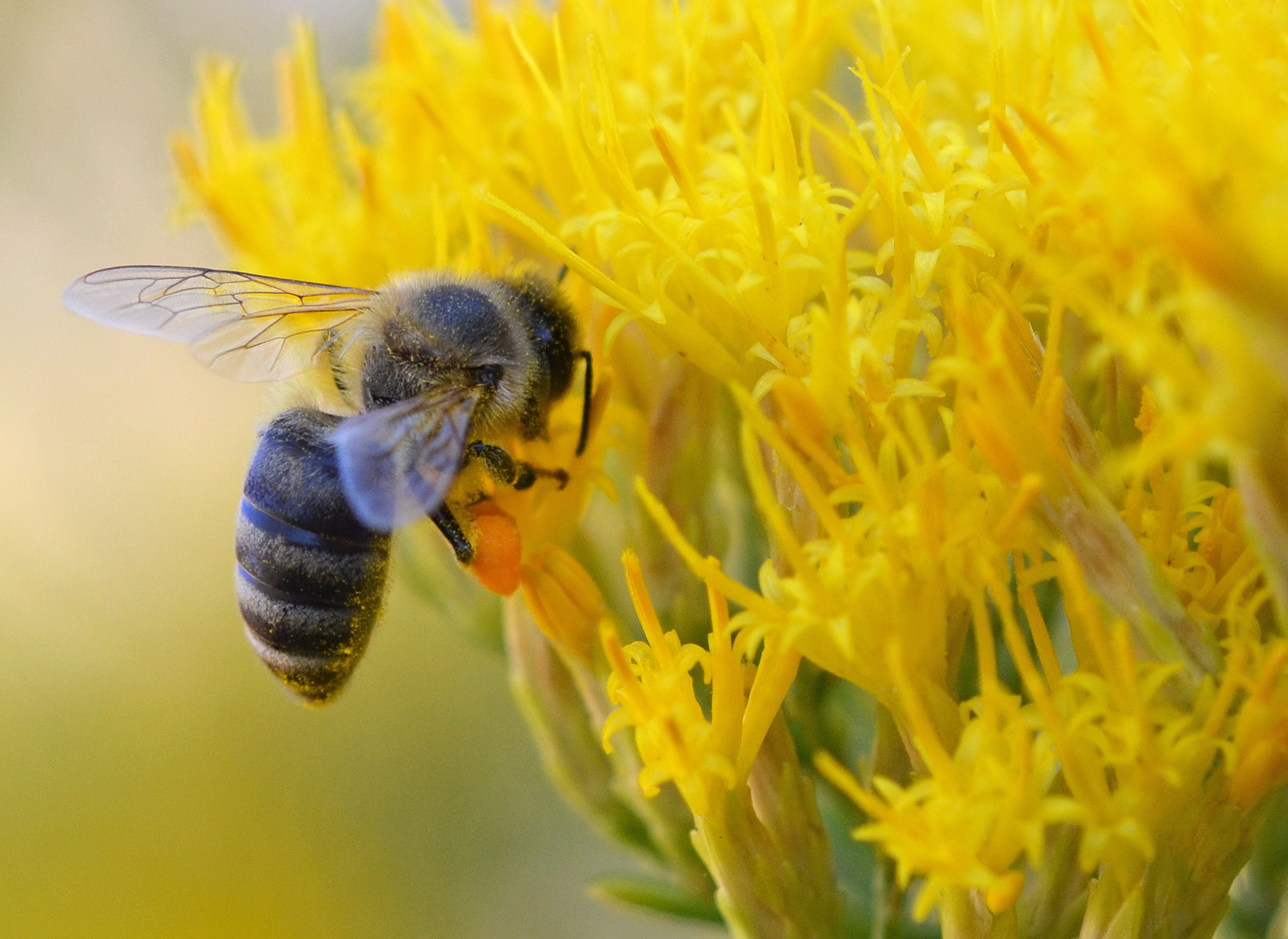
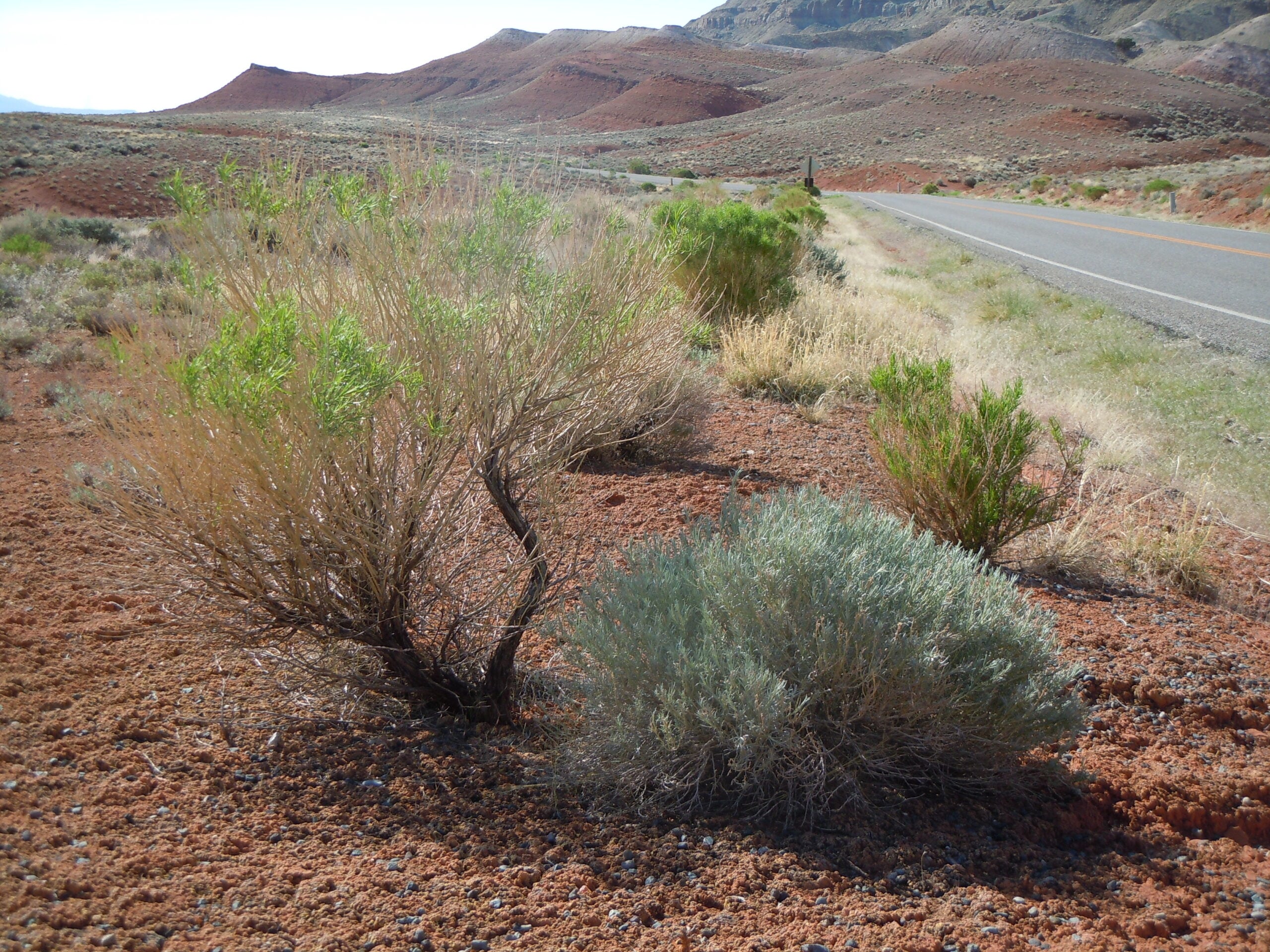 There is a wide median just outside the Cheyenne Botanic Gardens in the middle of Carey Avenue. Upon arriving in my position as Director, I was told that the City of Cheyenne had a thought that this expanse of turf should become a water-wise landscape with native plants. Of course, rubber rabbitbrush is one of the plants that comes to mind. Its deep root system and ability to withstand high pH and salinity make it one of the few plants that might succeed in this tough spot. The soft, billowy texture created by the fine branching habit and tiny leaves in summer, the stunning and bright yellow flowers that cover the shrub in late summer and early fall, the fluffy seed heads that follow and persist well into winter, and the stunning green stems make it lovely in every season. It is heavily used as a pollen and nectar source by native bee species, because it produces so many flowers when very few plants are in bloom.
 Rubber rabbitbrush may grow as tall as six feet. Plant Select® has selected a compact cultivar called Baby Blue that tops out at 28 inches if the species is too tall for you. Because it can recover quickly from hard pruning and blooms on new growth, you can also cut it back nearly to the ground in late winter or early spring to keep it in bounds.