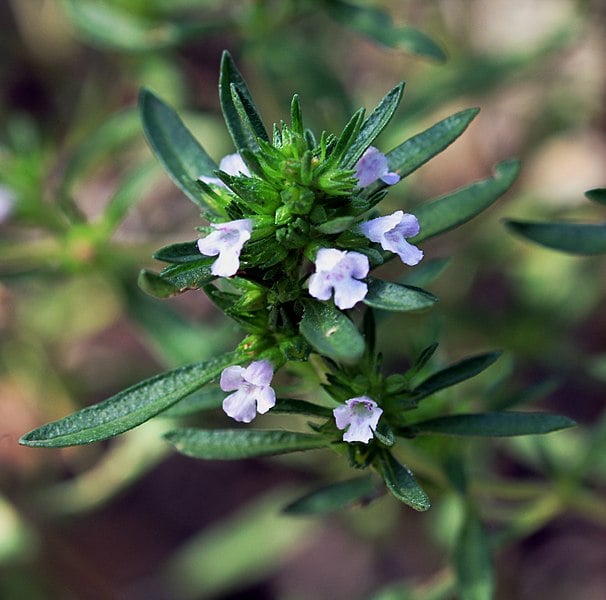
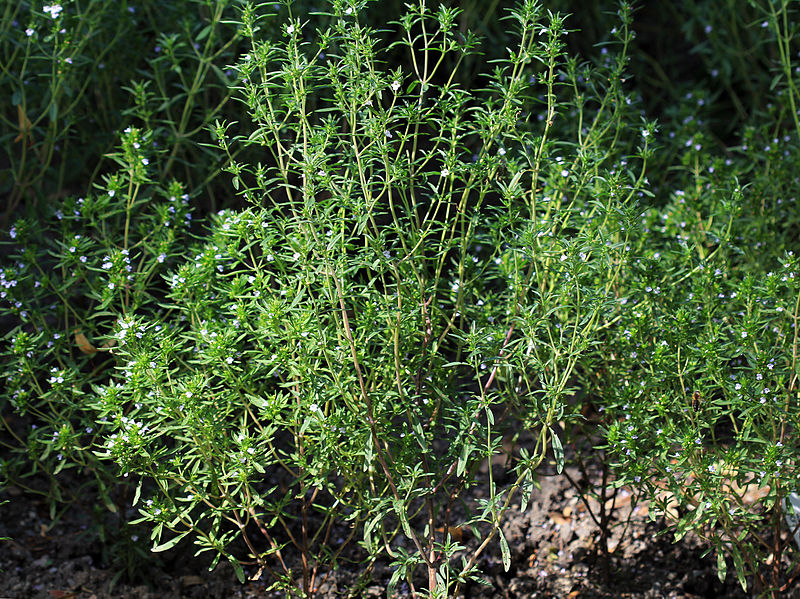
 It is summer and a perfect time to learn about summer savory, Satureja hortensis. If you have this spicy herb growing in your garden, plan to start using it this summer. It is an easy-to-grow, low-growing annual with white to pale pink flowers and narrow leaves. When in full bloom, the plant looks to be “covered with snow” (Clarkson, 1990). Summer savory requires full sun and good drainage, and can easily be started from seed. It may reseed if given enough sun and water. The leaves are very fragrant and have a warm, peppery taste, which is stronger before the plant flowers. Trim summer savory throughout the summer to encourage new growth. The leaves dry easily and can be stored for later use. Winter savory, Satureja montana, is its stronger, perennial cousin.
Like mint, sage, rosemary, thyme, and oregano, summer savory is in the Lamiaceae family. Dioscorides, a first century Greek physician, called summer savory thymbra because it resembled thyme in its growth habit and taste.
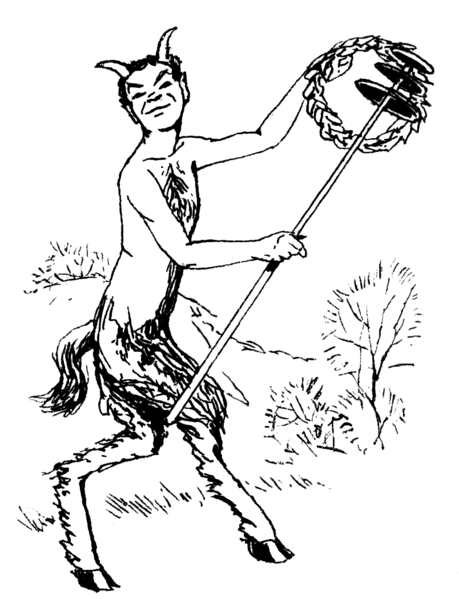 Savory is native to southern Europe and northern Africa. It was a very popular herb for the Romans until black pepper was introduced. The Roman writer Pliny (23 CE) is credited with giving the plant its Latin name, Satureja, a word that comes from the word for “satyr,” the mythological half man, half beast that loved wine, women, and song. Savory was a symbol of love and romance for the Romans. The Romans and Egyptians considered summer savory to be an aphrodisiac. Apparently, the ancients made a connection between the use of summer savory and the mythology surrounding it.
Savory is a good addition to a pollinator garden, as bees, flies, bats, butterflies, and moths love its flowers. The Roman poet Virgil (70 BCE) recommended growing savory near bee hives because it produced a pleasant tasting honey. It is considered a companion plant for onions because it encourages their growth. It also deters beetles that feast on beans.
Summer savory has mostly been used as a culinary herb to give a robust flavor to foods. The Romans are credited with bringing savory to England, where it was called savory because its pungent taste created soups and stews that were called “savories.” It still is a great addition to soups and stews. In Germany, it is called the bean herb, bohnenkraut, because it flavors bean recipes. It also reduces flatulence in those who eat the beans. Summer savory is milder than winter savory, yet tasty enough to add flavor to salads, green beans, and peas. It gives flavor when added to vinegars and salad dressings, and is a great addition to herbed cheese spreads. Summer savory is also an essential ingredient in herbes de Provence. Below is an easy recipe for this classic French seasoning from the Complete Illustrated Book of Herbs (2013).
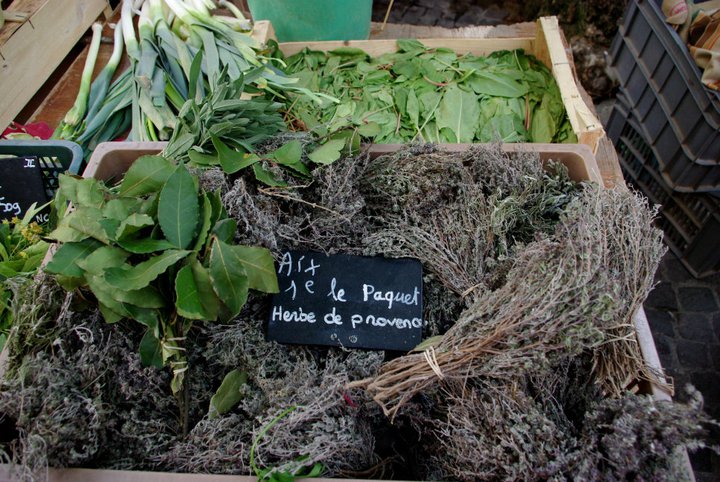 Herbes de Provence
4 tbsp. dried rosemary
3 tbsp. dried sweet marjoram
2 tbsp. dried thyme
3 tbsp. dried savory
2 tbsp. dried lavender
1 tsp. dried sage
Combine the herbs and place in an airtight container. Store in a cool, dry place up to four months. Use to season vegetables, chicken, and red meat.
Combine the herbs and place in an airtight container. Store in a cool, dry place up to four months. Use to season vegetables, chicken, and red meat.
In addition to using it as flavoring, summer savory can be added to water to reduce odors while cooking strong-smelling vegetables like broccoli and cabbage. Some people on low-salt diets find that it is satisfying as a salt substitute. In Europe, diabetic patients use it to reduce thirst (Kowalchik & Hylton, 1998). Some suggest adding it to bath water for a fragrant, spicy soak.
Nicholas Culpepper, a 17th century apothecary, wrote that, “The tops when in flower, gathered and dried, are good in disorders of the head and nerves, and against stop-pages [sic] in the viscera, being of a warm aromatic nature.” Early settlers brought summer savory to the New World and used it to treat indigestion. Many early American cookbooks included summer savory in recipes.
 Historically, savory has been used as a “tonic, vermifuge, appetite stimulant, and a treatment for diarrhea. A tea has been used as an expectorant and as a cough remedy” (Kowalchik & Hylton, 1998). Ancient gardeners and today’s gardeners alike have used the crushed leaves to relieve the sting of insect bites. Recent research indicates that because of the antioxidant, antibacterial, and antifungal activity of S. hortensis, it has great potential for use in the food processing industry (Hassanzadeh et al., 2016).
Summer savory is another one of those herbs that can add a lot of flavor to everyday cooking. If you have it growing in your garden, remember to use it. Summer savory is The Herb Society of America’s Herb of the Month for July. For more information about all of the savory species, please explore The Herb Society’s Essential Guide to Savory.