 There are numerous lemon-flavored or lemon-scented plants in the herb world, but in my opinion, none rival the clean lemon fragrance and taste of lemon verbena (Aloysia citrodora). I was first introduced to this plant when I was an intern in the National Herb Garden (NHG), and I’ve been partial to it ever since. I believe its scent and flavor far surpass lemon balm’s (Melissa officinalis), but I’m not a chef, so take that for what it’s worth. It’s not a particularly difficult plant to grow; I certainly put it through its paces in my own garden, and it frequently comes out (mostly) unscathed. It does just as well in decorative containers as it does in the garden, so if you’ve yet to develop a fondness for lemony herbs, then please, let me commend this one to you!
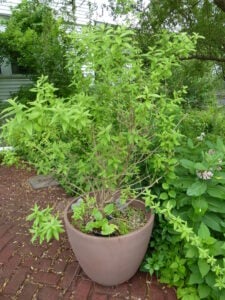
Unlike lemon balm, which spreads readily by seed, you may not even see lemon verbena’s purple to white flower sprays unless you have a long enough growing season. I have only seen them a handful of times throughout my gardening career in Zone 7. Hardy to USDA Zone 8 and higher, most gardeners treat lemon verbena as a woody annual that gets about two – four feet tall and wide during the warmer months. According to the Missouri Botanical Garden Plant Finder web site, though, Aloysia citrodora can grow to a massive 10 – 15 feet tall in its native habitat. The American Botanical Council’s journal, HerbalGram, states it can grow even higher, to 23 feet (Williams and Jenks, 2025)! My mind can’t even fathom that.
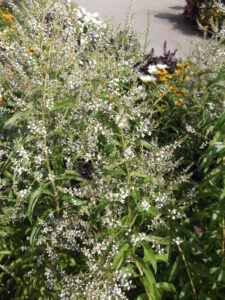 Native to tropical regions in South America, lemon verbena is considered an evergreen perennial there. But don’t let that stop you from pushing the plant’s boundaries here. I gently dig up the plants from my garden each fall, pot them up, and let them “rest” by my garage window for the winter, where, it seems, they barely cling to life. I water them infrequently to avoid root rot and always offer words of encouragement that they will surely make it through the cold if they would just pull themselves up by their boot straps. (Sometimes, I can hear faint grunting through the mudroom wall. Apparently, those boots are hard to get on.) Occasionally, I nick the bark with my fingernail somewhere along a stem to make sure it’s still green underneath (a trick you can do on most woody plants to check for signs of life—if it’s green, that’s a good sign; brown, a cause for concern). More often than not, my patience—and plant life coaching—is rewarded with newly emerging leaves once the temperatures begin to climb. I slowly reintroduce the plants to the outside world with increasing filtered-sun exposure until it’s time for planting out in the garden.
I realize that this method isn’t for everyone in the country. Areas farther north will likely have winter temperatures too cold for garage storage. So, you may need to purchase new plants each spring unless you have some sort of facility in which to house your overwintering plants. You could also try growing the plants on in your actual house, but be careful of this: Lemon verbena isn’t always fond of being treated like a houseplant. Conditions inside your house may be too dry/warm, which could lead to leaf drop or pest issues. Check with your local extension agent or perhaps someone who has experimented with growing lemon verbena indoors in your area to see if they have had success.
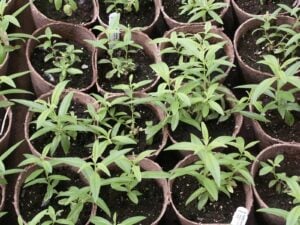 If you have the inclination, you might also propagate your plants from semi-hardwood cuttings in late summer to provide you with additional plants the following year, which is a great way to save some money, up your plant numbers, or just practice your propagation skills. We do this annually in the NHG and keep the cuttings in a warm greenhouse for the duration of the winter. The downside to this location is the propensity toward overwatering when the temperatures and light levels are low and the potential for root rot is high (sometimes people love on their baby plants a little too much—totally understandable!) or we run the risk of increased pest pressures common to greenhouses, like white flies and aphids. So, make sure you are employing adequate plant health care and sanitation practices for better plant vigor.
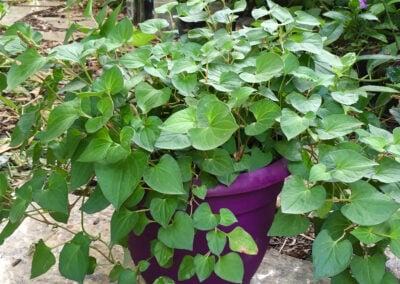
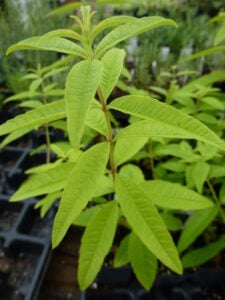 A. citrodora has a mostly upright habit with lower branches that may drape downward in a cascading effect. The narrow, lanceolate leaves reach 3 – 4 inches in length and have a rough, cat’s-tongue texture. Despite their rough feel, though, the leaves exude that magnificent lemon fragrance the plant is known for, perfect for use in potpourris, sachets, and in perfumery as an “absolute” derived from the essential oils. (Note: Lemon verbena oils can cause minor phytotoxicity or irritation to the skin in some individuals, so use with caution.)
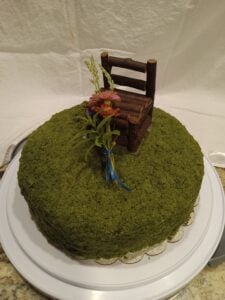
Yes, lemon verbena is a great garden plant, but it also has numerous culinary uses. Its flavor makes it an obvious choice for inclusion in tea blends and cocktails, fruit salads, or in marinades, just to name a few examples. But you can also infuse creams and butters for use in ice cream, cheesecake, baked goods, and the like. A few years ago, my herbal-medicine-trained coworker asked me to make a very specific stinging nettles cake for her birthday (of course, she did), the recipe for which called for lemon juice/zest. Not content with just using regular lemons, she requested that I also use lemon herbs. I didn’t have lemon balm in my yard, so I swapped it for lemon verbena, which I did have. Given that I like lemon verbena’s flavor better anyway, it was a no-brainer switch. (I also used bergamot to add complexity.) It was a lovely, if not complicated, cake that she enjoyed immensely, and I was happy to utilize one of my favorite herbs.
 Medicinal uses are plenty, including for gastrointestinal and neurological conditions. Williams and Jenks (2025) note that lemon verbena was not widely used for medicinal purposes in Europe after its introduction in the 18th century, owing to the already-popular usage of mints and lemon balm for such purposes. The same cannot be said, however, in South America where lemon verbena holds a place in traditional medicinal practices and spiritual rituals to this day. Cultures in South America also incorporate lemon verbena into regionally specific beverages like soothing teas, yerba maté, chicha, and as a flavoring in sodas, wines, and liquors (Williams and Jenks, 2025).
Wherever your interests lie, I can almost guarantee there’s a place for lemon verbena, even if it’s next to the garage window. For more information on how to incorporate this chipper herb into your plant sphere, check out The Herb Society’s Herb of the Month page. But, wait! No good article about lemon verbena would be complete without a great recipe to show it off. Many thanks to Susan Belsinger, chef and herb lover extraordinaire, for offering this special recipe for our readers to enjoy.
Maple Scones with Lemon Verbena and Candied Ginger
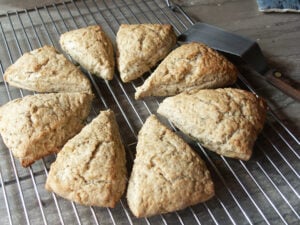 You can use any lemon herb that you like in these scones; orange mint is also delicious. Of course, using fresh herbs will give you the most wonderful bouquet in addition to flavor. However, you may use dried herbs if need be—reduce the amount of dried herbs to about 2 tablespoons—and stir it into the milk and let stand for about 10 to 15 minutes. The scones can be prepared with all unbleached flour, which will make them a bit lighter; the whole-wheat flour makes them a bit more toothsome. This recipe appears in Susan’s article on ‘Homemade Herbal Breads’ in the January 2006 issue of the Herb Companion.
Makes about 1 dozen scones
2 cups unbleached white flour
1/2 cup whole-wheat flour
3/4 teaspoon salt
3 teaspoons baking powder
8 tablespoons cold, unsalted butter, cut into pieces
3/4 cup milk
1/4 cup + 1 tablespoon pure maple syrup
About 4 tablespoons freshly chopped lemon verbena
1/4 cup chopped candied ginger
Preheat oven to 425º F degrees. Combine the flours, salt, and baking powder in a large bowl and blend thoroughly. Cut in the butter until the mixture resembles a coarse meal. Stir the milk, 1/4 cup of the syrup, and the lemon verbena together. Add the liquid to the dry ingredients and stir to form a soft dough.
Turn the dough onto a floured pastry marble or board, knead gently with a few turns until it just comes together. Roll the dough out into a circular shape, about 3/4-inch thick. Brush the top of the dough with the remaining tablespoon of maple syrup. Cut the dough into 8 or 12 wedges with a sharp knife or pizza cutter and place on an ungreased baking sheet.
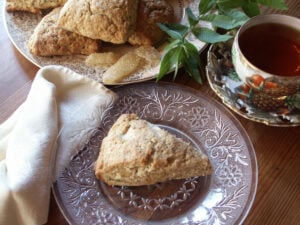 Bake the scones for 18 to 20 minutes or until golden brown. Remove to baking rack to cool slightly before serving. The scones are best served warm and right after baking. If you want to prepare them in advance, cool them completely and store them in an airtight container. Wrap them in foil and gently reheat them in a 325º F degree oven for about 10 to 15 minutes.
© Susan Belsinger