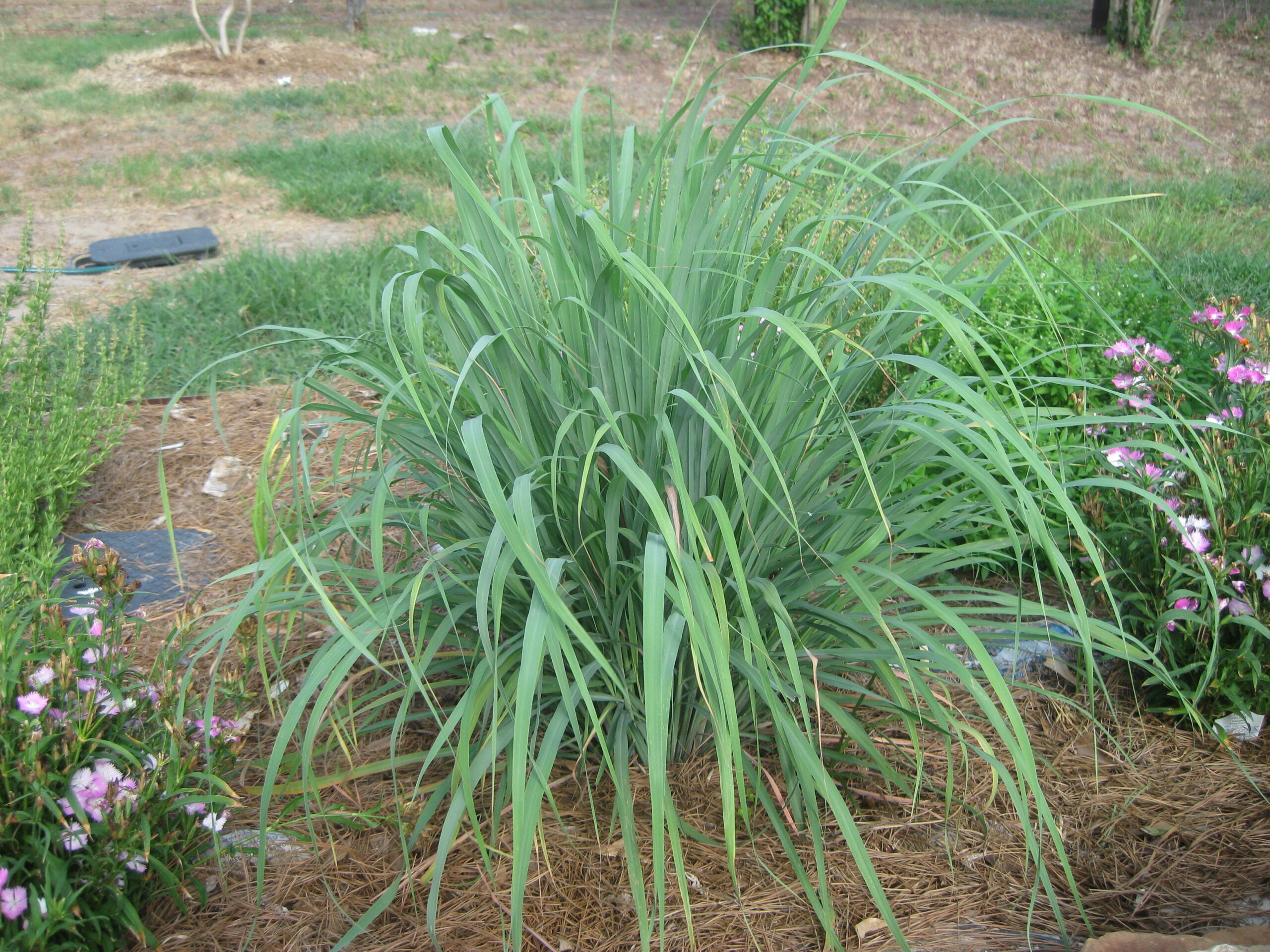
 West Indian lemongrass, Cymbopogon citratus, is a fragrant member of the grass family (Poaceae). It has long, sharp-edged, narrow leaves and edible, small bulbous roots that resemble scallions. The plant is used as an ornamental grass in the garden, growing quite tall in a single season. It is evergreen in Zones 10 and 11, and the roots are winter hardy to Zones 8b, if protected. The foliage turns brown in the winter and should be trimmed back in the spring before new growth starts. It is an annual plant in zones lower than 8b.
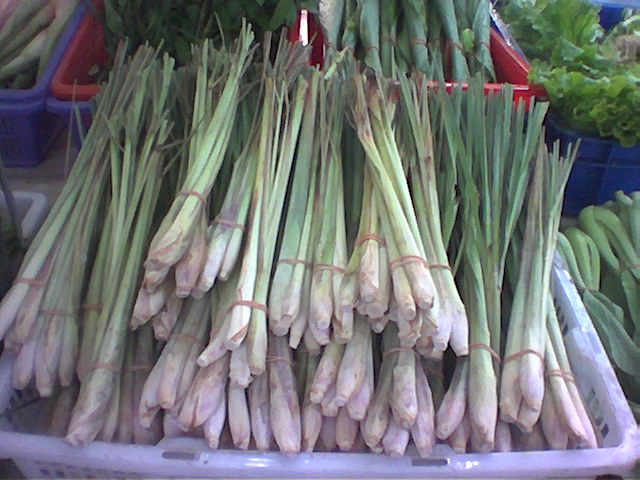 Lemongrass can be grown from seed, or the crown and rhizome can be divided to create new plants. New plants can also be started from stalks purchased from a grocery store’s produce section. It rarely produces a flower when grown as an annual plant. It needs full sun, fertile soil, and adequate water and will grow easily in a container.
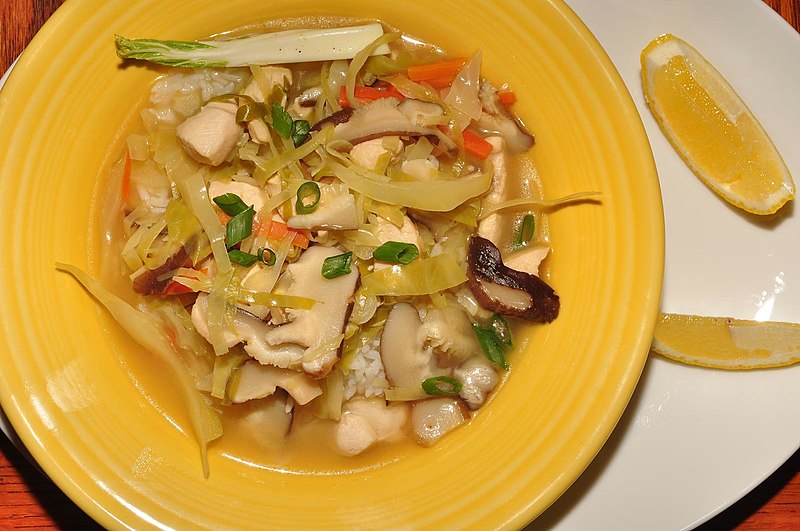
Lemongrass is native to Southeast Asia and is used in the cuisines of those countries. The long arching narrow leaves and bulbs have a distinct lemon scent. Both are used to flavor soups, fish, seafood stews, curry, poultry, and sauces. After removing the fibrous outer layer, the bulb should be chopped fine or mashed. The leaves are added to soups to give a lemon flavor but should be removed before eating. Its herbal lemon flavor is a nice addition to cookies and cakes, puddings, and sweet desserts. The leaves can also be used to make a lemony tea. The stalks can be frozen or cut up and dried for later use.
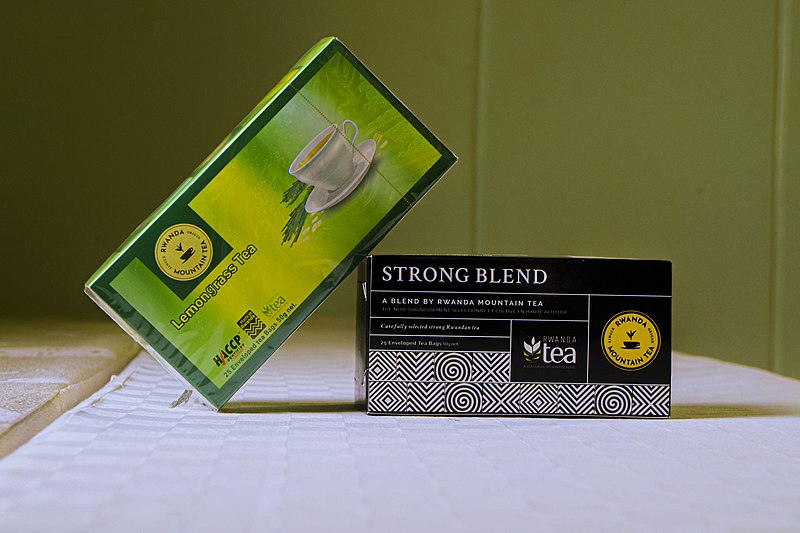
 In India, the plant is used mostly for medicine. It is believed to have cooling properties and is sometimes called “fever grass.” It is used to treat stomachaches, digestive problems, and inflammation (Stephanie Lyon, N.D.). Lemongrass tea is thought to be antibacterial, antifungal, and antioxidant, and is also considered to be calming. Lemongrass is high in Vitamin A and is used in the “compounding of vitamins” (Madeline Hill, 1997). More research is needed to confirm the effectiveness of lemongrass on illness.
The essential oil of lemongrass is used in soaps, cosmetics, and perfumes. The ability of lemongrass to hide odors was recognized by Southeast Asians long ago. It was added to bathwater, and the distilled oil from the plant was combed through the hair and added to deodorant and lotions. Lemongrass was not known in Europe until the 17th century. At that time, lemongrass essential oil was very expensive and could only be afforded by the wealthy, who used it to mask body odors (Grant, 2018). Lemongrass became popular in South America, Mexico, the Caribbean, and the United States after World War I (Specialty Produce, N.D.).
 The essential oil is also used by beekeepers to imitate a pheromone to attract bees to the hive or swarm (Hobbs, 2022).
Lemongrass is the Herb Society of America’s Herb of the Month for August. For more information, recipes, and a screensaver, please visit the website.