
 Vincent van Gogh paid homage to a wonderfully versatile herb in his 1887 oil painting entitled “Flowerpot with Chives.”
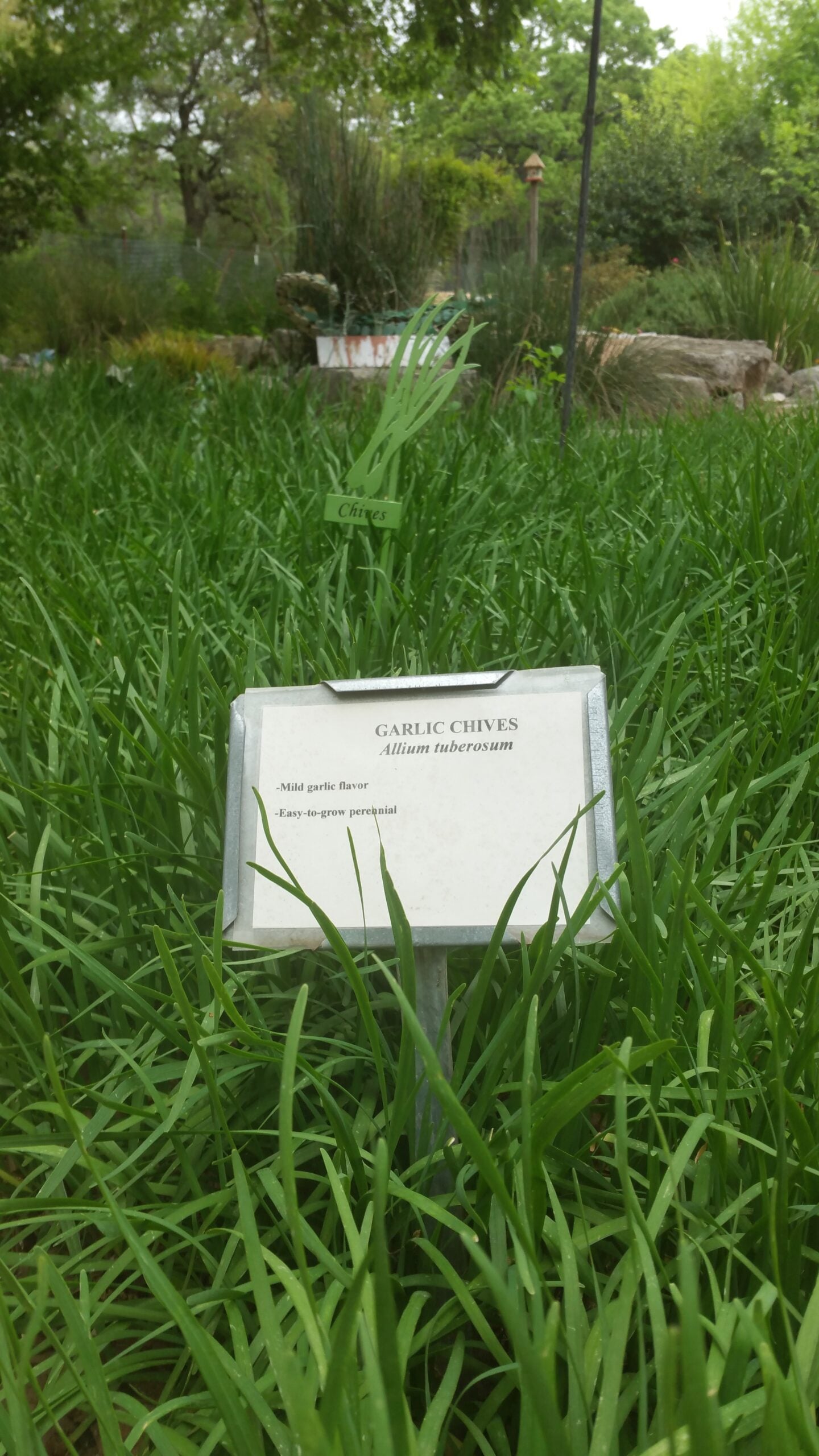
Whether you call the plant gow choy, ku ts’ai, nira, cuchay oriental garlic or Chinese chives, April 2016 Herb of the Month — garlic chives (Allium tuberosum) — has myriad 10uses.
DESCRIPTION: Garlic chives, unlike thin, tubular common chives, are strap-like. In contrast, they are firm and light green in color. The flavor and fragrance of this herb is more like mild garlic than onion-y chive. The plant produces small white, star-shaped flowers which grow in loose bunches, on stalks much taller than the leaves. Both the leaves and flowers of the plant are edible. While most species of garlic chives do not produce bulbs, the few that do produce edible bulbs. Although the herb originated in parts of Mongolia, Siberia and Northern China, it can now be found throughout Europe. Garlic chives grow wild and abundantly in parts of Ohio, Illinois, Alabama, Nebraska, Wisconsin, Iowa, Arkansas, California and Michigan. Because of aggressive growth and readily available seeds/seedlings, it is believed to have migrated to many other parts of the north.
CULTIVATION: The herb grows well in damp soil but prefers well-drained, organic soil. The plant grows best in total sunlight and will not tolerate shade. Garlic chives usually repel insect invasion but must be protected from disease and fungi which can occur if they are too congested and saturated with water.
CULINARY USES: The leaves are wonderful when infused into butters and cheeses. They are used to flavor sauces, vegetables, meat, poultry, egg dishes, soups and salads. The herb is a tasty addition to seafood, especially, salmon, caviar and oysters. Garlic chives are used prolifically in Asian cooking. In Asian countries the fresh Garlic chive leaves are often fried with vegetables and meat. Chinese dumpling of pork, egg and shrimp are flavored with the leaves. In Northeastern Indian cuisine the herb is used as a substitute for onion and garlic and is called maroi nakupi. The flowers should be picked fresh for use. It is best to use fresh leaves as well. However the leaves may be frozen in ice cubes if necessary. Never dry this herb for storage as it will lose its flavor and color.