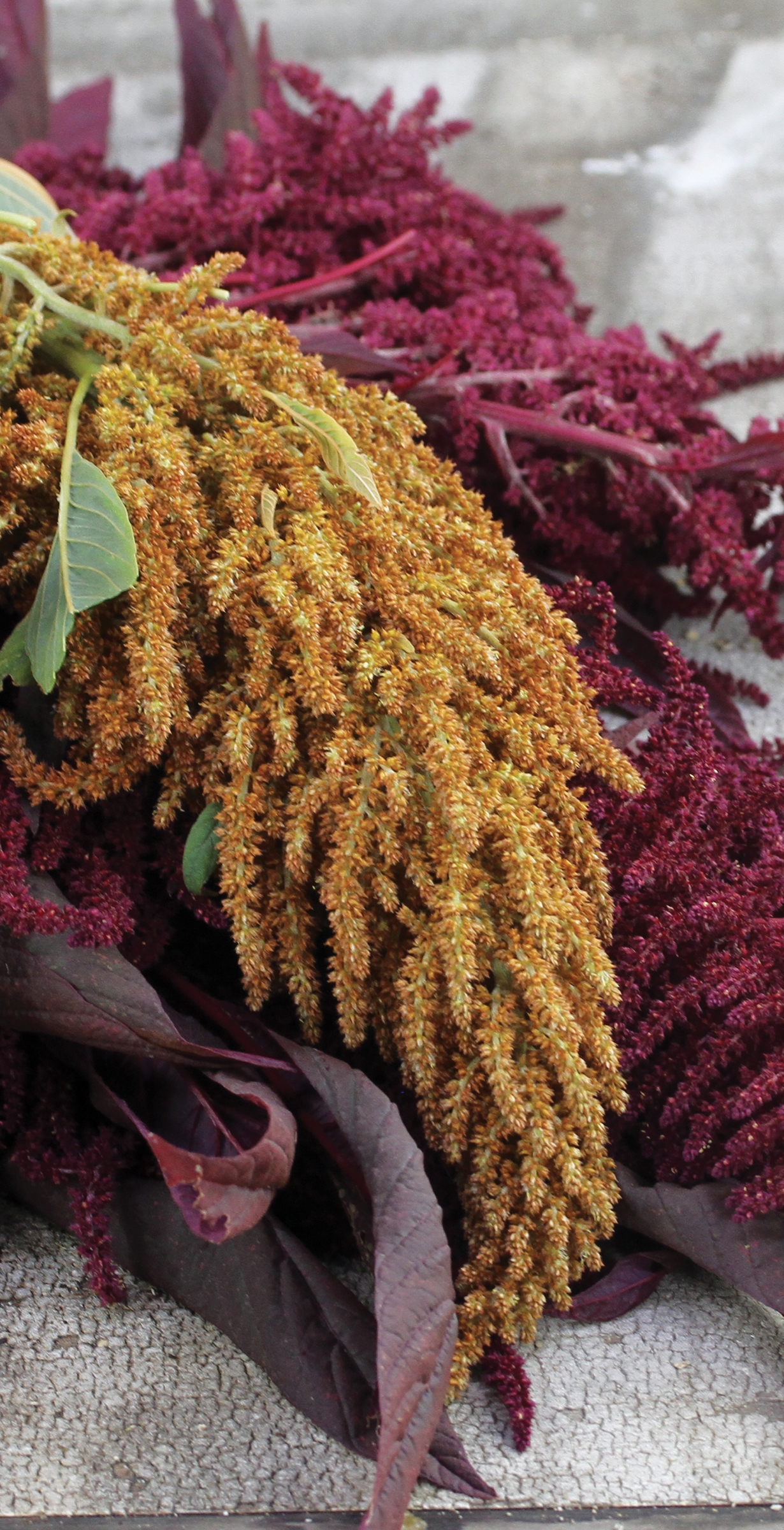
 When Karen Kennedy, Herb Society of America educator, told me amaranth was March Herb of the Month I was surprised. I had thought it a grain, not an herb. And, I didn’t know anyone who was growing it.
As synchronicity would have it, I picked up The Whole Seed Catalog from Baker Heirloom Seed Company and 14 variations led the book. On a quest to learn more, I contacted Randel A. Agrella, Seed Production Manager. Now I want several in my garden as ornamentals and edibles.
I thought amaranth was more of a weed not a cultivated food.
Amaranth is not a weed, but it sure grows like one! It has been cultivated for centuries in both the Old World and New. Several species exist. There are amaranths grown primarily for grain, or for the nutritious leaves, or both. There are also ornamental forms. That said, the plant has kept its vitality from the original days as a wild plant. And, actually, several amaranth species in North America ARE weeds. These are usually called “pigweed,” although that name is also used on some non-amaranth types.
How did The Baker Heirloom Seed Company manage to collect so many varieties of amaranth?
By traveling to remote areas, shopping in unlikely places, and responding to customers, who often offer new varieties of many crop types, including amaranth.
Are they different in any way other than color?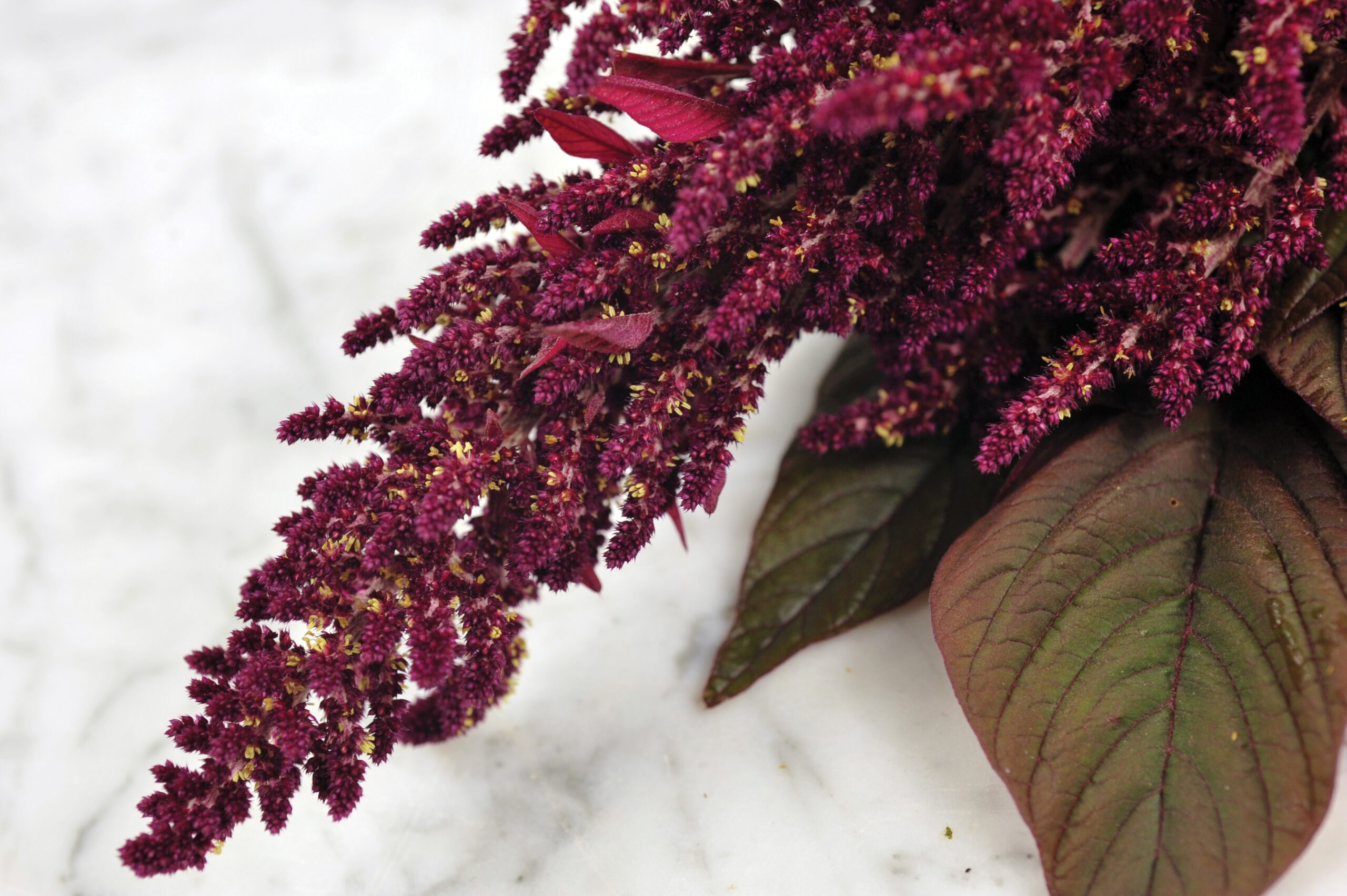
They vary in both leaf and stem color, and in the color of their rather amazing seed heads. They also differ in leaf-form –there are round-leaf types as well as the more usual, lanceolate leaf types. Seed color is also variable, with the white- or tan-seeded types being more favored for grain. There are some dwarf types, mainly the result of recent breeding efforts to tone down this robust plant. There are some variations in the flower-heads’ shape as well–most usual is a plume-like inflorescence, but there are some with a completely different shape, known as Elephant Head (because of a fancied resemblance to an elephant with upraised trunk). There is a weeping or trailing form, as in Love Lies Bleeding, which is grown as an ornamental, yet used for both its leaves and its seeds in its countries of origin.
What’s amaranth is the rarest?
The rarest ones are yet to be identified.
What amaranth plants are the popular?
Golden Giant, an orange-flowered grain type, and Love Lies Bleeding Red, have been grown as an ornamental in American gardens for generations.
Tell me about their health benefits.
The seeds are very high in protein, and this protein is more digestible than that of many commonly grown crops. They offer a more complete protein and are especially rich in lysine, an amino acid often lacking in plant protein sources. The seeds are gluten-free, have anti-inflammatory and possibly even anti-mutagenic properties.
The blog for The Herb Society of America is written by members, staff and guest authors, to promote herb appreciation from cultivation and use to learning and research. It supports the Herb Society’s goals to protect botanical heritage, steward scientific diversity and promote personal enjoyment. Membership is open to individuals and businesses.
What are you doing with amaranth?