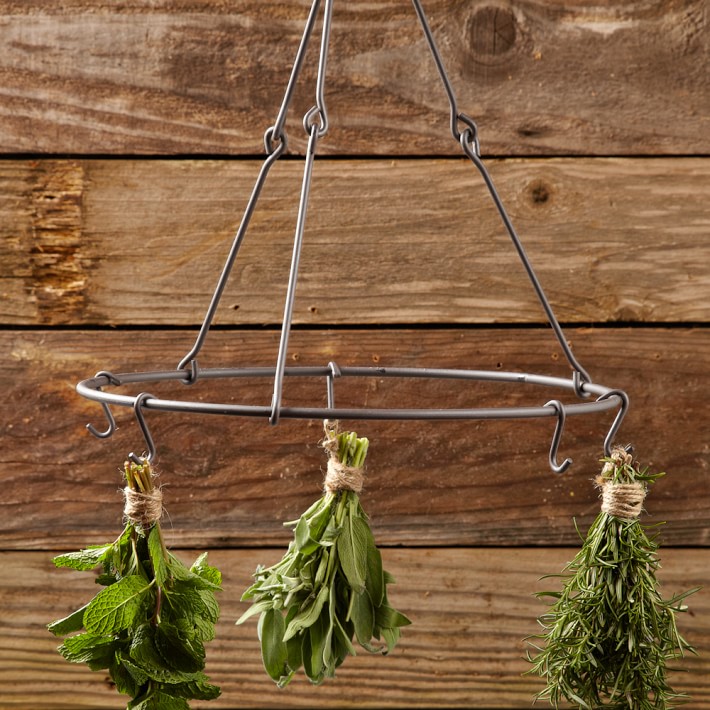
Herb drying rack sold by Williams Sonoma
Drying herbs is easy, but takes time. And, that’s where I failed. Patience.
I had a loose pile of mint sprigs resting on an aluminum cookie sheet to air dry. Then, I had an aha-moment. After removing four roasted (free-range) chicken thighs from the oven for dinner, I slid a tray into the oven as it cooled down. By the time we’d eaten, the mint was crisp and ready for a tea tin.
I was so efficient. And, wrong.
“The goal is to keep the essential oils and dry out the water,” says Karen Kennedy, Education Coordinator. “But, if you add heat or sun, the essential oils will dissipate.”
It turns out, the oven was too much. So, I started again following Karen’s advice.
Herbs should be cleaned gently, without bruising the plant materials and causing oils to disperse. That’s done with a cold water rinse and patting or spinning dry. While salad spinners may remove water, Karen laughs at the memory of a woman who wrapped herbs in kitchen towels and spun them in her washing machine. Unconventional, but effective.
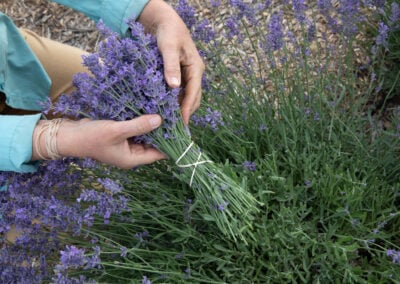
Once dry, herbs should be bundled and hung to dry. “It’s really not very complicated. You can bundle and hang them or lay them on screens to dry,” says Karen. She uses rubber bands to bundle herbs for hanging because the band contacts as the herbs dry and shrink.
“The key is that you don’t want them to hang or sit for too long and get dusty. You don’t want direct sunlight because the sun will add heat. And, you don’t want to store in your hot attic or damp basement,” she says.
When “cornflake crisp,” the herbs are dry. Then, they should be stored in airtight containers away from heat and direct sunlight. Above the kitchen stove is the worst place to store them because of heat and steam. Most pantries are a better location.
No matter the technique, some herbs dry well, others don’t. Dried basil and cilantro, for example, says Karen, lose flavor. Because most supermarkets sell them year ‘round, it’s better to go fresh. Lemon balm is another weak addition to the pantry; lemon verbena retains stronger flavors. A little research or trial-and-error will help determine the best herbs to dry.
“The most important thing is to date your dried batches when you store them so you can remember which year an herb was preserved. You want to pitch after a year because it has less flavor.”
For now, I have trays of mint lying around drying. I can wait.