 Most of us grow herbs to treat the senses with beauty, aroma or taste. We may tap their chemical properties to treat internal or external illness. Whatever the case, we likely use plant material to enhance life.
That wasn’t (isn’t?) always the case. The poison garden had a special place in history as a way to off the enemy. In a demonstration garden, Blarney Castle in Ireland grows plants that are so dangerous and toxic that they may be kept in “cages.” Included in the collection are wolfsbane, mandrake, ricin, opium and cannabis. Brave visitors can read labels with information about their toxicity and traditional and modern uses.
Ironically, some plants now known to be toxic were once used widely as herbal remedies. And, perhaps some of their components still are.
Recognizing a fascination with these “magical” plants, the Cleveland Museum of Natural History is in the final weeks of “The Power of Poison.” This exhibition, which ends July 24, 2016, includes plant toxins’ roles in nature and human history as weapon, defense and lifesaving healer.
People have long put poison to work—using it in hunting and fishing, making dyes and pigments, developing pesticides and herbicides, and even as a path to altered consciousness. And breakthrough medical applications continue to elevate that “magic.”
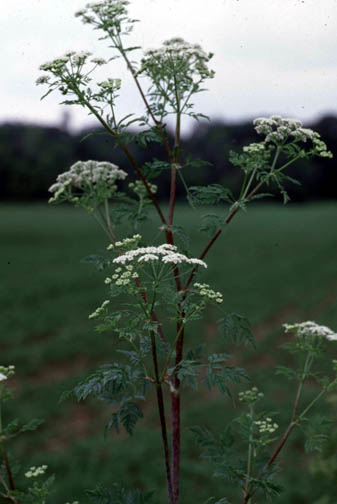
Poisonous Hemlock
In the exhibit, visitors learn about the powers of belladonna, hemlock, monkshood, and rhododendron. Hemlock (not the tree), for example, contains a toxin that was used to sedate and to treat spasms, but can cause death; the ancient Greek philosopher Socrates was executed by being forced to drink hemlock brew.
Children (and adults) may be titillated with tales of the manchineel tree, the most poisonous tree in the world. The manchineel’s milky white sap is so dangerous that even a drop can cause skin irritation or burns. The sap is so caustic that even the rain drops coming from the branches can cause burns.
What do you think … are poisonous plants considered herbs?