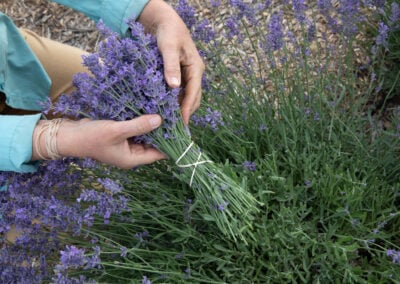
 My children (now 18 and 20) are accustomed to playing in the kitchen. Ever since they were small we taste-tested and compared foods … farm-raised salmon vs. wild caught salmon, grey sea salt vs. Morton salt and on and on …
Recently I’ve been comparing herb varietals – thyme, basil, oregano, sage – that I grow in my garden. I might, for example, simply bite into sage, tri-color sage, and variegated sage to observe different characteristics.
That brings me back to last month’s question about finding the best lavender for cooking when I blogged about Edgar Anderson of Fragrant Isle Lavender Farm, Shop & Le Petit Bistro on Washington Island in Door County, WI. He suggested that English lavender varieties are the best for cooking.
Obsessed with information gathering, I posed many of the same question to Luvin’ Lavender’s Laurie Hedjuk. Her family grows 19 varieties of the purple treasure, with seven best suited to culinary use.
“There are over 400 varieties of lavender worldwide. While all of them are edible, certain varieties are more suited for culinary use. Generally, the English (lavandula angustifolia) are more pleasing to the palate. The only French (lavandula intermedia) we recommend — that we grow — is ‘Provence.’”
That’s because most French varieties have a stronger camphor component. Camphor has been described as smelling a bit like eucalyptus. That aroma may make them better for perfumes, cleaning products and the like.
At Luvin’ Lavender in Madison, Ohio, the Hedjuks grow the following varieties for cooking.
- Melissa- peppery undertones (savory)
- Sharon Roberts- sharp floral (savory)
- Buena Vista- tangy spice (savory)
- Hidcote- all purpose/ sweet floral/ gentle citrus (sweet or savory)
- Folgate- citrus floral (sweet or savory)
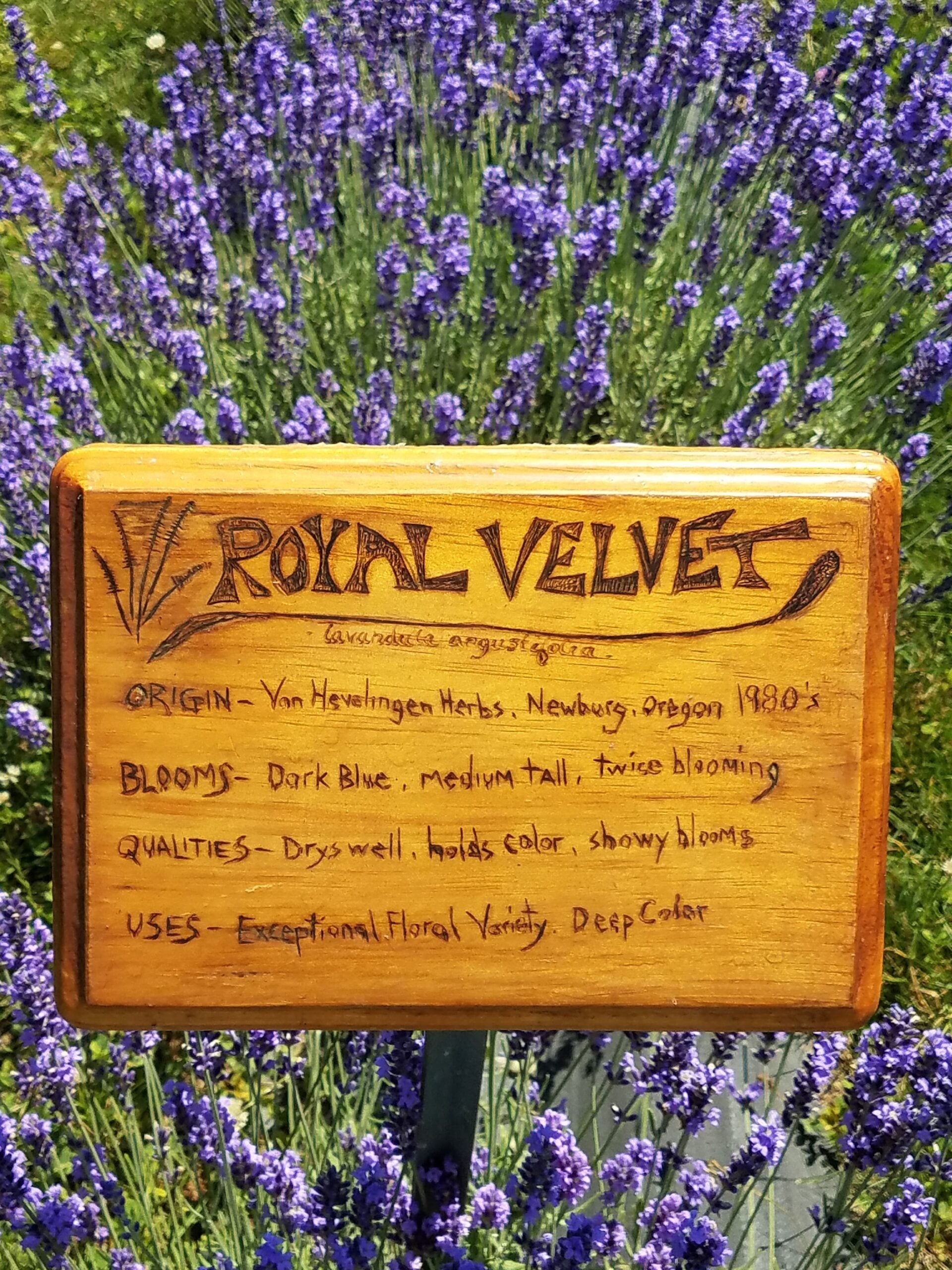
- Royal Velvet- smooth gentle floral (sweet or savory)
- Provence- very mild spice (sweet or savory)
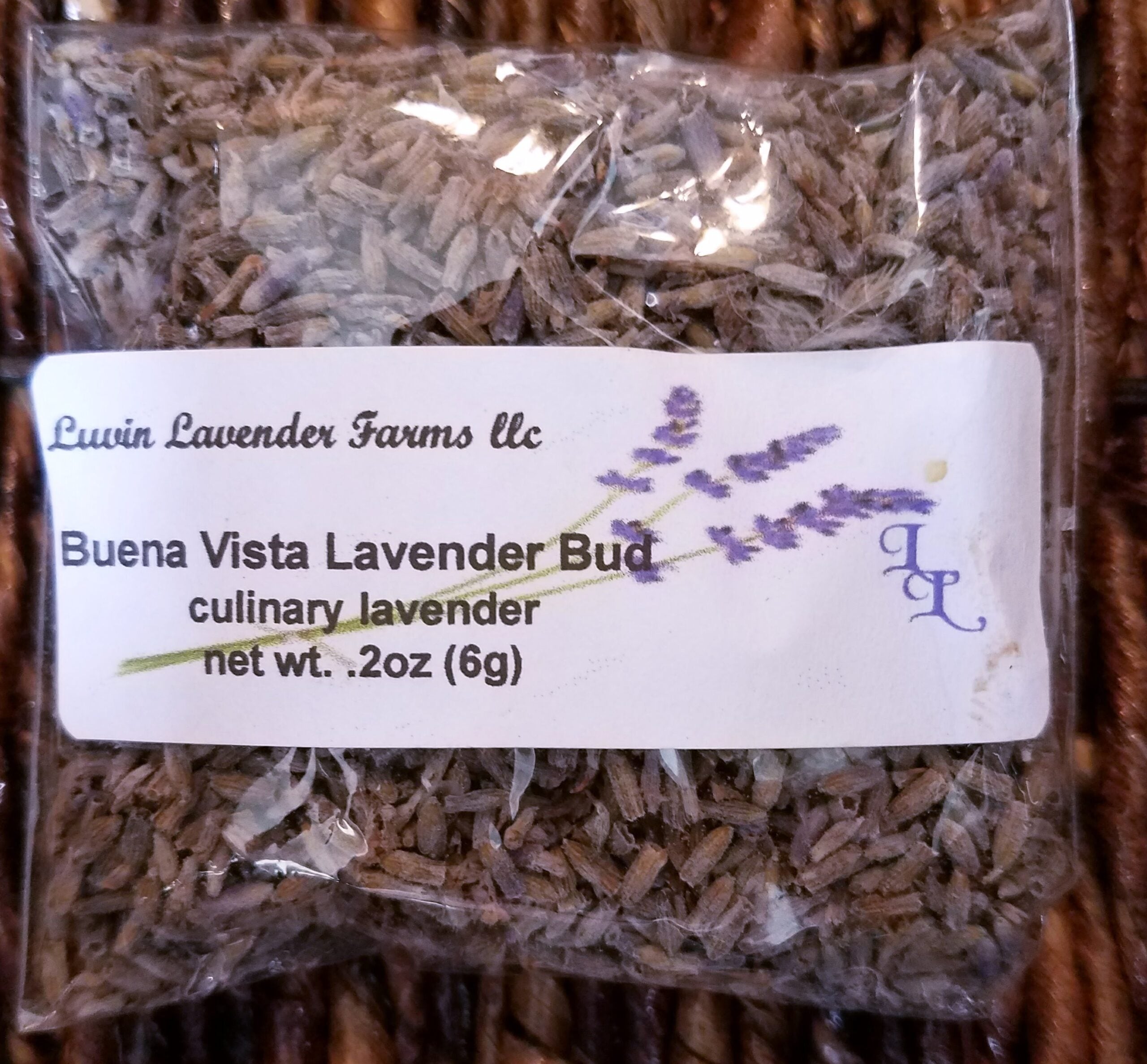
“Keep in mind these are general recommendations and everyone has their own tastes,” says Laurie. When following a recipe, she cautions that you’ll need twice as much fresh to equal a dry measurement. Then, you can use whole buds or grind with mortar and pestle.
As one might suspect, Laurie uses lavender in the kitchen far more than I. Some of her favorites are
- Lavender tomato chowder
- Lavender cream cheese
- Lavender lemon shortbread
- Lavender sweet and sour sauce
“Experiment experiment experiment,” she advises. “Lavender is can overtake a dish fairly easily but can really make a statement when used sparingly.”
If you can’t find the culinary lavender you like, consider growing your own.