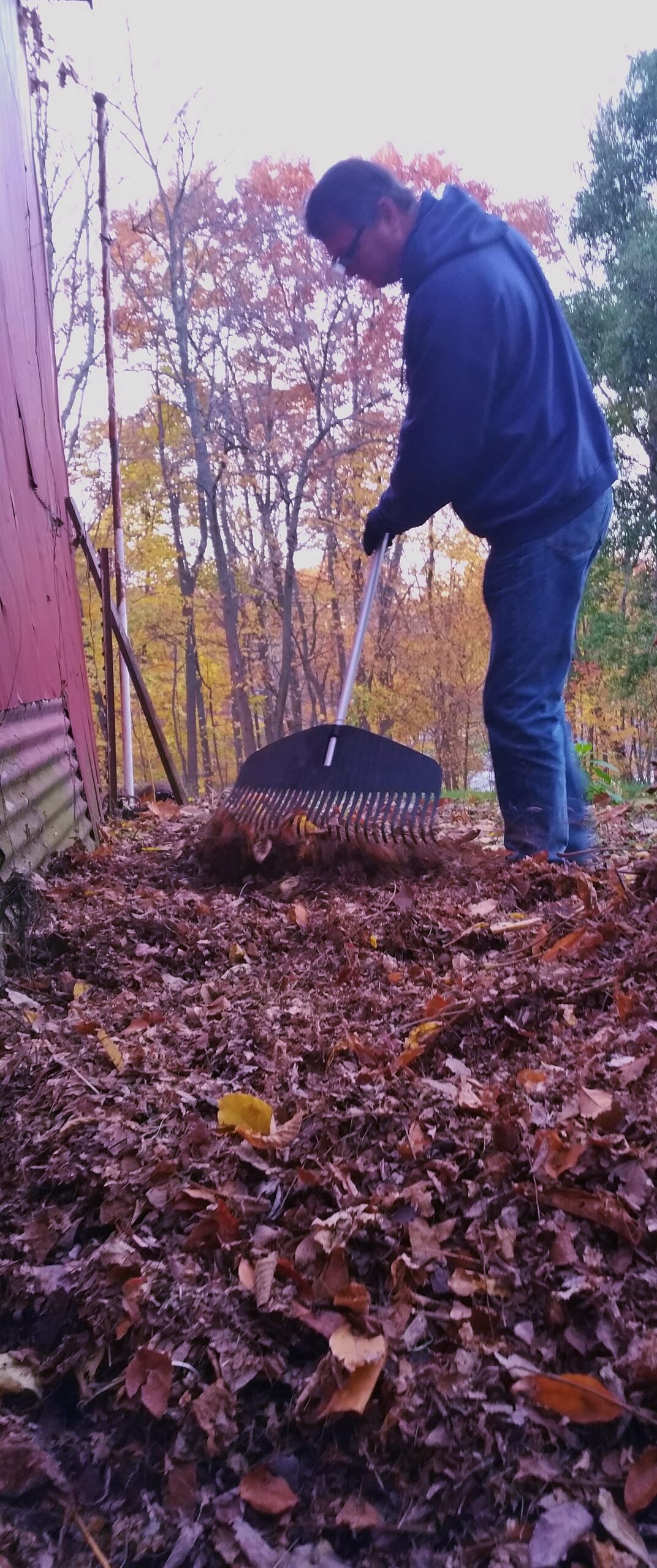
Last week, Gary was mowing over the orange, yellow, red and brown leaves dropped by the oak, maple and black walnut trees. He was shredding and then raking them to limit the volume overwintering on the grass.
As he motored to the backyard “abyss” I flagged him to an empty plot that will be next year’s perennial and herb garden. I planned to compost and dig the leaves into the soil as organic matter. I was patting myself on the back for such a sustainable decision.
Uncertain of how many leaves to compost, I called Karen Kennedy, educator at The Herb Society of America, for her advice.
She said shredding with the lawnmower was a good idea. “You can add some of these tree leaves to an empty bed and they’ll compost in place. I wouldn’t do a tremendous amount.”
Then she went on: “There are leaves that you don’t want to compost. You may want to look up which leaves in various part of the country inhibit plant growth. For example, you may not want to do walnut leaves.”
Ugh. She said it. “Walnut leaves.”
Gary’s yard has at least a half dozen majestic black walnut trees. I love the trees. They spread shade from their tall canopy. And, this summer I harvested immature nuts in late June to make the Italian liqueur Nocino for Christmas.
 Discouraged, I did a little further research. From the University of Maryland Extension I learned that the black walnut trees produce juglone which can stunt or prevent some plants from growing. (That explains my tomato fail.)
“Juglone is present in the leaves, roots, husks, and fruit and can be found in the soil throughout the tree’s entire root zone (on average 50 to 80 feet in diameter for a mature tree).
Juglone does not pose any threat of toxicity to humans, but gardeners should be aware of its effects and plan accordingly. Using raised beds lined with gardening fabric may make it possible to grow susceptible plants in closer proximity to black walnut trees. Juglone does break down when composted. If black walnut leaves, twigs, or nuts are used in compost to be spread in a garden, the compost should be aged at least one year before being applied.”
So much for composting leaves.