In these dark, cold days we look longingly at our snow-covered frozen gardens and pour over seed catalogs. We think about new plants, or replacing plants, all those annuals and maybe a new garden.
Turn those daydreams into a plan for an herbal tea garden. It’s relatively easy to create and quite rewarding. The following plants will get you started:
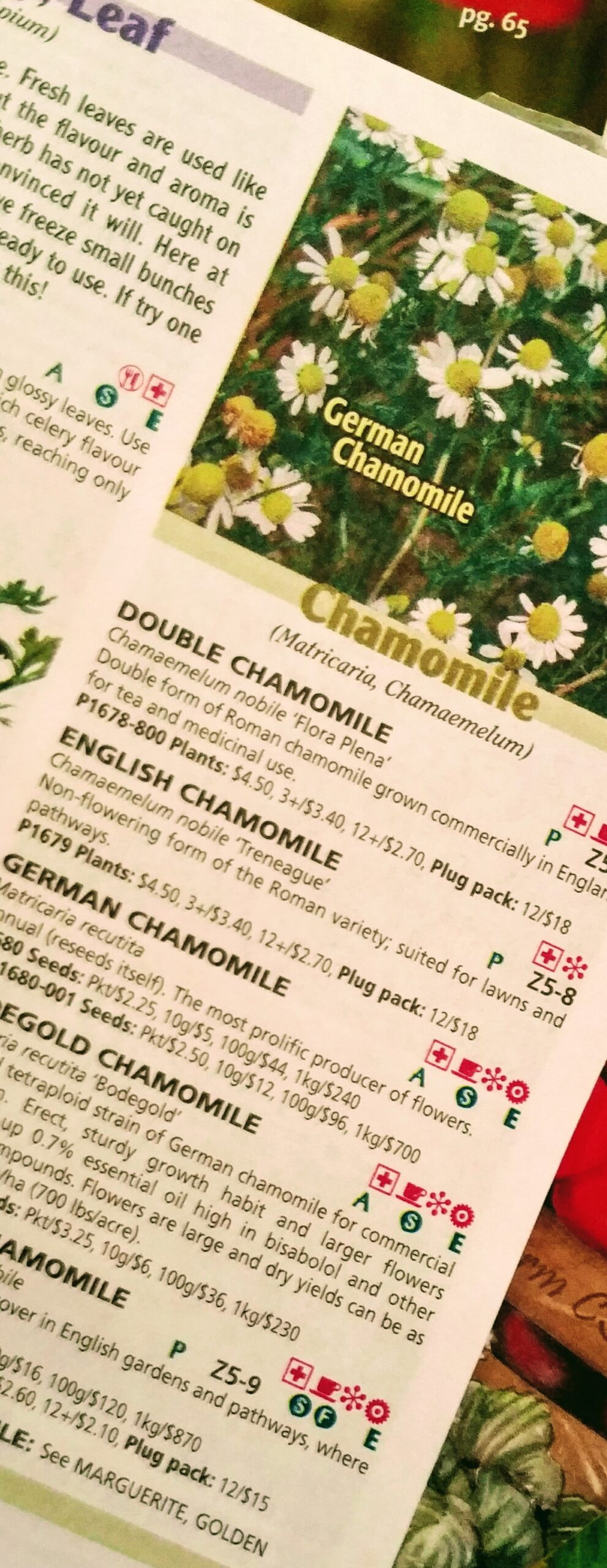 CHAMOMILE (Matricaria recuitita) …German Chamomile is an annual easily grown from seed and will self-sow. It prefers full sun or light shade.
Chamomile makes a lovely tea that many – the non-allergic — use to relax before bedtime. Only the flowers are used, either fresh or dried.
Save leftover tea as a rinse on blonde hair; or for a facial mask, add enough honey to make a paste.
MONARDA or BEE BALM (Monarda didyma (red) or fistulosa (lavender))
Many hybrids of Monarda (often called Bergamot) exist. Perennial to Zone 4, this grows up to three feet, so it should be positioned at the rear of the garden. It prefers full sun, but can live in some shade.
The heirloom varieties offer pollen to bees, butterflies and hummingbirds, so it can serve double duty in your garden.
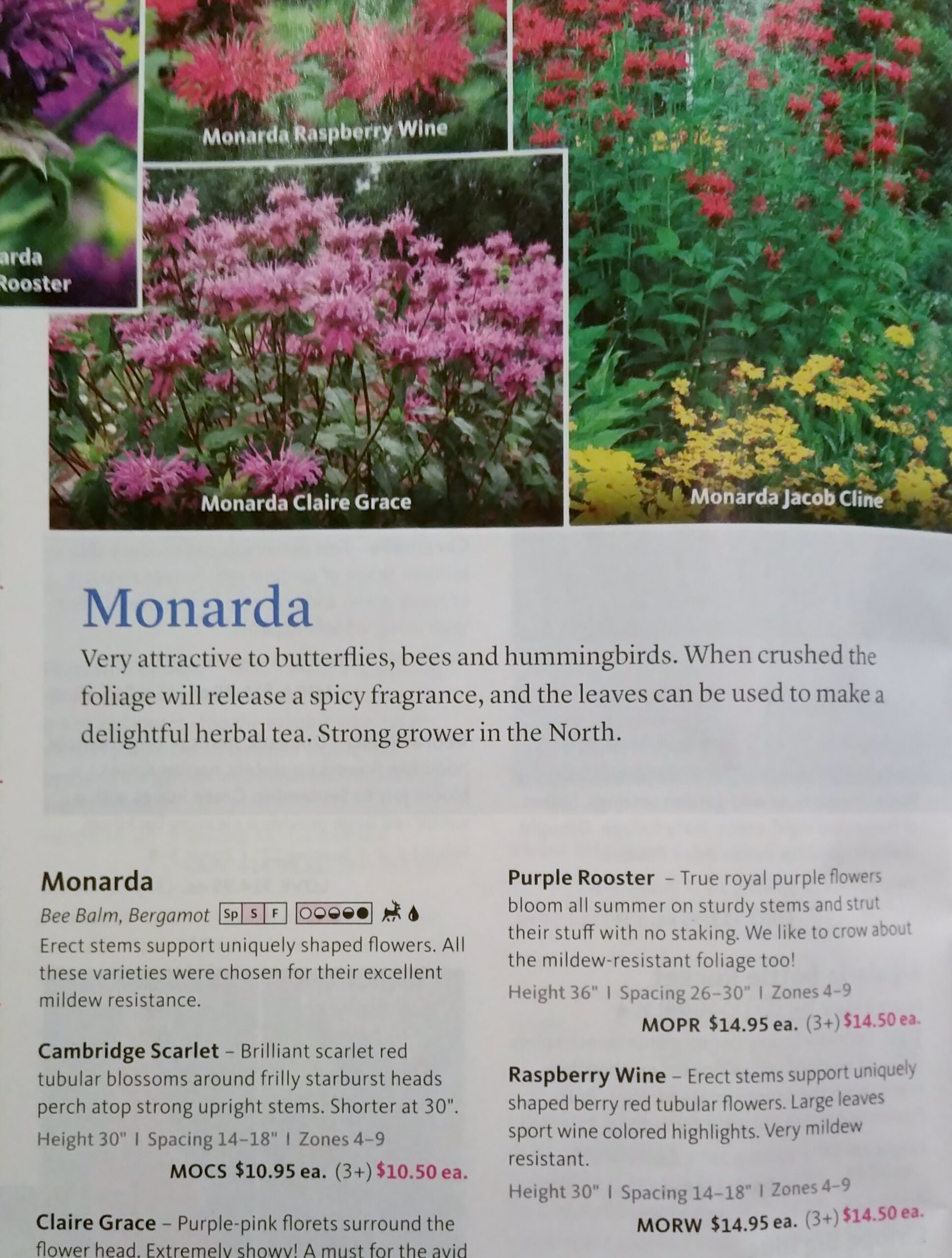 Use the fresh or dried leaves for tea. You can sprinkle the petals in salads, and use both flowers and leaves in marinades for wild game.
I prefer the flavor of M. didyma, however, Native Americans use the M. fistulosa in medicine making.
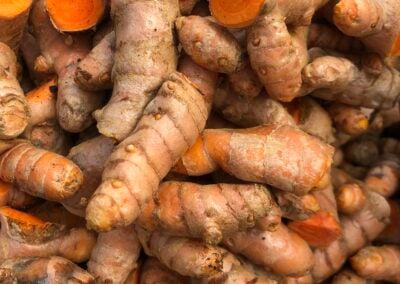
GINGER (Zingiber officinalis)
Ginger is a tropical plant, but can be grown in containers on your patio. Take a piece of root (like a potato it will have eyes), plant it one to two inches deep, water and wait. A grass like stem will grow and if you’re lucky, flower. When it dies back (in about a year) you can dig up the new root that should be quite a bit larger than what you planted. Each successive planting of the same root will be less spicy than its predecessor.
Don’t let your ginger plant freeze; bring it in at the first signs of frost or it will die.
The root can be used in teas either fresh or dried. I slice my fresh ginger roots to quarter size and freeze them for later use. Some people prefer to dry and grind them into a powder. (Powder them just prior to using to retain more flavor).
Ginger goes well with lemon (which I also slice and freeze). This is my go to combination when I need a boost of energy and it is a common go-to for nausea.
LEMON BALM (Melissa officinalis)
Lemon balm is a favorite of herbies! It is easy to grow (in the mint family), and has a refreshing taste. It is good either hot or as an iced tea. It blends well with monarda, tulsi, or chamomile.
Lemon balm likes full sun, but will tolerate some shade, and it will return with no effort. It may spread nearly as aggressively as mint.
The leaves should be harvested prior to flowering, and can be used fresh and dried. You can also make ice cubes from the tea and save for winter.
MINT (Mentha)
Mint exists in many varieties; you just have to find your favorites. I prefer apple mint, chocolate mint and spearmint.
Plant where it can either grow crazy, or cut the excess with the lawn mower. It prefers the sun, but I’ve found it will thrive in most places.
Mint makes a wonderful tea by itself but just a pinch enhances the flavor of other teas.
HOLY BASIL or TULSI (Ocimum sanctum)
Tulsi is one of my favorites. It should be considered an annual and grown from seed each year. It is gaining in popularity and availability, but collect the seed if you find a variety you really enjoy. It prefers full sun, and shouldn’t be allowed to freeze.
Use both the leaves and the flowers, fresh or dried. It’s spicy and some of the varieties smell a bit clove-like.
Try something new this year – maybe an herbal tea garden!