- All photos courtesy of The Biltmore Company
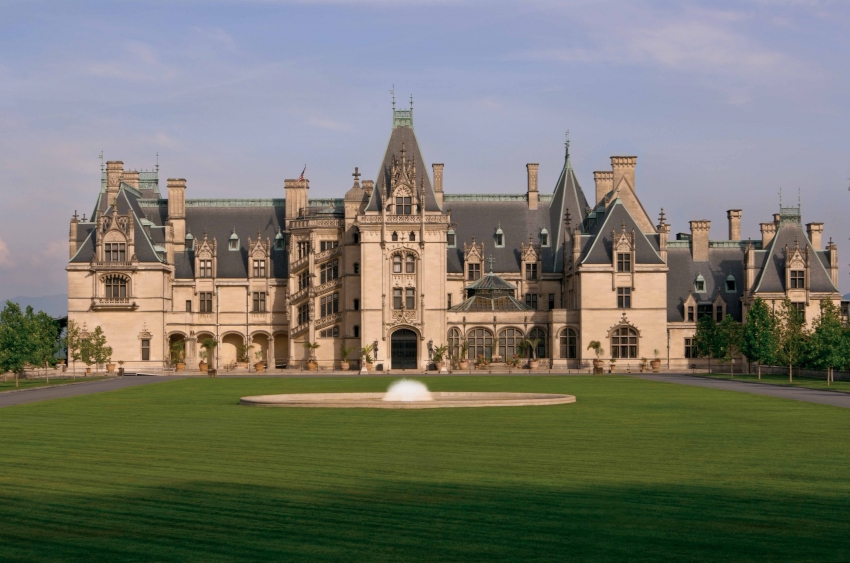
When you plan for this year’s Herb Society of America Annual Meeting on April 29, 2016, schedule extra time in Asheville, North Carolina. One of the most significant attractions is the 8,000-acre Biltmore Estate.
House tours are self-guided and take 1.5 to two hours. Tickets include a free visit to the property’s winery. You can purchase add-ons such as audio, guided tour, rooftop tour and more.
 Tours of the estate gardens – 2.5 miles of manicured paths — may be more delightful for Herb Society members. Acres of formal and informal gardens were designed by America’s foremost landscape architect, Frederick Law Olmsted. From the beauty of the Italian Garden to the breathtaking trees in America’s first managed forest, Biltmore’s lush landscape is a living tribute to Olmsted’s genius.
As a century-old model for forest conservation (and, more recently, for sustainability, thanks to nine acres of solar panels), Biltmore continues to honor Vanderbilt’s legacy of environmental protection.
While the property lacks a formal herb garden for visitors to wander, it has a utilitarian kitchen garden for use in the Biltmore’s six, sit-down restaurants. By the end of April, most of the kitchen garden fields will still be at rest. The only sprouting things will be a couple thousand broccoli plants. The greenhouse, however, will be in full production with microgreens, flowers, lettuce, and herbs.
Field to Table Manager Eli Herman answered a few questions for HSA …
 Q. Is there a dedicated herb garden? Kitchen garden?
A. We don’t have an herb/kitchen garden any more but we do have our Field to Table Production Garden. FTT focuses on larger plantings and less diversity than a kitchen garden.
Q. How big is the garden?
A.Our current planting is about 2 acres and one 30- by 80-foot greenhouse.
Q. What herbs/produce are grown?
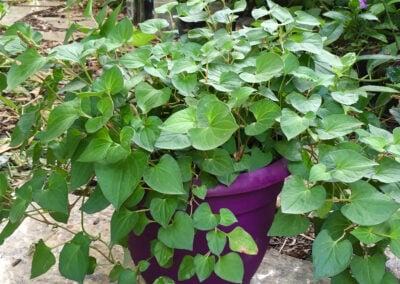
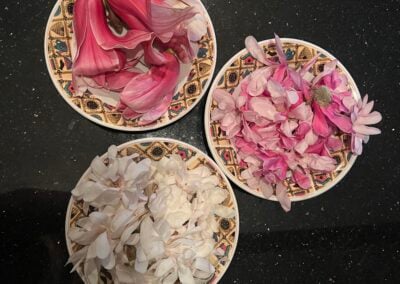
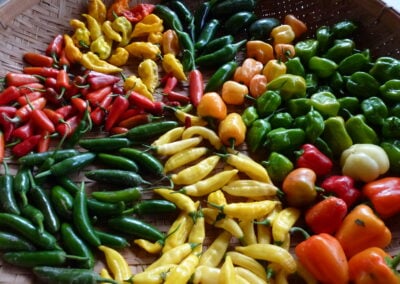
A. Some of the crops we grow are blackberries, butternut squash, broccoli, tomatoes, fingerling potatoes, and sweet potatoes. We also have a small greenhouse where we grow microgreens, edible flowers and are developing hydroponic production for lettuce, tomatoes, cucumbers, and chives.
Q. What are the crops used for?
A. Everything grown in FTT is used in one of the six restaurants on the estate. Our goal is to have something available to every restaurant year round. The chefs determine where they will feature the products
Q. Can the visit the food gardens?
A. USDA and USFDA food safety guidelines forbid visits by the general public.