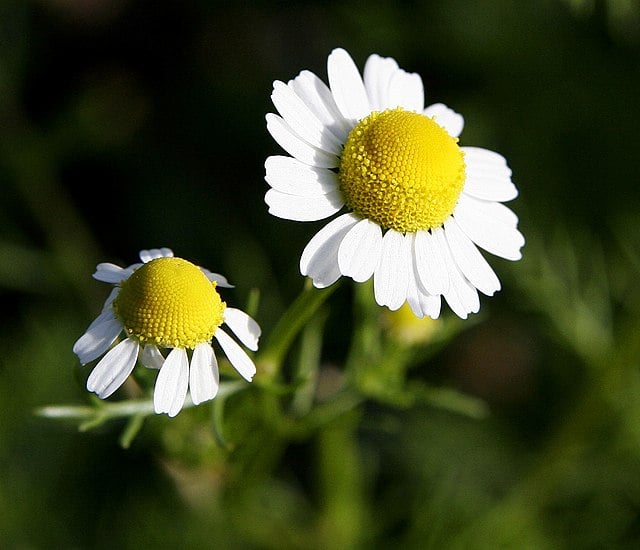
 German chamomile, Matricaria chamomilla, was once considered by the Anglo-Saxons of England to be one of the nine sacred herbs given to humans by the god Woden (Smith, 2020). The root word of the plant’s botanical name, Matricaria, comes from the word “matrix,” which in Latin means “womb.” It was given this name because chamomile was used to treat gynecological problems and sleep disorders related to premenstrual syndrome. The name chamomile comes from two Greek words meaning “earth apple.” It was called “earth apple” because of the apple scent of the plant.
Chamomile is a well-known herb whose medicinal qualities have been put to good use for centuries. Ancient Chinese, Egyptians, Greeks, and Romans used chamomile as a medicine. Greek physicians Hippocrates, Dioscorides, and Roman physician Galen used it to treat digestive issues, fever, pain, and skin disorders. Avicenna, the legendary 11th century Persian physician, recommended using chamomile for treating headaches, swelling, conjunctivitis, jaundice, chronic fever, amenorrhea, toothache, muscle tightness, and treatment for skin conditions.
 During the Middle Ages, chamomile was a common remedy for sleeplessness, anxiety, and digestive problems. It was believed to have anti-inflammatory properties and was used to heal wounds and reduce swelling. Chamomile was also a strewing herb in medieval homes because of its pleasant scent. By the 16th and 17th centuries, it was used mostly to treat fevers (Engels and Brinckmann, 2018).
German farmers cultivated chamomile in the United States and Eclectic physicians treated children and pregnant women with chamomile (Engels and Brinckmann, 2018). The USDA gave chamomile Generally Recognized as Safe (GRAS) status as a food additive in 2000 (Code of Federal Regulations, 2024). Although there have not been many studies on the effects of chamomile on the central nervous system, a recent clinical trial confirmed that chamomile reduced anxiety symptoms in people with anxiety disorders (Mount Sinai, N.D.), giving credence to the historic use of the herb.
 More than 120 chemical compounds have been identified in chamomile flowers, mostly in their essential oil. It is interesting to note that the plant is sometimes called blue chamomile because of the blue color of its essential oil, which is due to the azulene released during distillation (Singh, 2010).
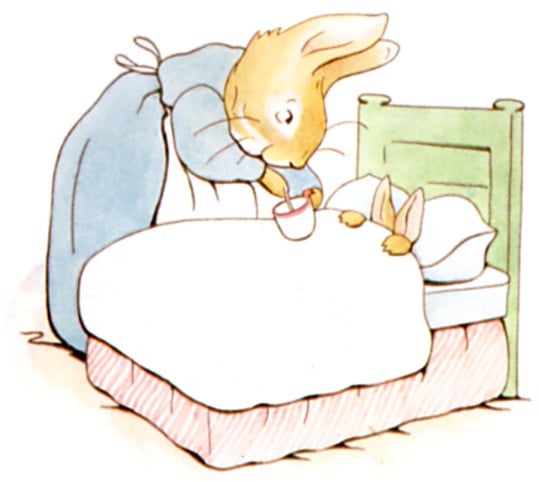
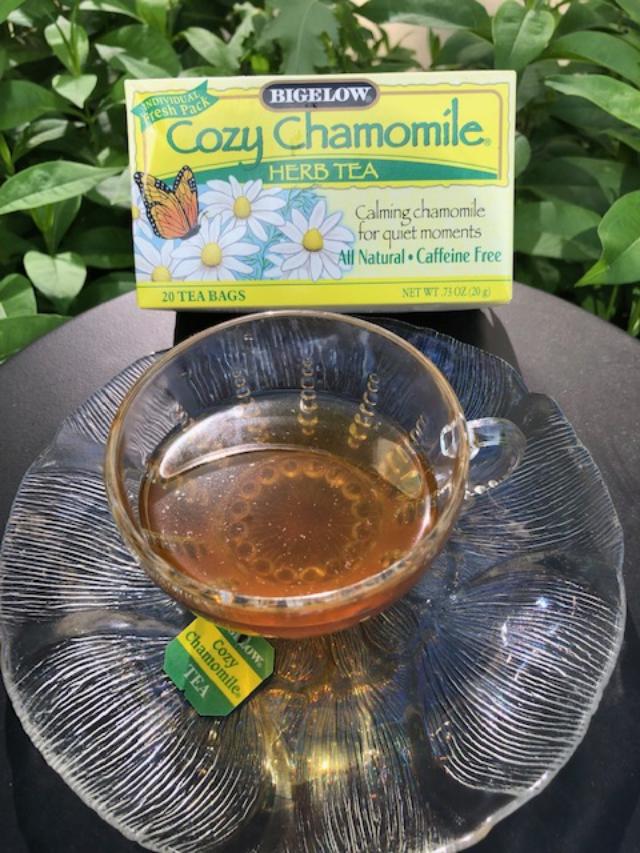
Small children learn about chamomile’s calming effects in Beatrix Potter’s classic book The Tale of Peter Rabbit, where Peter Rabbit’s mother puts him to bed with chamomile tea after his harrowing escape from eating vegetables in Mr. McGregor’s garden. “Peter was not very well during the evening. His mother put him to bed, and made some chamomile tea: One table-spoonful to be taken at bedtime” (Potter, 1902). Still today, people sip on chamomile tea to reduce anxiety, ease digestion, and help them sleep. Chamomile is considered a cure-all in Europe and is referred to as alles zu traut in Germany, meaning that it is capable of anything (Sah, 2022).
 German chamomile is an easy plant to grow. There is no need for additional fertilizers or insecticides when growing it. It’s considered a good companion plant in the garden as it’s said to repel insects and diseases. In his 1911 publication of The Herb Garden, herbalist Frances A. Bardswell called chamomile “the plant’s physician” because of its healing effect on plants growing around it (Larum, 2022). Seeds can be planted directly in the soil in the spring or fall. It is an annual, but reseeds readily. It’s a drought-tolerant plant and if the soil is fertile, the stalks will be thicker. The plant can grow 2-3 feet tall and likes full sun or partial shade. The flowers should be harvested often and the plant should be cut back to encourage new growth and new flowers. Shakespeare knew about chamomile when he wrote in Henry IV— “Though the chamomile, the more it is trodden on, the faster it grows.”
Chamomile flowers are fragrant and can be used fresh or dried. Their apple scent is a flavorful addition to pastries and jellies. The flowers are used to make a yellow-brown fabric dye and most of all, the popular tisane, chamomile tea. If used as a hair rinse, the flower tea can also brighten hair. The leaves of the plant are edible.
 Roman chamomile (Chamaemelum nobile) is almost identical to German chamomile, even though it is a different species (Iannotti, 2022). However, the Roman variety is perennial, low-growing, and more fragrant. It has the same medicinal qualities. When harvesting from the wild, care should be taken to make sure that it is not the look-alike variety of chamomile, Anthemis cotula L., which is toxic to animals and is easily identifiable by its strong, unpleasant smell.
Chamomile is in the daisy family (Asteraceae), therefore, care should be taken if one is allergic to other members of this family such as chrysanthemum, ragweed, marigold, or daisies. It should be avoided when pregnant (Mount Sinai, N.D.).
The international demand for chamomile oil has been steadily growing worldwide. The future of chamomile is expected to grow by 5.5% a year (Future Market Insights, 2024). As a result, the plant is widely grown in Europe, and growing it has expanded to other countries. This growth is due to a greater interest in using herbal products because of lower costs and fewer adverse side effects than pharmaceutical drugs.
German chamomile is The Herb Society’s Herb of the Month for January and the International Herb Association’s Herb of the Year for 2025. This is a great year to learn about this ancient herb and to grow it in our gardens. For more information about the herb, please visit The Society’s Herb of the Month webpage.