
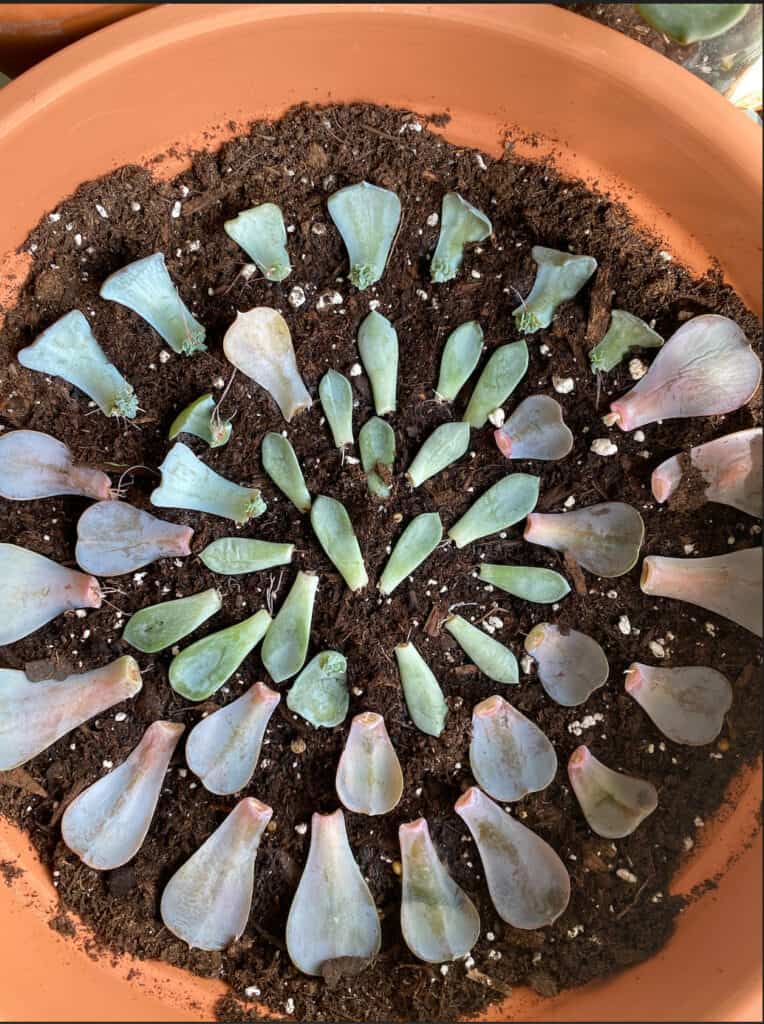
 Part of the reason why I like growing herbs is that most of them are what are called “straight species.” They are not owned by anyone or any company. They are not branded, marketed, hyped up, sold in a particular container, or jacked up in price. With most herbs I can either sow by seed and save seed or propagate by divisions or stem cuttings. I can share with others and they share their herbs with me.
In recent years, companies have been breeding herbs and/or branding them with marketable names. This is not a bad thing – many have been bred to be disease resistant. But before you think about sharing your bounty, you should know that some herbs are protected by a patent or have a trademark name.
Inventors, breeders, or ordinary gardeners can obtain a patent for inventing or discovering a plant that is new, distinct from other known varieties, and can be reproduced asexually (i.e., a clone can be made). The U.S. Patent and Trademark Office (USPTO) issues plant patents, which last for 20 years and cannot be renewed. This allows breeders time to be able to recoup whatever expenses they incurred when developing the new cultivar and to prevent competitors from propagating and selling the plant. If a plant has a patent, people cannot propagate and sell or give away that plant, until 20 years later when the patent expires.
 This means that herb enthusiasts, gardeners, and garden clubs must not dig up, divide, and give away their plants free, at a plant swap, or for a fee at a plant sale if the plant has a patent. If someone does propagate a patented plant, the patent holder can sue the person in federal court. That is not to say there are “plant police” inspecting every garden club plant swap. The intent is not to punish gardeners but to deter commercial competition.
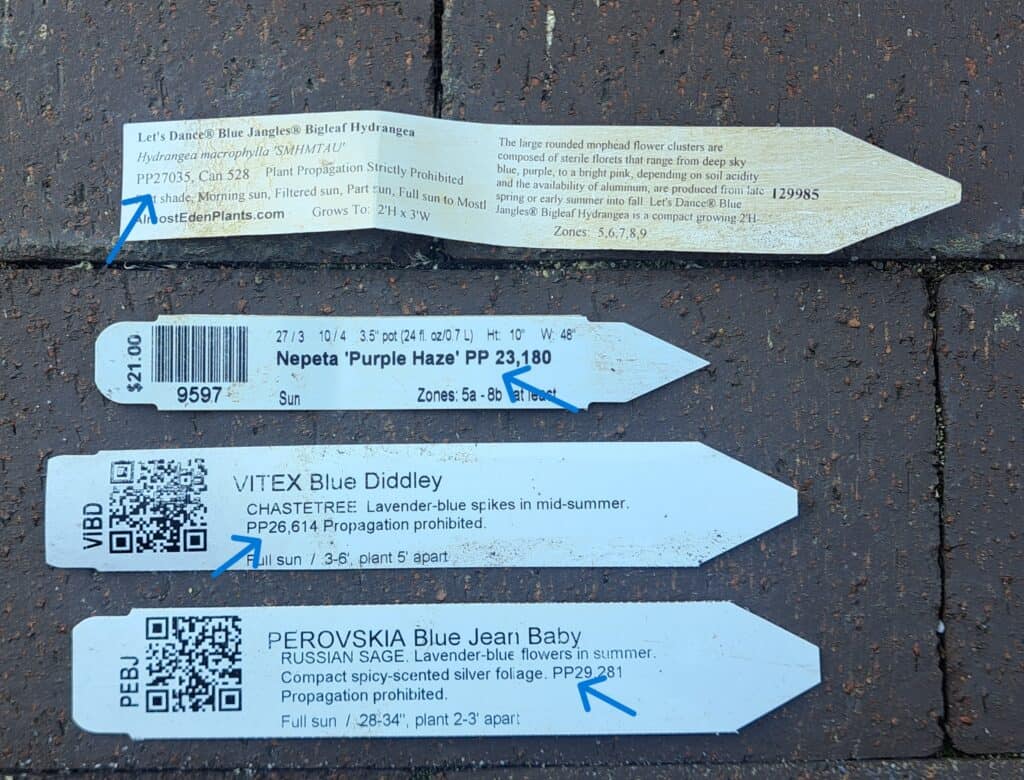
If you purchase the plant at a nursery, it’s because the grower paid the patent holder a royalty for growing and/or selling the plant. There should be a tag indicating that it has a patent (or not), which always begins with the letters “PP,” followed by up to five numbers. If you don’t have the tag but you know the patent number, you can either look it up for more information via an internet search engine or look it up on the USPTO website. If you don’t have the tag or a number, you can still search to see if it has a patent. Also, terms on the tag vary: often you will see “PPAF” (Plant Patent Applied For) or “patent pending.” When you see those terms, consider the plant patented and do not propagate it.
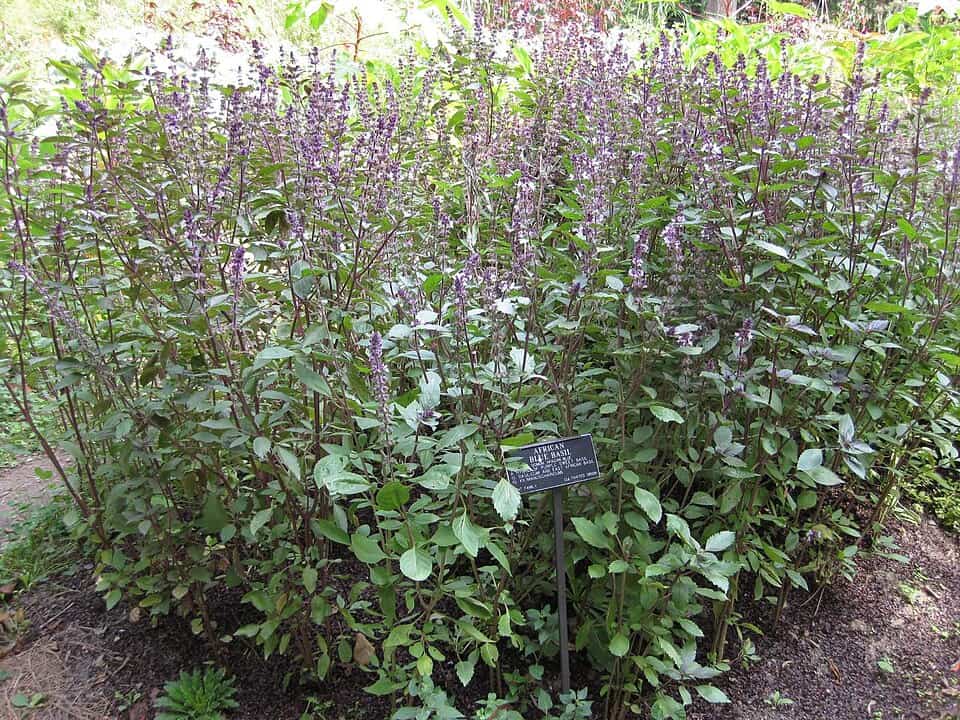 Using basil as an example, Wild Magic is a patented purple foliage basil primarily grown for purple flowers. It is supposed to have low temperature tolerance. The patent was filed by Herbalea GmbH (a German company) and expires in July 2032. If I were to purchase Wild Magic, I would not be able to take stem cuttings. But if I were to purchase an African blue basil plant which has no patent yet similar purple foliage and flowers, I can take stem cuttings and make many from one. Because I live in Virginia where frost will kill my basil no matter what, the low temperature tolerance is not a priority for me. It may be more important to those who have mild winters.
Another basil with a patent is Pesto Perpetuo. In 2004, it was discovered as a sport or unusual variation of a Greek columnar basil. It is non-flowering with lime green leaves variegated with thin white markings. A nursery called Sunny Border Nurseries, Inc., discovered it and applied for a patent because this was a distinctly new plant with new genetics. Again, if I were to purchase that plant in 2005 or later, I would not be able to take cuttings. However, 20 years have gone by, the patent has expired, and I can now take stem cuttings and share with friends.
 Trademarks can be any word, phrase, symbol, design or a combination of those things to identify a plant. The symbol for a trademark is the “tm” superscript but it has no legal standing. A registered trademark is one that has been registered with the USPTO and has a superscript “R” in a circle. A registered trademark confers a legally recognized monopoly on the name or symbol for that plant. Registered trademarks are valid for 10 years and can be renewed. A trademark name, registered or not, is different from the plant’s botanical name. The plant’s botanical name cannot be trademarked and thus cannot be registered with the USPTO. The botanical name for sweet or Genovese basil is Ocimum basilicum. No one can own that.
In 2027, PanAmerican Seed will introduce a new Genovese basil called Monteverde™ which was bred to be resistant to basil downy mildew. It is trademarked and has the designation “US PAF.” The US PAF means “Patent Applied For” and one should act as if the patent was already granted. People cannot sell a basil plant with the name Monteverde nor can they propagate the plant to give to friends or sell at a garden club plant sale.
 Trademarks are ownership of a name while patents are ownership of the plant’s genetics. Only the trademark holder or a licensee can sell a trademarked plant under the trademark name, but anyone can use the botanical name. Growers cannot grow and sell plants under the registered trademark name unless they pay the trademark holder for a license to do so or if the growers purchase the plant starts from the trademark holder.
If a gardener has a plant with a trademarked name and no patent, the gardener cannot propagate and give away or sell division using the plant’s trademark name. Trademarked plants may or may not be patented. Conversely, patented plants may or may not have a trademark.
When in doubt, either research it on the internet, contact USPTO, or contact the plant’s company/breeder.