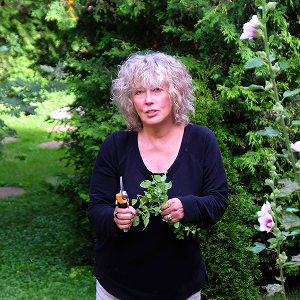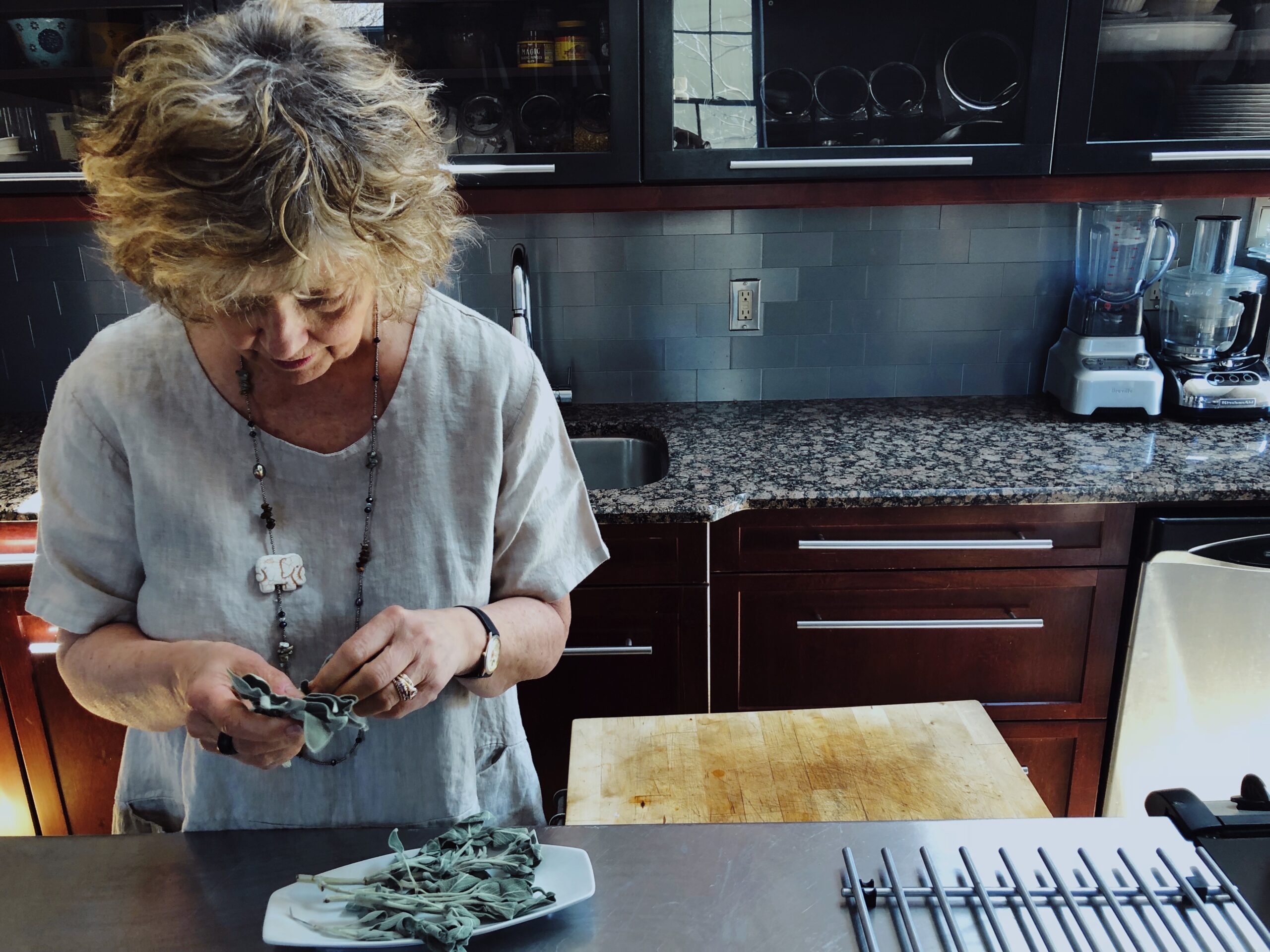
Scottish philosopher Thomas Carlyle (1795-1881) once said, “Man is a tool-using animal. Without tools he is nothing, with tools he is all.”
What about you? Do you have a favorite trowel or pair of pruning shears? One that fits your hand perfectly or one that was passed down to you by a gardener you cherished?
Like most craftspeople, gardeners and cooks alike seem to have specialized instruments that they sharpen, oil, and use with loving care. I’m passionate about all my tools, but the ones that I use to cut stems or chop garlic are those that I hold dear. I’m excited to share three cutting tools that I use almost every day.
[wpvideo wEWNMq87]
Chef’s or French Knife
Myth: I have a block or drawer or rack filled with all kinds of knives of every shape and color.
Reality: I own 3 knives: French, paring, and bread. They are the best quality I can afford. I keep them razor-sharp and they travel everywhere with me. Years ago, when I decided to pare down my knife collection, I did a bit of research on the materials and craftsmanship that goes into making kitchen knives and then I test-cut my top brand choices at several kitchen stores. I recommend that you try out several brands and sizes of knives to determine the one that works best for you.
I knew I wanted a molded, all-metal blade and handle because wooden handles often harbor bacteria and I knew that a French knife and a paring knife were the only cutting tools I used to prepare ingredients. Sure, I kept my mother’s grapefruit knife–curved and serrated on both sides–but use it? Never.
A French knife is tapered so that it rocks or slices back and forth over ingredients to chop them to any degree of fineness desired. In the video, I’m chopping rosemary and garlic together for a tomato sauce, so the garlic is only medium-cut, not finely cut. I am using two hands on the knife, but cooks also hold the ingredients by gripping the food with the curled fingers of one hand (shaped into a claw, with the thumb tucked under) and chop using the knife in the other hand.
French knives give you control over the size of the herbs and other ingredients you are chopping.
Mezzaluna
Whenever I have a lot of herbs to chop, I use my mezzaluna. Mezza, means half and luna is the Italian name for moon, so the name describes the shape of this herb-friendly tool. It’s a curved blade or blades with a handle on each end of the curve. Mezzalunas are meant for two hands so you can really get a rhythm going…safely.
There are many different styles of mezzalunas and keeping with my choice of all-metal, molded knives, I found the perfect one that has a single blade and handles that feel like they were molded for my hands. I can rock back and forth easily and swiftly, turning mountains of herb sprigs into mince in practically no time at all.
Mezzalunas are simple tools that do an excellent cutting job. They are easy to use and you control the size of the chop. I use my mezzaluna for chopping nuts, chocolate, greens, and of course, herbs.
Herb Snips
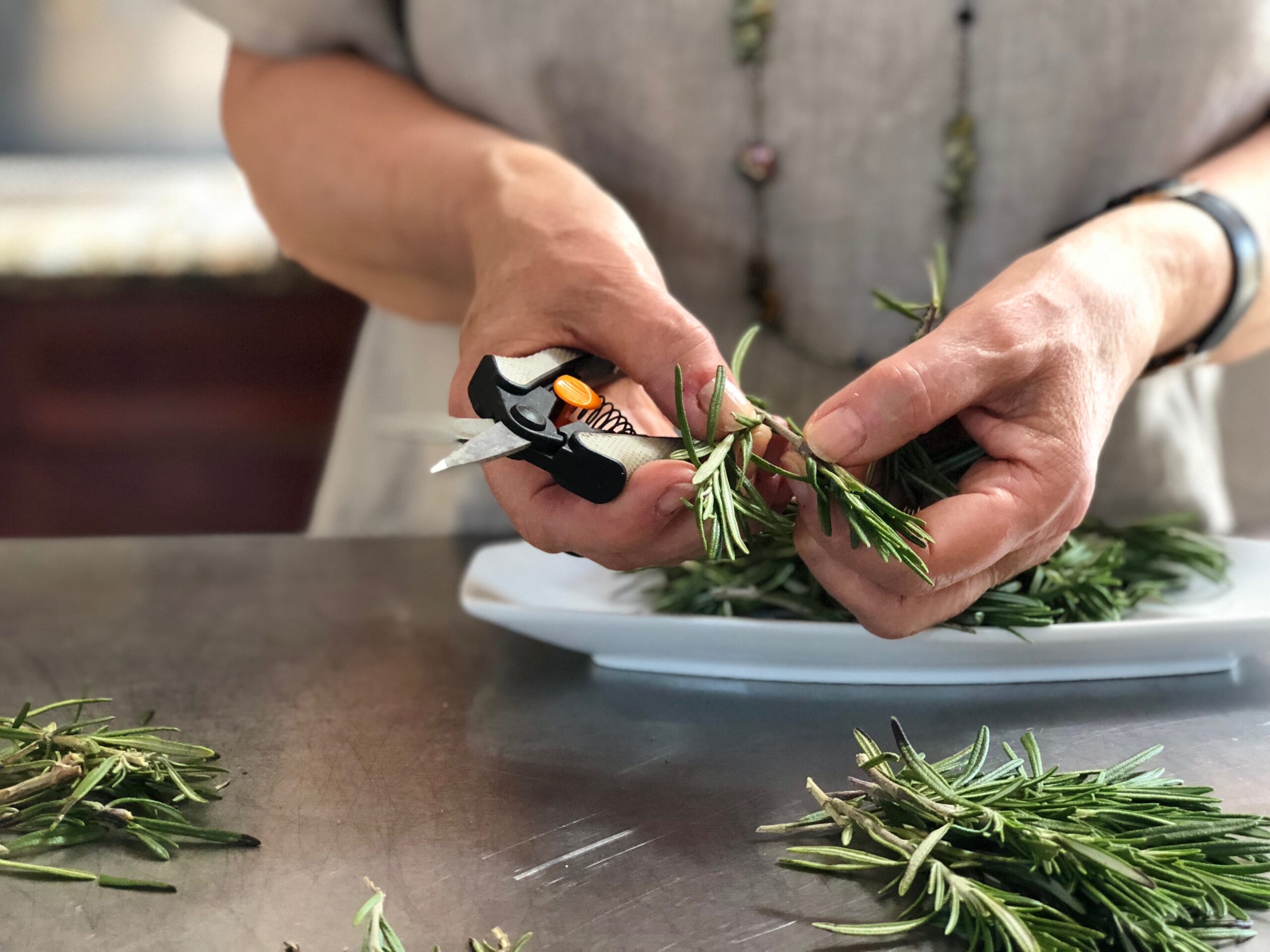
Fiskars knows cutting tools. Heck, they’ve been in the business since 1649 and they craft a lot of different kinds of shears, secateurs, pruners, kitchen scissors, utility snips and a very useful pair of herb snips. I’ve had my herb snips for years and what I like about them is that, as you can see from the photograph, I can hold them in my hand while separating sprigs and use them for the delicate job of deadheading or cutting away tough or unwanted parts of the sprig. They do the job of helping me to get my herbs ready for chopping or garnishing food.
My French knife, mezzaluna, and herb snips are fine examples of the fact that the right tool for the job makes the work go faster and easier. What are the tools that you use to elevate your work in the garden or the kitchen?