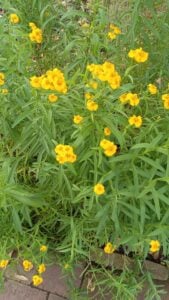
 This sunny, late-blooming, garden and culinary herb is The Herb Society’s spotlight herb this month—Mexican tarragon, Tagetes lucida. It is known by several names—Mexican mint marigold, sweet mace, sweet marigold, death flower, Texas tarragon, yautli (Mexican), and pericon (Spanish). It is indeed in the marigold family (Asteraceae), but in a different genus than the annual French marigold and African marigold, which are colorful summer bedding plants. Most marigolds are native to the tropical and warm parts of the Americas. Tagetes lucida is a perennial marigold native to Mexico and Guatemala (Bown, 2001).
History of Tagetes lucida
Mexican tarragon has a history dating back to the 12th-century Aztecs and ancient Mayans (2000 BCE‒1627 CE), who used this anise-flavored herb to flavor their famous cocoa-based drink, chocolatl and enhanced their tobacco products with its leaves.
The Aztecs used the dried leaves as ritual incense. The plant was dedicated to the rain god, Tlaloc, and in some parts of Mexico today, branches of Tagetes lucida are formed into crosses and hung on farm fences to encourage rain and ensure a good harvest. The crosses were also hung in doorways to keep evil spirits away. This ancient tradition was influenced by the Spanish conquistadores (1521), who connected it to the biblical story of the Archangel Michael leading a heavenly army against the devil.
The May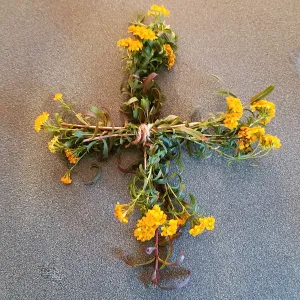 ans also added dried Mexican tarragon leaves to their tobacco. In ancient times, powdered Tagetes lucida was blown into the faces of sacrificial victims. They believed the powder had hallucinogenic and anesthetic effects, easing the pain and distress of becoming a sacrifice. (Research shows that the plant has a numbing effect, but not enough to completely ease pain.) Contemporary shamans use the plant’s mild hallucinogenic properties in tobacco during their rituals.
 Tagetes lucida and African marigold (Tagetes erecta) are important flowers in Mexican Day of the Dead (Día de los Muertos) traditions. Their blooms coincide with this beloved holiday on November 1 and 2. The bright blooms are believed to welcome and guide the souls of departed loved ones back home to celebrate the holiday. The flowers are used extensively on family altars, in cemeteries, and to line pathways with their glowing colors. It is thought that the scent of the flowers also leads the departed back to their homes. Tagetes lucida is often dried and used as incense during Day of the Dead rituals. An anise-flavored tea brewed from the leaves is served during the celebration. Herb Society member Gloria Cabrera Hunter recalls her mother serving the tea during Dia de los Muertos when she was a child (Hunter, 2026).
 Mexican tarragon flowers connect the passing of loved ones to the ancient Aztec goddess Mictecacihuatl, the Lady of Death, who allowed the spirits of the dead to return to their families. Spanish conquistadores associated this tradition with the Christian All Souls Day, which was celebrated in early November in Spain.
Medicinal Use
As mentioned, Tagetes lucida was thought to have anesthetic properties. A recent animal study concludes that extracts from the plant can affect the central nervous system (Porras-Davilla, Sandra Liliana, 2022), giving credibility to the Mayan use of the plant.
An infusion of Mexican tarragon’s leaves and flowers is still used to treat gastrointestinal disorders. The results of a 2020 study “…provided evidence of the antispasmodic and antidiarrheal activity of T. lucida, which supports its use in folk medicine to relieve symptoms of some gastrointestinal disorders” (Ventura-Martinez, 2020).
In Mexican culture today, a tea made with flower petals is still used to treat the common cold.
Culinary Uses
The anise-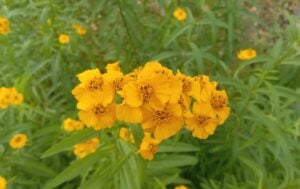 and licorice-scented leaves and flowers of Mexican tarragon flavor eggs, fish, chicken, salads, and dips. The stems of the flowering plant make a beautiful and flavorful vinegar. The leaves can be used as a substitute for French tarragon, which is difficult to grow in hot, humid climates.
As mentioned earlier, tea can be made from the leaves and flowers.
Mexican Mint Marigold in the Garden
 Tagetes lucida is an easy-to-grow, ornamental, and popular perennial in USDA Zones 8-13, reaching 2-3 feet in height. Because of its outstanding qualities, it was named a Texas Superstar plant in 2025. Its bright yellow flowers continue to bloom well into late fall and can survive light frosts. It is herbaceous but returns easily in the spring. It grows best in full sun and is not particular about soil. It is heat-and drought-tolerant, and its late-summer-to-fall flowers are a favorite of pollinators at a time when many plants have already stopped blooming. It can be started from seed, root division, or cuttings. It also repels insects, making it a good companion plant in the garden.
What is not to love about this plant?
For more information about Mexican tarragon, please see The Herb Society of America’s Herb of the Month webpage and recipes using the herb on the HSA Blog page.