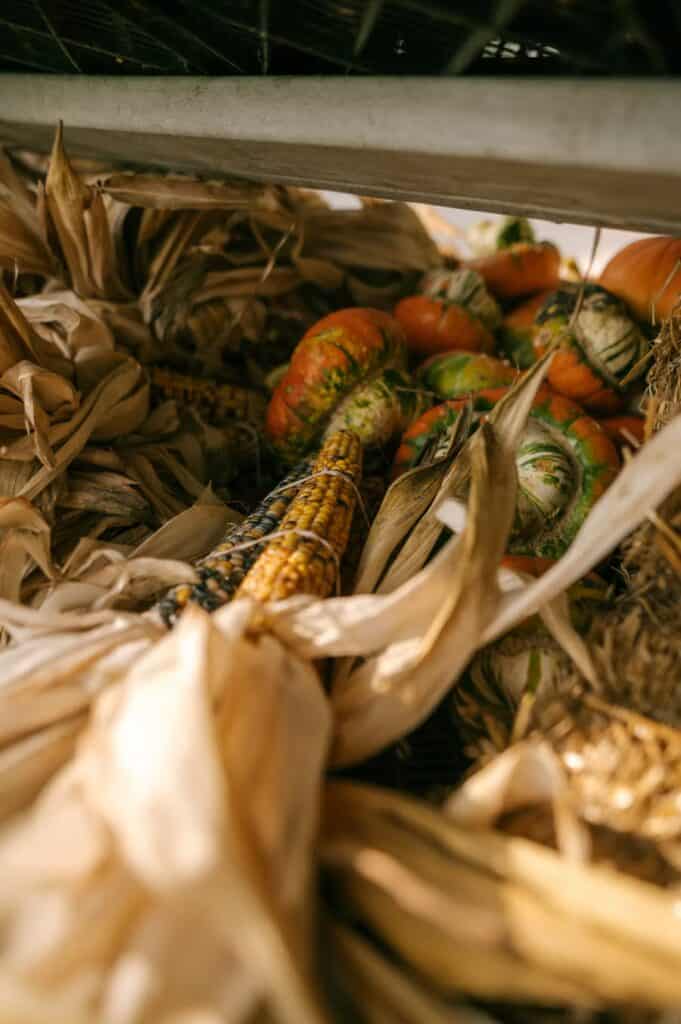
 At my house, Thanksgiving begins long before anyone sits down at the table. It starts with sage on the cutting board, rosemary at the door, thyme in the roasting pan—and the garden gathered close for one more feast. It continues when the good dishes come down from the cupboard and are rinsed of the dust they have gathered since the last time we decided an occasion was worthy of them. It begins with onions softening in butter, bread drying on trays, stock burbling on the back of the stove, and someone opening the oven door far more often than necessary.
More than anything else, Thanksgiving begins with fragrance. Rub a sage leaf between your fingers in late November and an entire holiday rises from it: browned butter, stuffing, roasted squash, warm bread, and the particular commotion of a kitchen in which too many things are happening at once. Crush a sprig of rosemary and the air sharpens. Strip thyme leaves from their stems and even the simplest pan of vegetables begins to imagine itself part of the feast.
The herbs may occupy only a corner of the cutting board, squeezed between apples, onions, citrus peels, and the good knife I keep misplacing, but they quietly hold the meal together. This is what I love most about the Thanksgiving kitchen: the garden has not disappeared simply because frost has taken the tomatoes and the trees are nearly bare. It has moved indoors, where it hangs in bundles from a beam, waits in jars in the pantry, grows in a pot near the window, and rests beneath a slightly damp towel on the kitchen counter. We bring it close for one more feast and let it find its way into nearly everything.
I don’t want to write about Thanksgiving without pausing to acknowledge that there is no single, historically tidy Thanksgiving table. The familiar story of one harmonious “first Thanksgiving” leaves out far more than it explains, including the complex histories and continuing traditions of the Wampanoag and other Indigenous peoples. The meal many Americans now call “traditional” has been shaped over generations by Indigenous agriculture, colonial foodways, immigration, regional kitchens, family circumstances, and the wonderfully unpredictable habits of individual cooks. It has never stopped changing, nor has it ever belonged to only one story.
Many of its most familiar foods—corn, beans, squash, pumpkins, cranberries, peppers, and potatoes—originated in the Americas and were cultivated, selected, traded, and prepared by Indigenous peoples long before European settlement. Corn, beans, and squash were grown together by the Haudenosaunee and other Native peoples in the companion-planting system known as the Three Sisters. Cranberries were used as food, medicine, and dye. The ingredients gathered on our Thanksgiving tables carry histories much older and far more complicated than the holiday itself.
The herbs tell another part of that story. Sage, rosemary, thyme, parsley, marjoram, savory, and bay arrived through European kitchens and gardens, then found new homes and new companions in North America. They met cornmeal and cranberries, pumpkins and pecans, apples and maple syrup—and, in my kitchen at least, a generous amount of Hatch chile.
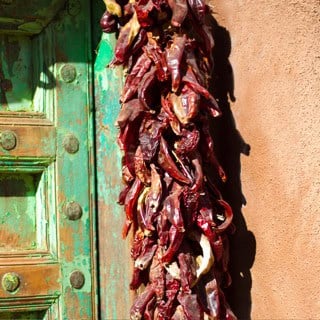 As for me, since I returned from Santa Fe, I seem almost incapable of leaving Hatch chile out of anything right now. I buy mine from Burlap & Barrel*, and opening the jar is often enough to send me wandering through the kitchen looking for something else that might benefit from it. It finds its way into cornbread, beans, squash, soup, herb butter, gravy, and occasionally dishes that had no idea they needed chile until I arrived. Sage and Hatch chile are particularly wonderful together: earthy, warm, a little smoky, and just unruly enough to keep Thanksgiving from becoming too well behaved. This feels to me like the most honest way to understand the Thanksgiving table—not as a reenactment of one historic meal, but as a record that is still being written. Every table carries plants, people, movement, adaptation, memory, and whatever the cook has fallen in love with that year.
If Thanksgiving were allowed only one herb, I believe sage would win the argument without having to raise its voice. Common culinary sage, Salvia officinalis, has soft gray-green leaves and a flavor that is earthy, resinous, slightly peppery, and almost musky. It has enough strength to stand beside onions, butter, sausage, mushrooms, poultry, beans, winter squash, apples, and bread without disappearing. Sage is often treated as though stuffing were its only reason for existing, but it deserves a much larger life. It is beautiful with roasted root vegetables, white beans, brown butter, pumpkin, pork, cornbread, biscuits, apples, pears, and toasted nuts. A few leaves slipped beneath the skin of a chicken or turkey perfume the meat as it cooks, while leaves fried briefly in butter or olive oil become crisp enough to scatter over squash, pasta, mashed potatoes, or a bowl of white beans. Chopped sage with Hatch chile and corn makes a very good argument for abandoning plain stuffing forever.
Fresh and dried sage do not taste exactly alike. Fresh sage carries greener, softer, almost lemon-peel notes, while drying concentrates its more resinous qualities. I use dried sage with a lighter hand and prefer to store the leaves whole, crumbling them only when I am ready to cook. Rosemary and thyme perform a different sort of work. If sage provides the deep, familiar heart of Thanksgiving, rosemary and thyme give the meal its bones.
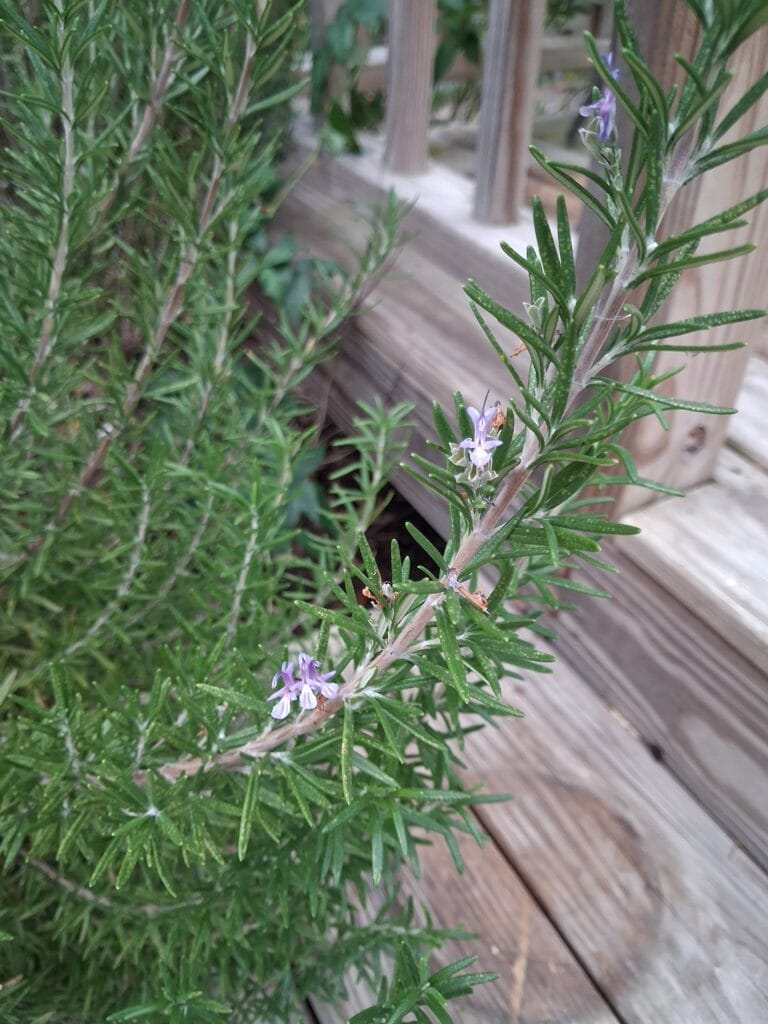 Rosemary is bold, evergreen, and unmistakable. Its needlelike leaves contain aromatic oils that can overwhelm a dish when used carelessly, yet the right amount brings clarity to roasted potatoes, poultry, bread, mushrooms, beans, citrus, and winter vegetables. I especially love rosemary with orange zest. The brightness of the orange lifts rosemary’s resinous depth, and together, they seem to belong naturally in a November kitchen. I chop the leaves into butter, rub them into salt, add them to bread dough, or tuck them into the roasting pan with onions, carrots, and whatever else needs using.
Rosemary has also long been associated with remembrance, making it especially fitting for a holiday built around returning, gathering, and telling familiar stories. A small sprig beside each place setting can be fragrant and quietly meaningful without requiring a ribbon, a printed tag, or an entire craft project. Sometimes it is enough to lay the rosemary beside the plate and allow the fragrance to do the remembering.
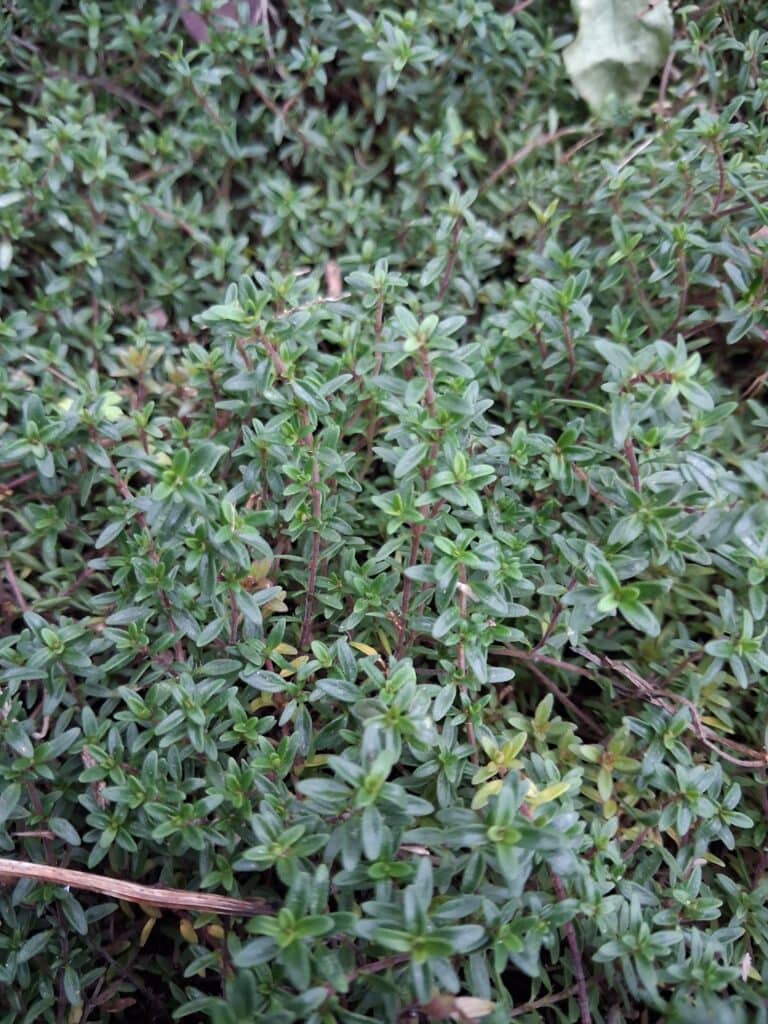 Thyme is gentler and more accommodating. It slips easily into stock, gravy, stuffing, roasted vegetables, mushrooms, beans, and long-simmered dishes. Where rosemary announces itself, thyme settles in and makes everything around it taste more complete. I reach for it when a dish needs something but does not need to become about the herb, because thyme has the rare and useful quality of listening to everything else in the pot.
The Thanksgiving herb garden contains more than its famous trio. Parsley brings freshness and color to a meal that can otherwise settle into a very earnest collection of browns and creams. Added near the end of cooking or scattered over finished dishes, its clean green flavor brightens potatoes, gravy, stuffing, beans, carrots, and roasted vegetables. Bay works more slowly. One whole leaf added to stock, beans, gravy, braised vegetables, or the turkey carcass simmering the next day gives depth without calling attention to itself. Marjoram is softer and sweeter than oregano, with a gentle floral quality that is especially lovely in stuffing, poultry, mushrooms, carrots, and squash. Summer savory has a peppery liveliness and a particular affinity for beans, which makes it especially welcome in a meatless Thanksgiving kitchen where beans, lentils, mushrooms, and grains may carry more of the meal.
Chives, if the cold has not yet finished them, are wonderful snipped over potatoes or stirred into butter. Mint can brighten peas, carrots, fruit, or tea. Even lavender can have a place, although it should be used with the restraint appropriate to a guest who is charming in small doses and exhausting when allowed to dominate the conversation. Chile peppers are fruits rather than herbs, but in my kitchen they have clearly decided they belong in this story. Hatch chile is lovely with sage, thyme, corn, beans, squash, potatoes, cheese, and mushrooms. It brings warmth and depth without erasing the other flavors, provided we do not become quite as enthusiastic as I am sometimes inclined to become.
The Thanksgiving spice cupboard brings still more plants to the table: cinnamon, ginger, cloves, allspice, cardamom, pepper, and nutmeg. They may come from far beyond our garden gates, but they have lived in our kitchens for generations and have become part of the seasonal household apothecary.
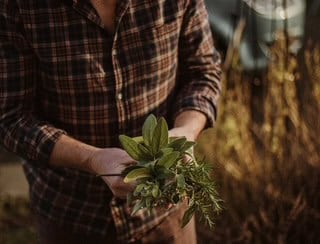 A day or two before Thanksgiving, I like to put on my muck boots, take a basket, and walk outside. I do not do this because everything we need must grow in the backyard. The walk simply changes the way I enter the holiday. It interrupts the lists, the shopping, and the low-grade panic over whether there will be enough gravy, and it reminds me to look at what is already around me before deciding what else I need to buy. There may still be rosemary holding its ground against the cold. Sage leaves may be weathered but usable. Thyme often remains tucked close to the soil, greener than expected. Parsley can endure surprisingly cold nights, and bay may be waiting in a pot that has already been carried indoors.
I gather only what is healthy, taking what the plant can spare and leaving what it needs. Then, I come back through the kitchen and look again: dried herbs from summer, apples in a bowl, onions in a basket, cranberries in the refrigerator, citrus on the counter, a jar of Hatch chile within suspiciously easy reach, and spices lined up in their jars. This habit of looking before buying has always been the heart of traditional herbalism for me. It begins with paying attention to what is growing, what has been preserved, what the season is offering, and what is already waiting in the kitchen.
Fresh herbs should be washed gently and dried thoroughly, then sorted according to the work they will do. Sturdy herbs such as sage, rosemary, thyme, bay, savory, and marjoram can withstand heat and longer cooking. Tender parsley, chives, and mint are usually best added near the end, when they can keep more of their freshness and color. The stems need not be wasted. Clean thyme and parsley stems can be tied together with bay and a small rosemary sprig to make a bouquet garni for stock. Celery leaves, onion ends, carrot trimmings, and mushroom stems can be saved as well. By the following day, the feast may have become soup, which remains one of Thanksgiving’s finest transformations.
Thanksgiving Herb Butter
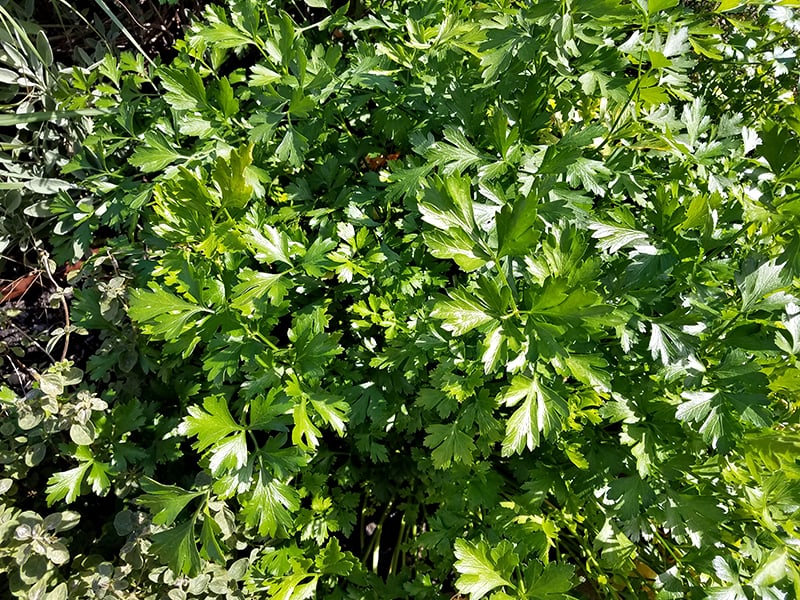 This is one of my favorite things to have waiting in the refrigerator. Melt it over vegetables, tuck it beneath poultry skin, rub it over a turkey, stir it into mashed potatoes, or spread it across warm rolls while standing at the kitchen counter and pretending that does not count as lunch.
Ingredients
- 1 cup unsalted butter, softened
- 1 tablespoon finely chopped fresh sage
- 1 tablespoon finely chopped fresh rosemary
- 2 teaspoons fresh thyme leaves
- 2 tablespoons finely chopped parsley
- 1 teaspoon finely grated orange zest
- 1 small garlic clove, finely grated, optional
- 1/2 teaspoon Burlap & Barrel Hatch chile* to begin, then more to taste
- 1/2 teaspoon fine sea salt, or to taste
- Several turns of black pepper
Stir everything together until the herbs are evenly distributed, then taste and adjust the salt, pepper, and chile. Spoon the butter into a small crock, or shape it into a log using parchment paper. Refrigerate until firm. It can be made several days ahead or frozen for a later meal.
For a dairy-free table, stir the same herbs, orange zest, and Hatch chile into a good olive oil with salt and pepper.
Cranberry, Apple, and Sage Relish
Sage may seem unexpected in cranberry sauce, but its savory fragrance provides a beautiful bridge between the fruit and the rest of the meal. A little Hatch chile can go in here, too—not enough to turn the cranberry sauce into salsa, although I would certainly eat that, but enough to leave a small, warm flicker at the end.
Ingredients
- 12 ounces fresh or frozen cranberries
- 1 tart apple, peeled and diced
- 1/2 cup apple cider
- 1/3 to 1/2 cup maple syrup, to taste
- Finely grated zest and juice of 1 orange
- 1 small fresh sage leaf, very finely chopped
- A small pinch of Burlap & Barrel Hatch chile*, followed by more only after tasting
- A small cinnamon stick
- A pinch of sea salt
- A few grinds of black pepper, optional
Combine the cranberries, apple, cider, maple syrup, orange zest and juice, cinnamon, and salt in a saucepan. Cook gently for 10 to 15 minutes, stirring occasionally, until the berries burst and the apple softens. Remove the cinnamon stick and stir in the finely chopped sage, Hatch chile, and black pepper, if using. Taste before adding more sage or chile. (The idea is not to make sage-flavored cranberry sauce or disguise it as salsa. Both should hover at the edge, tying the fruit to the savory dishes elsewhere on the table.) Cool before serving. The relish will thicken as it rests.
The Herb at Each Place
Before everyone arrives, place a small sprig of rosemary, sage, or thyme beside each plate. It need not be elaborate. Tie it with a bit of thread, tuck it into a folded napkin, or simply lay it across the place setting.
Some years ask more of us than others. A Thanksgiving table can hold joy and grief, abundance and uncertainty, empty chairs and new babies, old recipes and changed plans. The herbs understand something about that. They have endured heat, drought, rain, insects, careless pruning, and the first hard frost, yet when we brush against them, they still give us their fragrance.
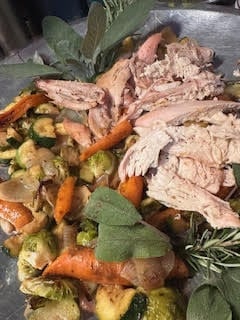 By late evening, the table will no longer look as it did when everyone arrived. The napkins will be rumpled, the candles will have burned low, and serving spoons will be resting in dishes that contain only a little of what they held. Someone will be searching for a container large enough for the remaining potatoes, while someone else will insist that the final piece of pie is too small to save! I often think this is when the table is most beautiful. The meal is no longer waiting to happen, and no one is trying to make it perfect. The table has become a record of who was there, what they loved, what they passed to one another, and which dish they quietly returned to for a third helping.
The herbs will have done their quiet work. Sage will remain in the stuffing and on the air. Rosemary will cling to the roasting pan. Thyme will have disappeared into the gravy and stock. Parsley will be scattered across plates. A bay leaf may already be waiting beside the pot that will become tomorrow’s soup, and there will probably be a stray bit of Hatch chile somewhere it was never intended to go.
The garden will have fed us once more, not only with leaves and flavors, but with memory, continuity, and the reminder that gratitude begins with relationship. We do not make a Thanksgiving meal alone. The soil, seeds, weather, pollinators, growers, harvesters, cooks, recipes, and generations before us all arrive at the table. This is why I continue to believe that the most elegant recipe for wellness and vitality is found at the end of your fork. On Thanksgiving, it may taste like sage and browned butter, smell like rosemary and orange, or carry just enough Hatch chile to make everyone sit up and pay attention. It may be a second helping passed across a crowded table or a container of leftovers carried home to someone who could not be there. However it appears, it is the garden gathered indoors, folded into the meal and the stories, quietly reminding us to notice how much we have been given.
A Gentle Kitchen Note
This article discusses ordinary culinary uses of familiar herbs and spices. Always identify plants correctly and use culinary species from trustworthy sources. Herbs and spices can cause allergies and may interact with medications or health conditions. Natural does not automatically mean harmless, and stronger is not necessarily better.
*The mention of Burlap & Barrel reflects my own kitchen preference and is not a paid endorsement.
Sources and Further Reading
- Smithsonian Institution, “Where Did Your Favorite Thanksgiving Day Food Originate?”
- Smithsonian National Museum of the American Indian, “American Indian Perspectives on Thanksgiving”
- Smithsonian Native Knowledge 360°, “Rethinking Thanksgiving Celebrations: Native Perspectives on Thanksgiving”
- The Herb Society of America Blog, “Sage: The Herb of Thanksgiving”
- University of Minnesota Extension, “Herbs”