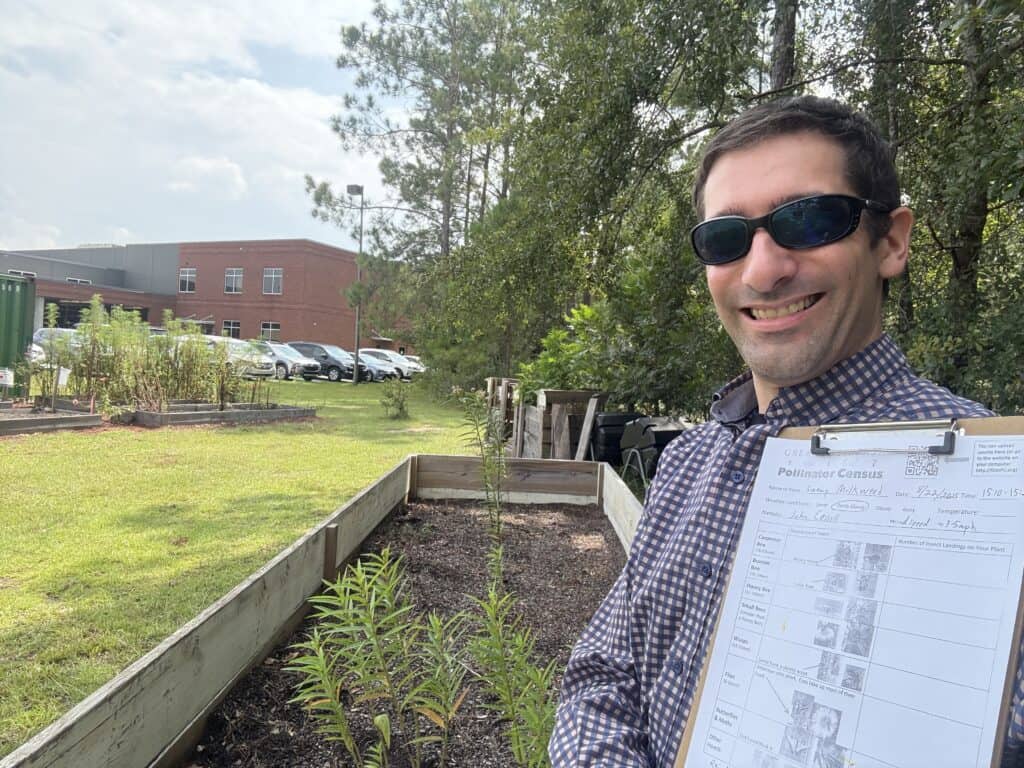
 When John Cassell took charge of the Effingham College and Career Academy (ECCA) Garden Club around 2022, he inherited a huge opportunity to turn an old herb garden in Rincon, GA, into something more. A marine scientist with a background in sea turtle biology, Cassell, who teaches Zoology, Scientific Research, and Entomology to ECCA’s STEM students, wanted to transform that green space into an active education and research site.
First, ECCA engineering students helped refurbish the old herb garden, and four raised, ipe-hardwood beds were donated through a program run by the Savannah Wildlife Refuge. Cassell then began searching for a formal garden certification program. He wanted a framework that fit the specific requirements of the ECCA campus. While well-known options like the National Wildlife Federation habitat certification exist, Cassell felt our HSA GreenBridges™ program was more appropriate for his school’s current environment and learning goals. It offered a tailored, practical, and easier way to bridge hands-on projects with genuine local conservation work.
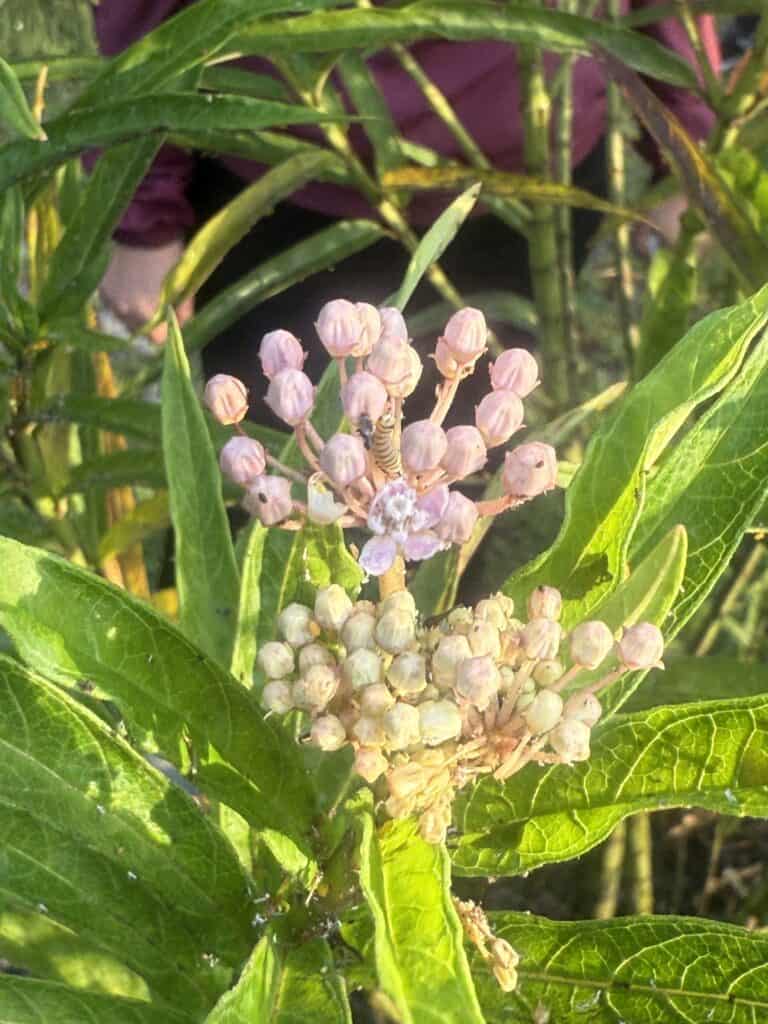 Today, the gardens at ECCA have expanded to seven thriving raised beds using a modest budget funded through small grants and Walmart seed donations. Filled with swamp milkweed (Asclepias incarnata), American pokeweed (Phytolacca americana), goldenrod (Solidago spp.), and various wildflowers, the gardens serve a critical ecological purpose. As rapid regional development—from battery plants to logistics hubs—leads to local deforestation, these certified GreenBridges™ native pollinator beds create essential stopping points for wildlife navigating these fragmented habitats.
 For many of these high school students, the project offers an entry point into the natural world. Most of the students do not have home gardens of their own, making ECCA’s gardens a primary tool for building their drive, interest, and confidence in horticulture. Centering the project on pollinator health has proved to be a powerful motivator; the students quickly adopt the mindset that “it’s not for me, it’s for them.” That sense of purpose transforms routine maintenance into a meaningful mission, fueling their desire to care for both the plants and the creatures relying on them.
Students actively learn real-world science through a wide variety of hands-on garden projects:
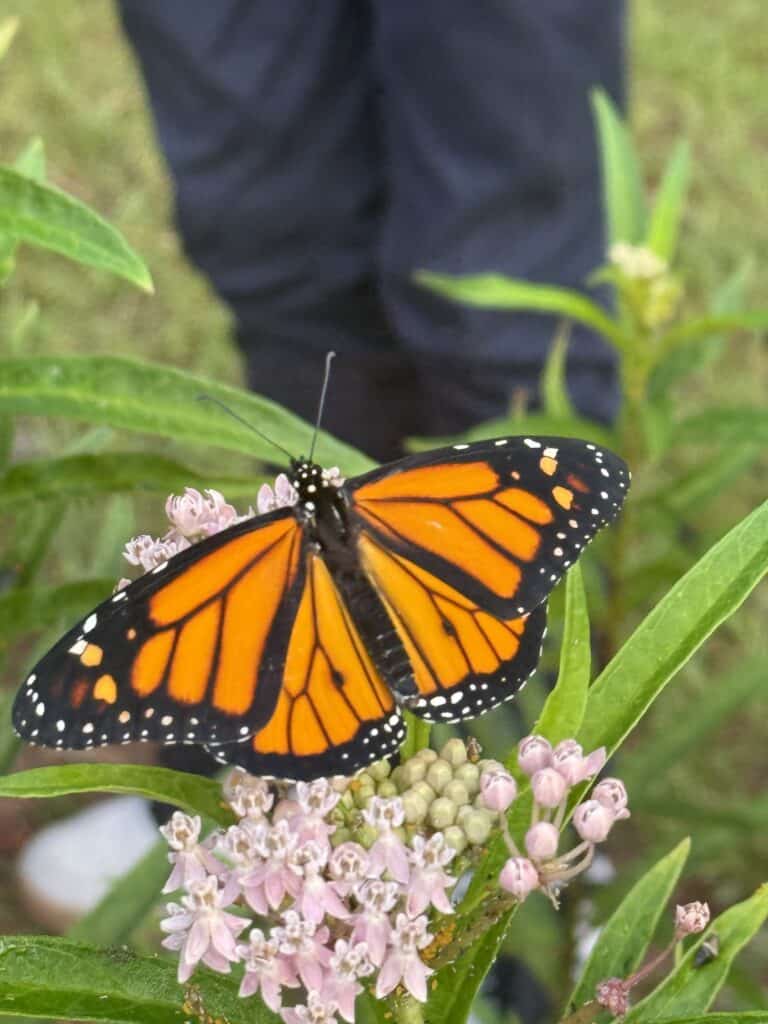
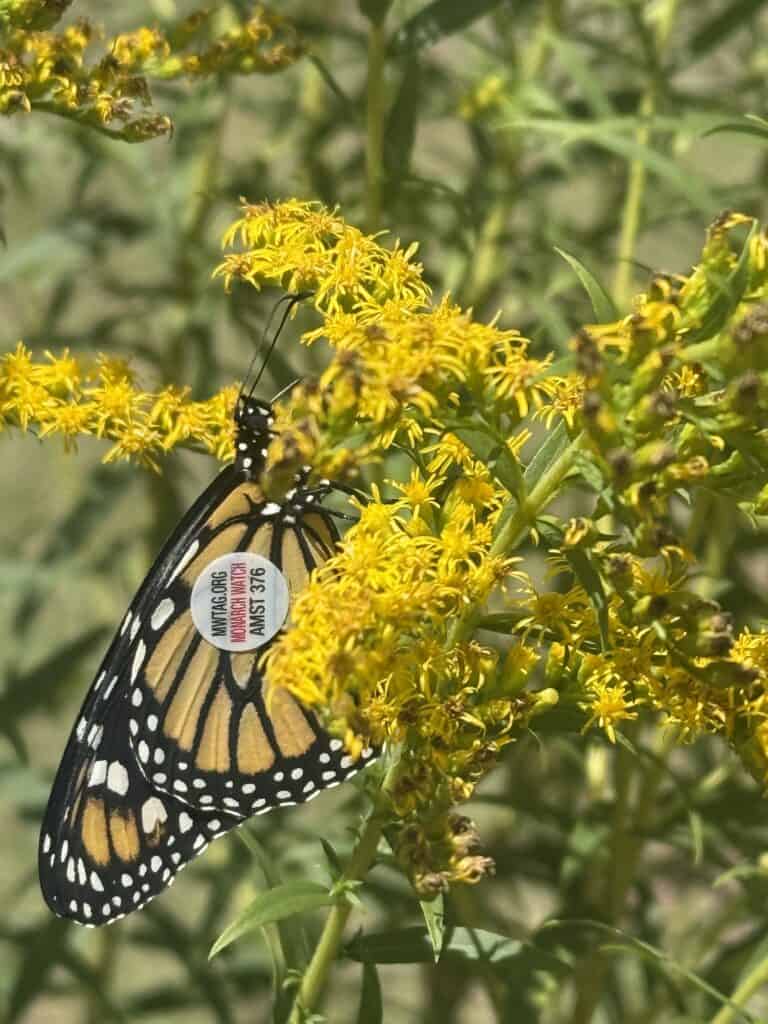 Hands-On Monarch Rearing and Tracking: Right in the classroom, students are currently hands-on rearing about 30 monarch caterpillars. The students actively care for these voracious eaters by harvesting fresh swamp milkweed from their garden, keeping the enclosures pristine, and observing the caterpillars as they progress through their growth stages before forming chrysalises. Once the adult butterflies emerge, students will attach specialized MonarchWatch tracking stickers to their wings before releasing them. This citizen-science tracking allows the class to monitor whether their garden-reared insects successfully make the incredible migration to Mexico.
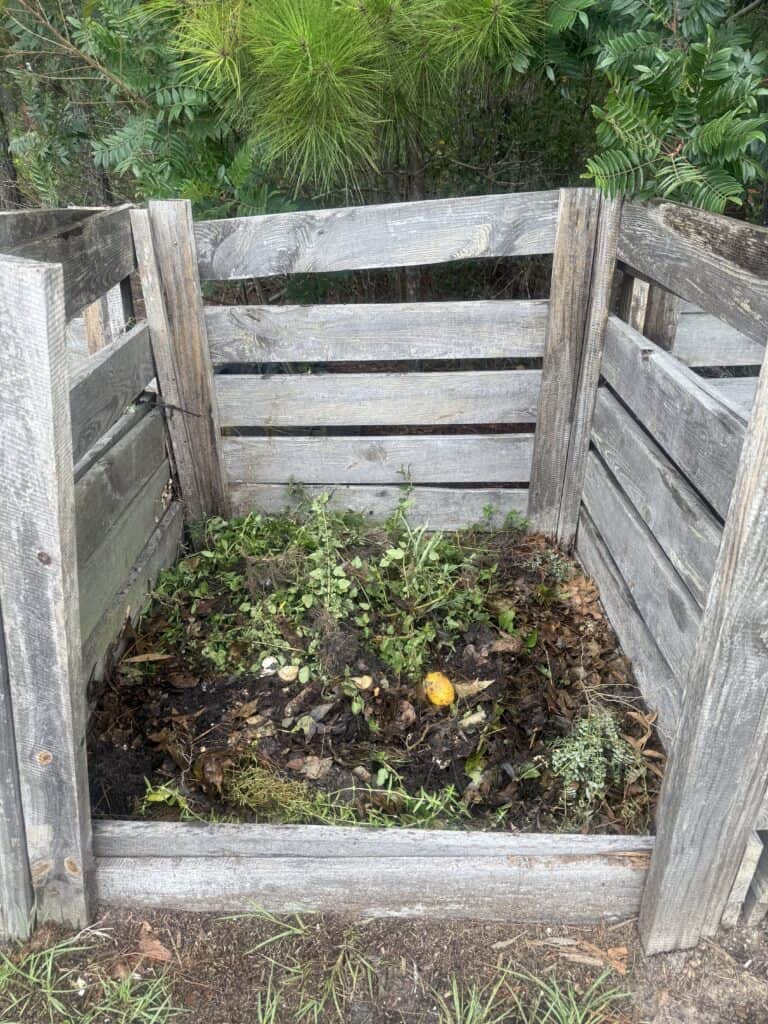 Soil & Compost Science: Students are actively collecting compost in the cafeteria to add to three compost bins made by engineering students. Using a mini-grant, Cassell created a library Compost Bucket system where students can check out a 5-gallon bucket to collect compost at home and add to the pile. This year, he wishes to go one step further by collaborating with the county extension office to run nutrient tests on the custom compost that is created for the gardens.
- Public Outreach: Students in the ECCA Garden Club participate in annual events to educate members of the local community. This year, they are preparing native flower seeds from the garden for clay seed balls.
- Citizen Science: During the annual Great Southeast Pollinator Census, students documented various insects found in their garden—everything from thread-waisted wasps and gulf fritillary butterflies to milkweed assassin bugs and lady beetles.
 Despite space and watering limitations (the beds are hand-watered using two hose reels pulled across a parking lot), Cassell and his students have proven that you don’t need acres of land or special equipment and materials to make a measurable environmental impact. Their certified GreenBridges™ gardens stand as a living classroom, proving that when students build native habitats, the wild world responds. Our many thanks to John, his students, and ECCA for making a difference in Coastal Georgia!
If you or your school or community garden is interested in The Herb Society’s GreenBridges™ program, go to the GreenBridges™ link for more information.