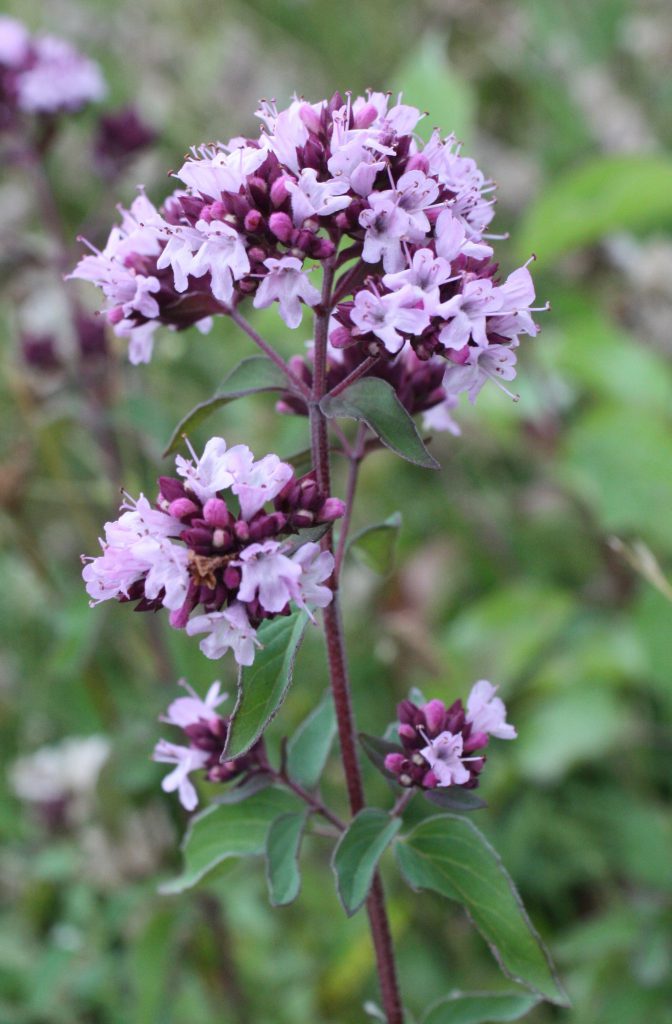
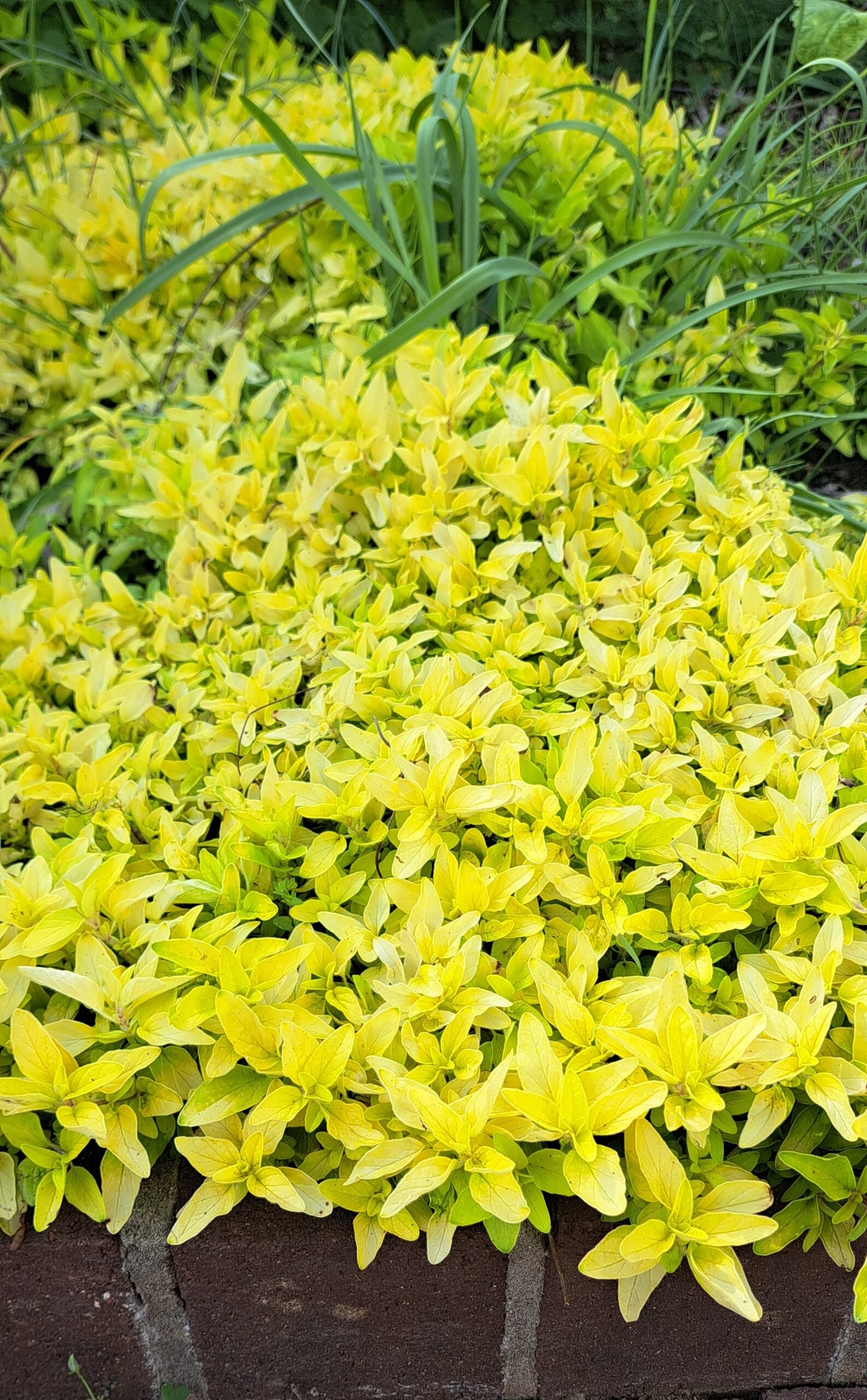
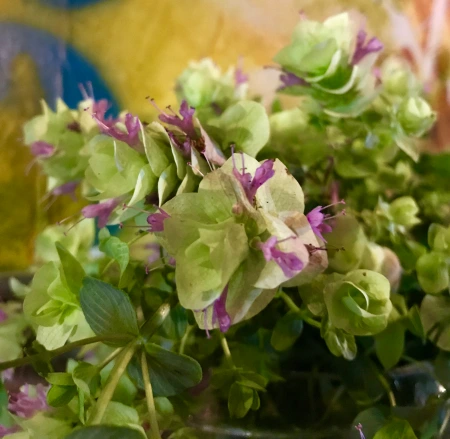
 Oregano, Origanum spp., is The Herb Society’s featured herb for May. It is an herb in the mint family (Lamiaceae) and is native to the Mediterranean area, northern Africa, and southern Europe. Its history is somewhat confusing, as many plants share the same fragrance and name as oregano but are not oregano, and different names have been given to the same oregano plant (Schlosser, 2006). Cuban oregano (Coleus amboinicus), for instance, is not an oregano at all and is used in Caribbean cuisines. Mexican oregano (Lippia graveolens), is in the verbena family (Verbenaceae) and has a citrusy, anise-like flavor and is used in chili and other Mexican dishes. There are nearly 45 species of Origanum oregano. Dittany of Crete (O. dictamus) and golden oregano (O. vulgare ‘Aureum’), are beautiful ornamental plants that can also be used in cooking or as medicinal herbs. Italian oregano (Origanum x majoricum) and Greek oregano (Origanum vulgare) are the species most often used for cooking. Marjoram (O. majorana) is an oregano with a slightly sweeter and milder flavor and is a classic herb used in stuffing.
 Oregano comes from the Greek words oros (mountain) and ganos (joy)—”mountain of joy”, which calls to mind the feeling of joy when seeing the bright green plant covering Greek hillsides. Legend has it that the goddess Aphrodite created oregano as a symbol of joy and fertility in her garden (Touwaide, 2024). Both the Greeks and the Romans recognized oregano as a plant that was easy to cultivate and propagate. When couples married, it was not unusual for them to be crowned with oregano, ensuring a happy and fertile marriage. Sprigs of oregano were placed on Greek graves to symbolize the continuity of life after death (Touwaide, 2024).
 The Romans appreciated the flavor of oregano, which is likely the reason for its widespread adoption throughout Europe and the rest of the world. In its early history, oregano was not a culinary herb. It was primarily used medicinally to combat sadness, relieve sore muscles, alleviate toothaches, counteract poison, treat gynecological issues, and relieve respiratory problems. Hippocrates (460-366 BCE) was one of the first physicians to use oregano oil to heal wounds and cure coughs.
The Elizabethans (1558-1603) used oregano a lot. “It was used to encourage good luck and good health. It was used in spells for happiness, tranquility, luck, health, protection, and letting go of a loved one. It was also worn during sleeping to give one psychic dreams” (Roots of Medicine, ND).
 Colonists brought oregano to the New World where it was used primarily as a medicinal herb. Oregano was not a well-known culinary herb in the United States until after World War II, when soldiers returned home from fighting in Italy and began asking for the “pizza herb.” That herb was oregano, of course. Today Italian oregano, a milder form of oregano, is the herb of choice for making tomato sauces, focaccia, and pizza. Greek oregano, on the other hand, is used to give food a bit hotter and spicier taste. It is used to flavor lamb, moussaka, and Greek salad.
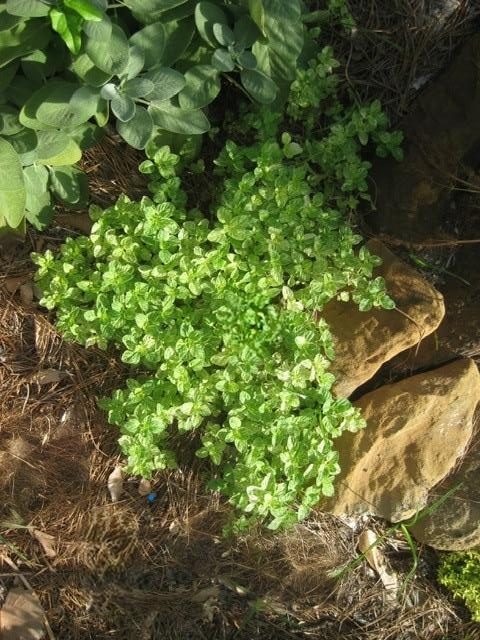 Oregano is an easy-to-grow perennial herb in southern climates and is grown as an annual in the North. It blooms with white, purple, or pink flowers. It is easy to propagate by taking cuttings or by root division. Some suggest sampling the leaves of an oregano plant before propagating it to ensure that the new plant will have the desired taste. (Herb Society of America, South Texas Unit, N.D).
For more information about oregano, please see The Herb Society’s Essential Guide to Oregano and Marjoram: An Herb Society of America’s Guide to the genus Origanum.