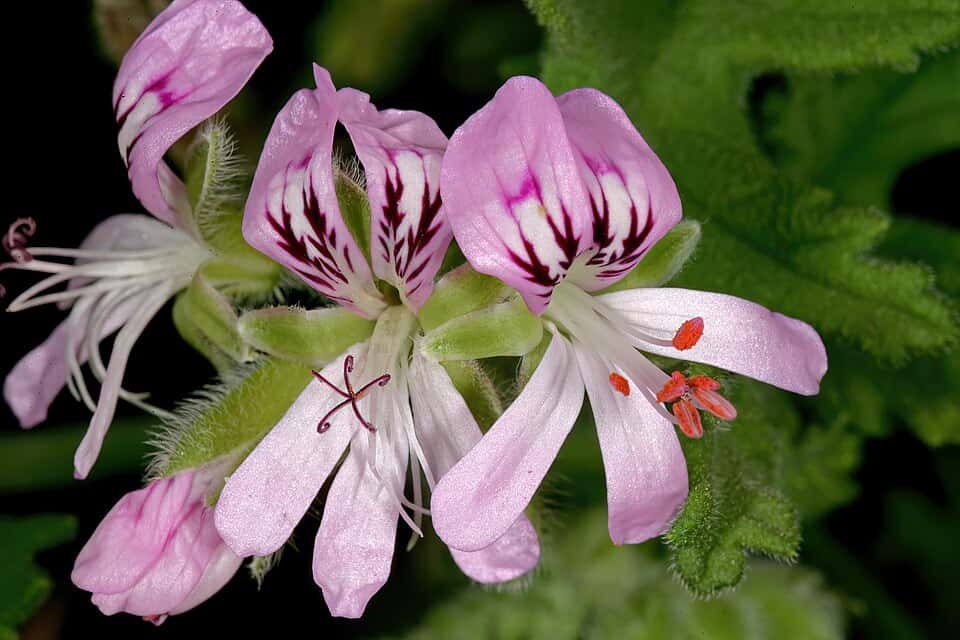
 Pelargonium is the Herb of the Month for September. Pelargonium is a genus of about 280-300 species in the Geranium family (Geraniaceae) (Toronto Master Gardeners, 2022), including not only the colorful geranium plants that every garden center sells in the spring as bedding and container plants, but also the scented-leaf species, of which there are at least 140 varieties. There are also native geraniums, regal geraniums, and ivy-leafed geraniums in the Geraniaceae family.
The showy, mostly annual pelargoniums (called geraniums in the nursery trade) are called zonal types because of the darker ring of color sometimes found on the leaves. However, breeders have mostly bred this ring out of these plants. The difference between the scented-leaf and zonal pelargonium lies mostly in the fragrance and shape of the leaves, with the scented-leaf pelargonium having very fragrant, myriad-shaped leaves. Scented varieties are also single-flowered.
The History
The name pelargonium derives from the Greek word “pelagos,” meaning stork, and refers to the plant’s ripe seed head, which resembles a stork’s beak. Another common name for the plant is storksbill, also cranesbill.
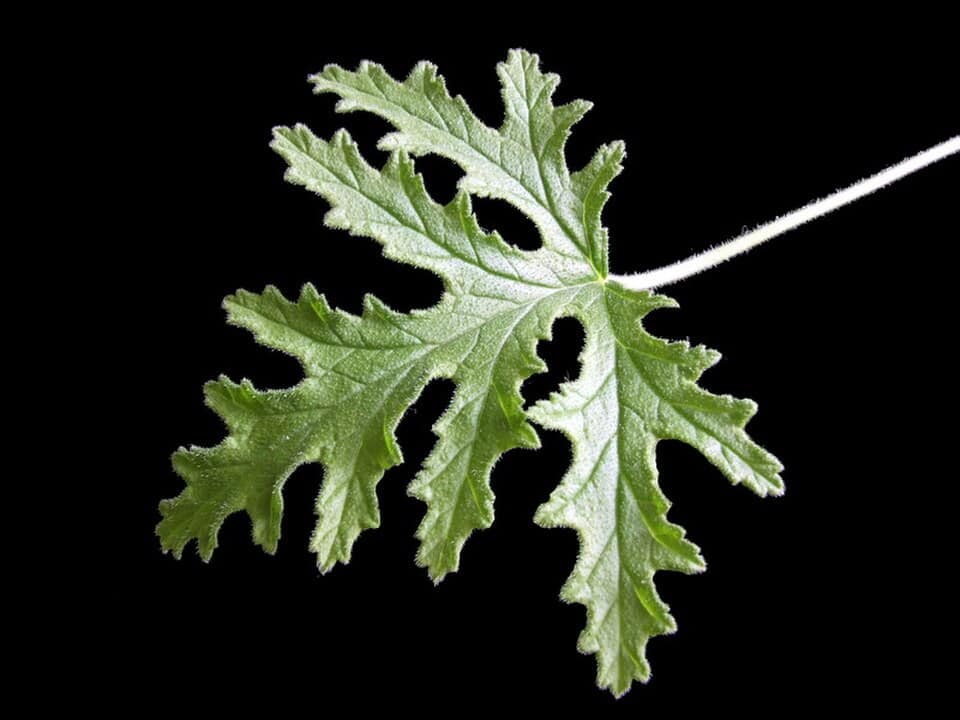 In the 1600s, explorers sailing around the Cape of Good Hope discovered pelargoniums in South Africa. Botanists brought the plants back to Europe, where they became favored garden plants. They were used as wound astringents, and were included in teas and sachets. Thomas Jefferson, an avid gardener, was an early fan of scented pelargoniums and grew several at Monticello and the White House. His children were known to include scented leaves in their letters.
Of course, the scented pelargoniums, with their distinctive leaves and flowers, became favorites during the Victorian era and were a popular addition to nosegays, sachets, and potpourris. Herbalists and gardeners used them to make ointments, teas, jellies, cakes, cookies, and even wine. These plants evoke images of Victorian parlors with floral drapes and velvet furnishings.
Pelargonium Uses
The scented pelargoniums are particularly useful as herbs. Both the leaves and the flowers are edible. The fragrant leaves are used in teas, jellies, cakes, cookies, sachets, potpourris, perfumes, and even wine, as mentioned above. Herb Society members recommend rose- and lemon-scented pelargoniums for baking. They suggest layering sugar and flour with the leaves to enhance the flavors of these ingredients in baked goods (Amidon, 2005).
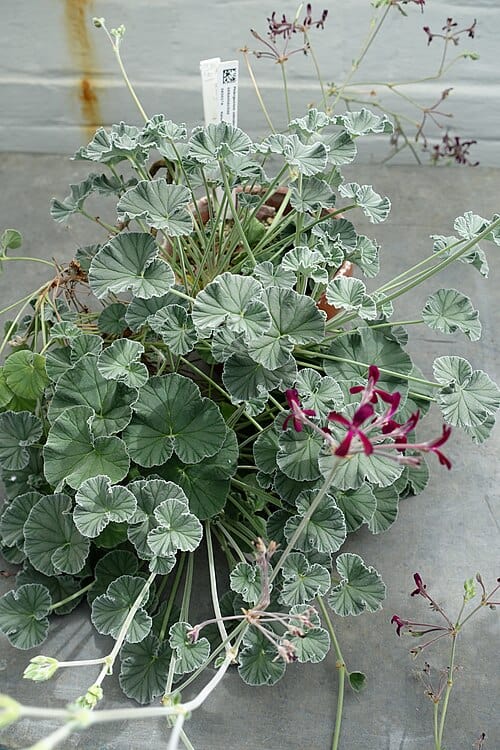 One variety, Pelargonium citronellum, is believed to repel mosquitoes when planted around the yard, although some studies suggest the plant is not effective for mosquito control (Wilson, 2025).
Current uses of scented pelargoniums include treating respiratory disorders and using the essential oil from rose-scented pelargoniums as a relaxant (Wilson, 2025). In its native South Africa, all parts of Pelargonium sidoides are used in traditional medicine to treat a range of ailments, including diarrhea, colic, gastritis, tuberculosis, cough, hepatic disorders, menstrual complaints, and gonorrhea. Powdered plant parts are used to treat acne. The plant is also used in veterinary medicine (Moyo, 2014). Because of its widespread medicinal use in South Africa, the plant’s wild population is threatened.
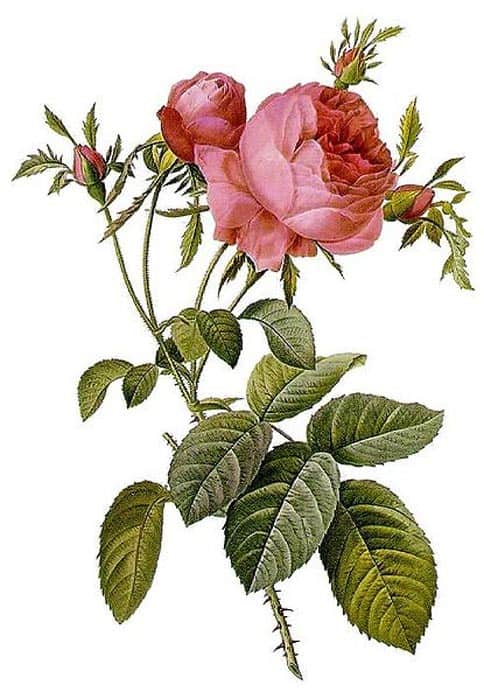
The oil from rose-scented species and cultivars of pelargoniums is used to produce attar of roses, which is used in the perfume industry.
Growing Pelargoniums
Pelargoniums are easy to grow with good air circulation and well-drained, neutral to alkaline soil. They also do well in containers. Most species thrive in sun, though some prefer shade. Remove spent flowers to encourage new blooms. For scented pelargoniums, clip the growing tip to encourage branching. I find that regular fertilization produces more flowers. Let them dry out between waterings.
The zonal and scented pelargoniums (geraniums) are not winter-hardy and must be brought indoors or protected during winter. Both have a shrubby growth habit, and their stems become woody as they age. Both are best propagated by stem cuttings.
The Pelargonium Today
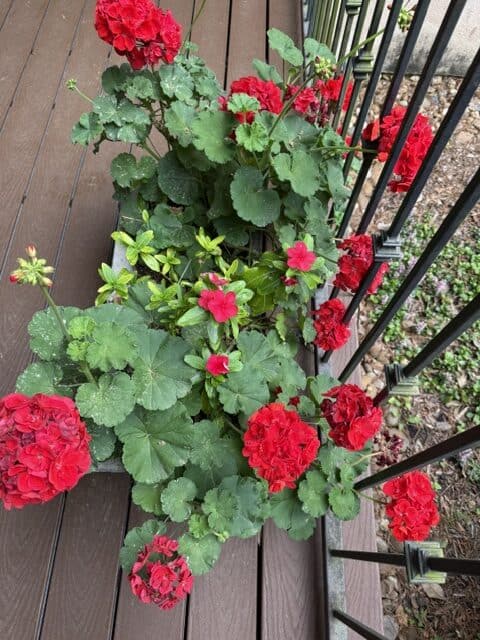 Scented pelargoniums hold a special place in the gardens of many Herb Society of America members. These fragrant herbs have been the subject of numerous articles in The Society’s journal, The Herbarist, and in The Society’s Essential Guide. With names such as nutmeg, orange, apple, pine, chocolate mint, rose, lemon balm, and strawberry (to name just a few), it is no wonder these plants have captured the imaginations of so many herb gardeners.
Today, scented pelargoniums are a collector’s dream for their intriguing scent and myriad leaf shapes. Breeders, of course, have capitalized on this interest by creating even more cultivars, each with a name that sparks gardeners’ imaginations as they seek plants with fragrance and beauty.
In the words of Society members Amidon and Brobst—”To grow Pelargoniums is to know them.”