 It is no surprise that the licorice plant, Glycyrrhiza glabra, The Herb Society’s Herb of the Month for October, is an ancient herb, like so many others. We mostly know licorice as a chewy black candy found in confections such as Good and Plenty, Twizzlers, and jelly beans. Only black licorice products contain flavoring derived from the licorice plant. In the United States, however, black and red candy labeled as licorice often contains fruit and anise oil flavoring instead of the real licorice extract.
The History
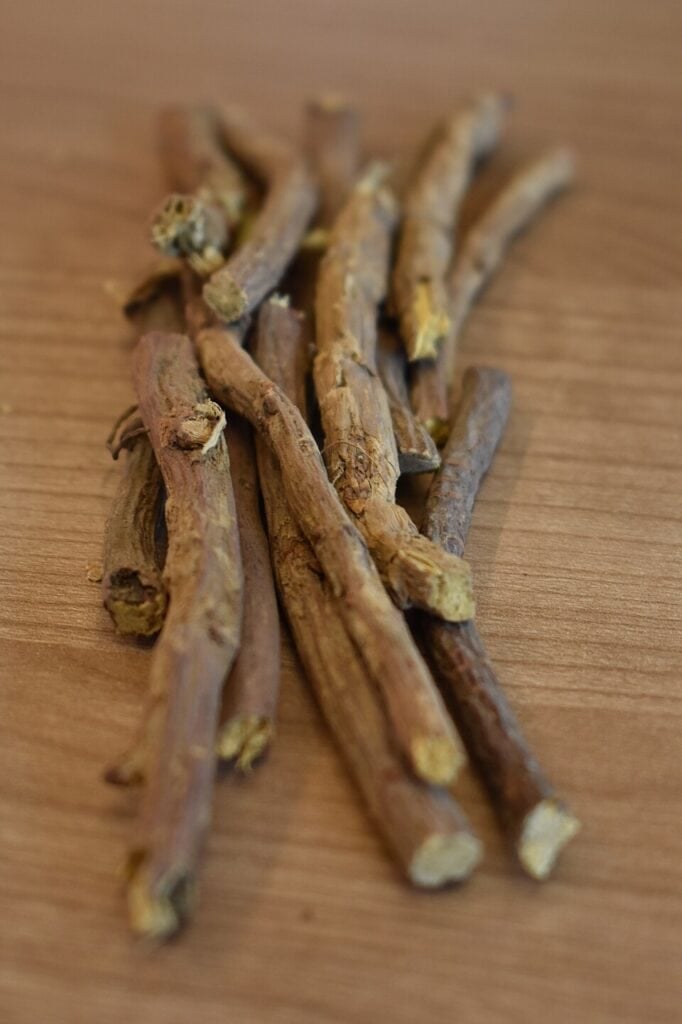 The history of licorice use is surprisingly medicinal. Shennong, the legendary Chinese ruler who lived roughly 5,000 years ago, is famous for experimenting with herbs on his own body. His teachings were compiled into the Divine Farmer’s Materia Medica, considered a forerunner of Chinese Traditional Medicine. He experimented with licorice and believed it could relieve aches and pains and cure other ailments. He called it gan can, meaning “sweet root,” because it was the root of the plant he used as a medicine and it was very sweet.
Licorice spread from China to Europe, Africa, and Asia. Aristotle’s student, Theophrastus (371 BCE), also known as the Father of Botany, discussed licorice in his writings. Dioscorides and Pliny the Elder (1st century CE) described licorice as a treatment for respiratory and oral conditions, urogenital issues, and eye diseases (Fiore, 2005). Dioscorides is credited with assigning the botanical name Glycyrrhiza to licorice, derived from the Greek glukos riza, meaning “sweet root.”
 Early Egyptians and Greeks chewed licorice root or drank licorice extract to quench thirst. Alexander the Great (356 BCE) and his soldiers chewed licorice root to stay hydrated during military campaigns. Alexander also believed licorice gave his soldiers an extra boost in battle. Ancient Egyptians flavored a drink with licorice and believed their pharaohs would continue drinking it in the afterlife, so they stocked their pyramids with it.
The Romans brought licorice to England. Medical practitioners such as Hildegard von Bingen and Avicenna documented its medicinal uses in their writings. Eventually, people discovered that the sweetness of licorice root had other uses, and they began adding it to beer and baked goods and even using it as candy. The licorice plant became a standard plant in monastery gardens. The still-famous licorice confection Pontefract cake, a black, coin-shaped candy, was made at Pontefract Abbey in Yorkshire and remains a popular licorice candy today, even outside Britain.
 Today, most of the licorice root imported into the U.S. is used to flavor tobacco products. It is also used in cough drops, syrups, laxatives, and nicotine lozenges, and to sweeten foods (Engles, 2009). Surprisingly, licorice is twice as sweet as sugar, so it is no surprise that it is added to cakes, candy, and ice cream.
Licorice in the Apothecary
Licorice is still being researched for its health benefits. It has been found to effectively treat constipation and certain ulcers. Studies show that it helps lower cholesterol, reduces depression in women, and may even help reduce body fat. It is also used for its antioxidant, anti-inflammatory, and anti-itch properties. Drinking licorice tea can boost energy and help with stress (Glenn, 2009).
 However, like its black color, licorice has a dark side (Tucker, 2009). In fact, in 2020, a Massachusetts man died after eating too much licorice. For people 40 or older, eating at least 2 ounces of genuine black licorice daily for 2 weeks may lead to hospitalization for heart palpitations (American Heart Association, 2022). Children and pregnant women should avoid it.
Growing Licorice
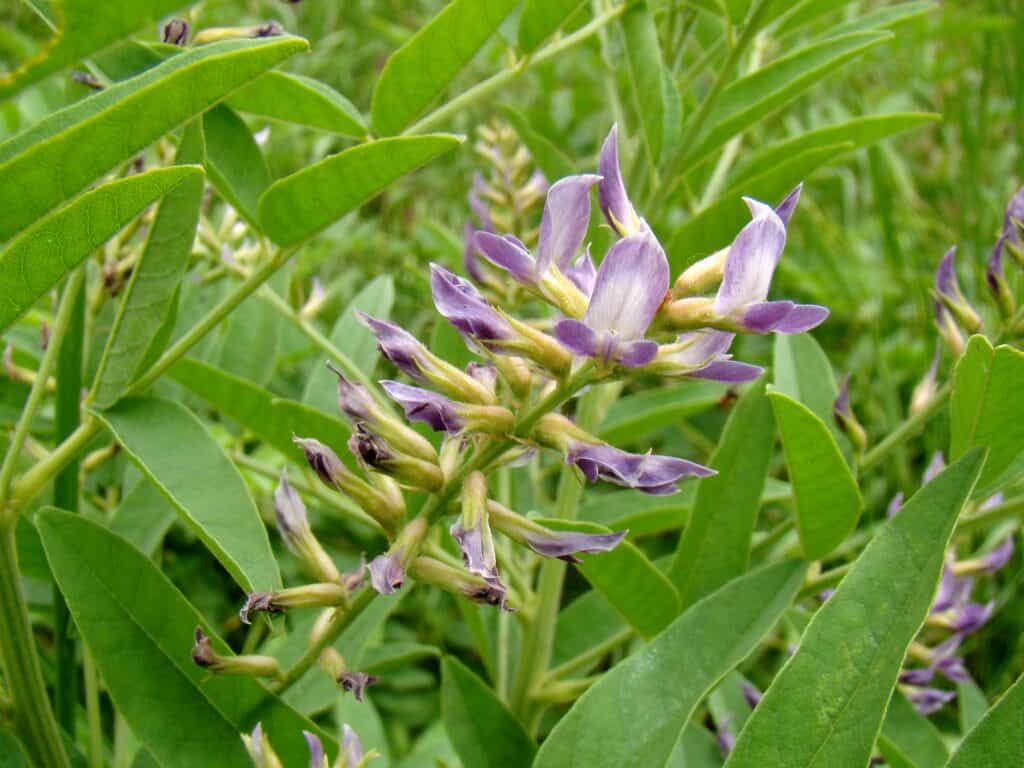
 Licorice is a tropical herbaceous perennial in the Fabaceae family—the bean family. It is native to Western Asia, North Africa, and Southern Europe. Plants can be started from seeds or root cuttings and grown in USDA Zones 9-11. The seeds require stratification, and plants can be invasive in some areas. It can grow up to 6 feet tall, and does best in a sunny location with well-draining soil. Licorice is slow growing, forming a dense mat of roots with a deep taproot. Roots are ready for harvest after 3-5 years. The plant is used for medicinal, ornamental, and culinary purposes and has an anise-like flavor. The young leaves and shoots are also edible in spring. The flowers form 6-inch, cone-shaped spikes and range in color from pink to mauve to white to blue. It blooms in summer.
In the End
I wonder how many of Alexander the Great’s soldiers died of heart attacks from eating too much licorice root during their military marches.