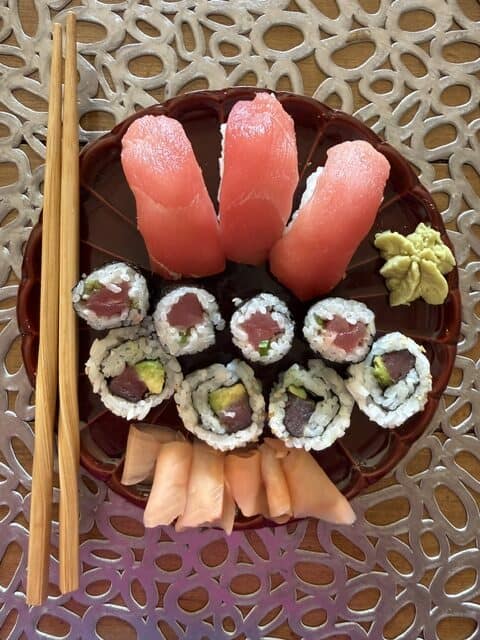
 Wasabi, Eutrema japonicum, is The Herb Society’s Herb of the Month for July. I never gave this iconic Japanese condiment much thought until recently. You will find wasabi paired with sushi, sashimi, or udon noodles at Japanese restaurants. A decorative spot of it is also included on supermarket sushi trays. However, the wasabi in supermarket selections is NOT made from the traditional wasabi plant native to Japan and Korea. Ground horseradish root dyed green is used as a substitute for authentic wasabi—hence, most of us have only experienced imitation wasabi. In fact, you may have to travel to Japan to experience the real wasabi.
Imitation wasabi VS the real wasabi
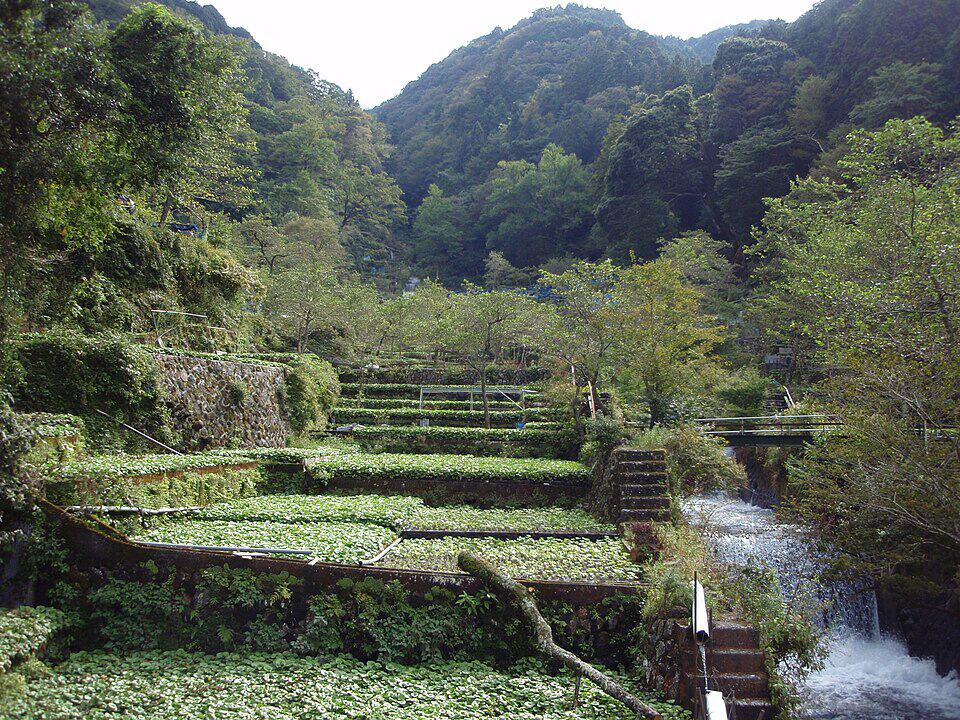 Wasabi is in the same botanical family (Brassicaceae) as mustard and horseradish, and it is grown in only a few areas of Japan, where the growing conditions are ideal. Wasabi is made from the rhizome, the plant’s underground stem. The rhizome is one to two inches wide and can grow to eighteen inches long (Cramer, 2025). This plant is a perennial, but it is very particular about its growing conditions. It is native to mountainous areas, where it is cool, shaded, and damp. When grown in wasabi paddies, the stems must grow partially submerged in fresh, running spring water. Even when grown on farmland, wasabi needs cool temperatures and a steady supply of pristine water (Kinjirushi, ND). It is difficult to propagate by seed, and it takes several years of growth before it is ready to harvest. Because of its very demanding growing conditions, it is not grown commercially in very many places; therefore, it is considered an expensive crop to grow.
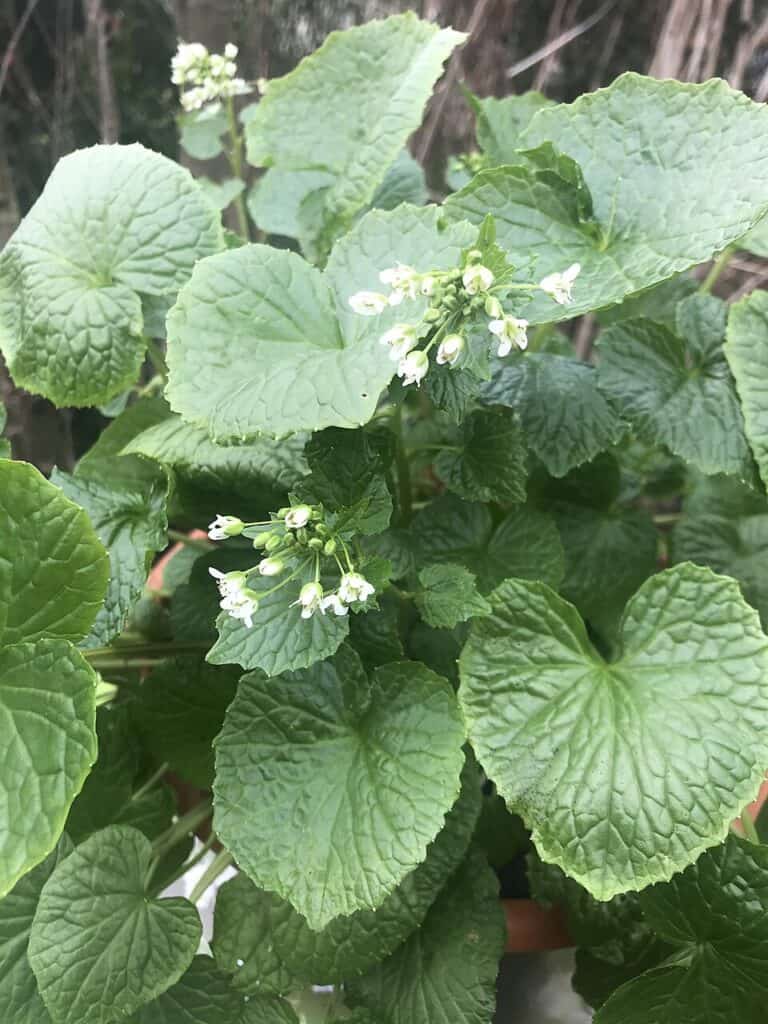
The large kidney-shaped leaves of wasabi grow at the ends of long stalks, which bear small clusters of white, four-petaled, cross-shaped flowers in the spring. The flower stalks are handpicked before they bloom and preserved in soy sauce as a specialty food. The leaves are also pickled and served with rice—all parts of the plant are used.
Imitation wasabi is usually made from European horseradish. It is sold as a powder or as a paste in a tube. These prepared products may contain only a small amount of authentic Japanese wasabi, usually 1%-3%. If you cannot find wasabi products in your supermarket, they are available from online retailers like Amazon.
What does it taste like?
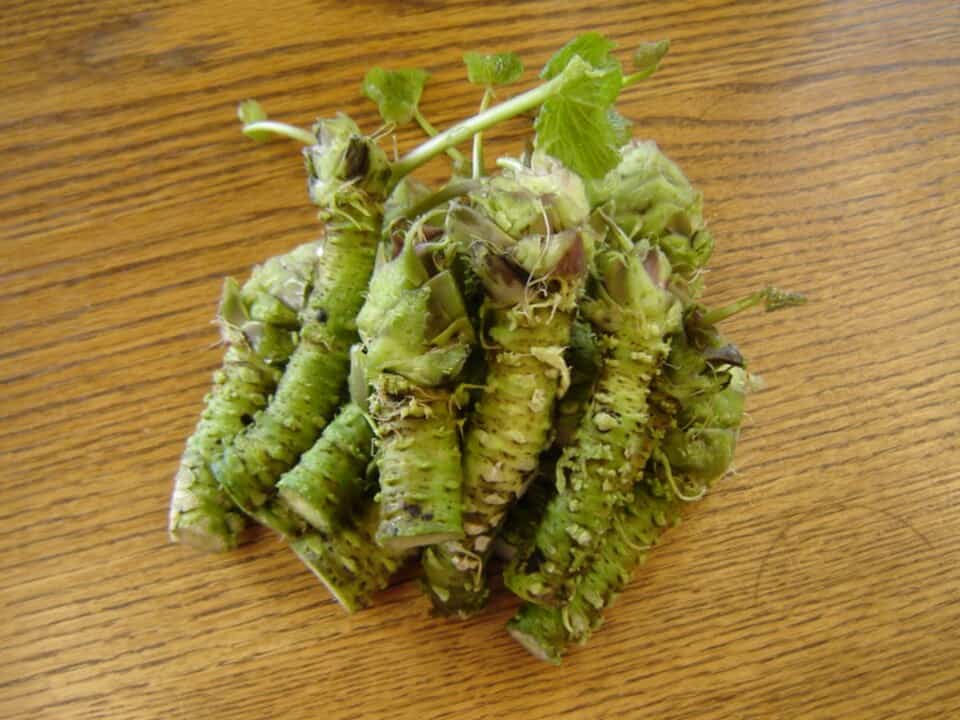 The heat you feel when you eat wasabi differs from the heat you feel when you eat hot peppers. Wasabi’s heat comes from the compound allyl isothiocyanate, which is a mustard oil released when the rhizome is ground, while capsaicin is the compound that gives chile peppers their heat. Wasabi heat is felt in the nasal passages and the front of the mouth, and it can make the eyes water. However, the heat dissipates quickly. This same compound is found in the horseradish used to make imitation wasabi. Some describe wasabi as having a sweet, fresh, and refreshing aroma.
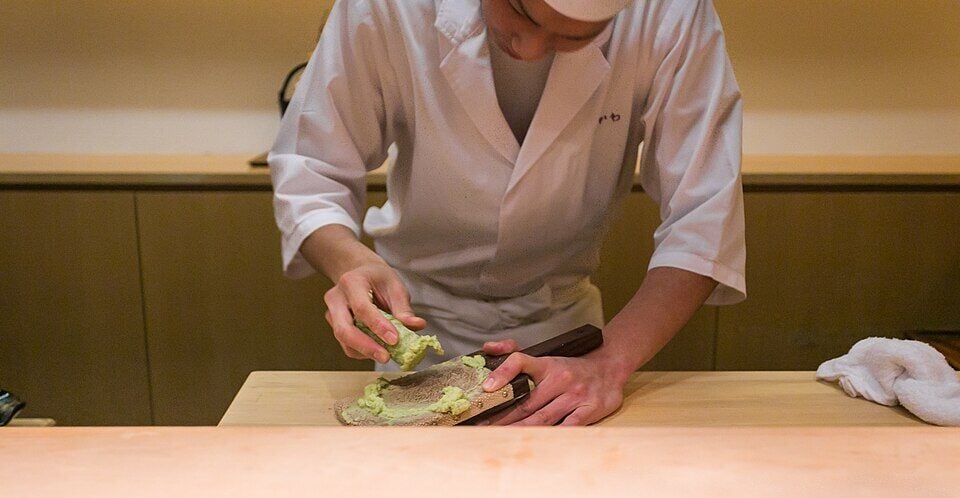
In high-end Japanese restaurants, wasabi is freshly grated just before serving to maximize flavor. Traditionally, wasabi was grated in a circular motion using a sharkskin grater. However, the metal oroshigane is now the most used grater.
The history
 Wasabi has been used in Japan since the 6th century. Wooden tablets from the Asuka period (550 CE), found buried in a pond within a medicinal garden, refer to wasabi as a medicinal plant (Kinjirushi.co.jp, ND). The oldest Japanese medical encyclopedia published in 618 CE, Honzo Wamyo, also describes wasabi as a medicinal herb. The oldest Japanese legal code, Engishiki, records that wasabi was collected as a tax from the Kyoto region.
 Serious cultivation of wasabi began in the Edo period (~1600). Its place in Japanese cuisine was solidified by the reigning Tokugawa family because of its flavor and because its leaf resembled the family crest (Kinjirushi.co.jp, ND). Later in the Edo period (~1800), sushi became a popular Japanese dish. Without refrigeration, wasabi was found to reduce food spoilage and bacterial growth, thereby lessening the risk of food poisoning.
Wasabi in the apothecary
Initially, wasabi was used for its health benefits. Research shows that small amounts of the isothiocyanate compounds in wasabi essential oil inhibit the growth of E. coli, Salmonella, and other bacteria. It also has antifungal properties that inhibit mold growth.
 Wasabi’s use in cancer suppression, cognitive enhancement, and its anti-inflammatory effects have also been studied. According to a 2024 publication, wasabi is “a promising candidate for the treatment of breast cancer, colorectal and stomach cancer, metabolic syndrome, heart diseases, diabetes, and obesity due to its anti-inflammatory and antioxidant properties and that it should be classified as a ‘superfood’ for the primary and secondary prevention of human diseases” (Bartkowiak-Wieczorek, 2024).
As a sushi lover, I now have a better understanding of the condiment I eat with my sushi and will be looking for opportunities to try the real wasabi. For more information about wasabi, please visit The Herb Society’s Herb of the Month.